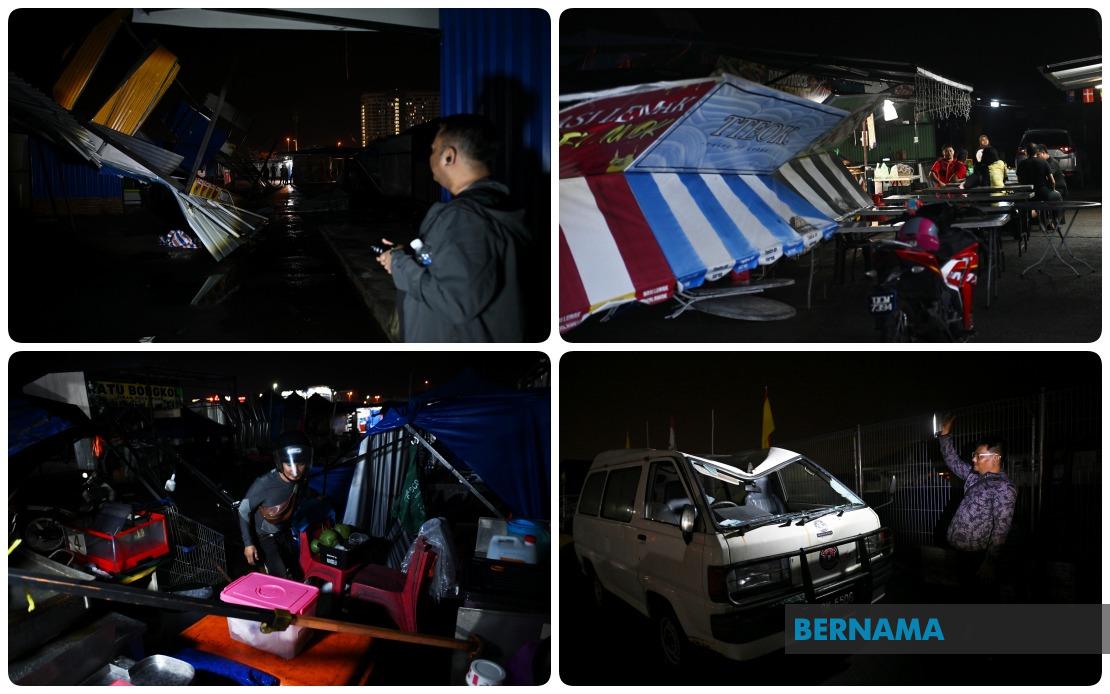
A destructive storm swept through Kuching over the weekend, forcing authorities to shut down the N6 Metrocity 2 Youth Night Market after violent winds destroyed canopy structures and damaged essential infrastructure at the bustling commercial site. The incident, which struck during peak business hours when the market typically draws its largest crowds, created a chaotic scene that prompted vendors and visitors to flee the premises for their safety. The combination of heavy rainfall and powerful gusts of wind proved too intense for the market's existing framework, with multiple canopy structures collapsing and becoming airborne hazards.
The sudden onset of the storm caught traders and shoppers off guard at a particularly busy moment in the night market's weekly cycle. Mohamad Faisal, a vendor who has operated at the site, described the terrifying sequence of events as canopies became projectiles flying unpredictably around the market grounds. The vendor recounted how he made the decision to abandon his stall immediately upon witnessing the structural failures, recognizing the acute danger posed by flying debris. His account captures the severity of conditions that forced the entire market population to seek shelter, with participants unable to secure their merchandise or equipment before evacuating.
The financial repercussions for the trading community are substantial. Individual vendors are facing losses estimated between RM2,000 and RM5,000 for canopy replacement alone, figures that do not account for damage to cooking equipment, refrigeration units, water containers, and goods. One veteran trader operating at the market for a decade calculated personal losses of approximately RM2,000, reflecting the immediate economic impact on household incomes dependent on this income source. With over 40 of approximately 300 vendor lots severely affected, the aggregate damage extends well beyond individual stall holders to encompass the broader market ecosystem.
Hamzah Hassan, deputy chairman of the N6 Metrocity 2 Youth Night Market management committee, characterized this weather event as the most destructive natural disaster to strike the venue in recent memory. Beyond the damage sustained by individual traders' equipment and structures, the market's shared infrastructure absorbed considerable damage. The incident damaged the main stage, the management office building, and the electrical supply system serving the entire market—infrastructure essential for the market's basic operations. The scale of institutional damage underscores the intensity of the storm and compounds the recovery challenge facing market management.
The broader infrastructure damage raises questions about the resilience of the current setup and future preparedness. The management committee has acknowledged that comprehensive restoration will require external support given the cost magnitude affecting both individual traders and communal facilities. Hamzah has appealed to relevant government ministries, elected state representatives, and cooperative organizations to provide financial assistance or material support to alleviate the burden on affected hawkers. This appeal reflects the reality that market traders, predominantly small-scale operators with limited financial reserves, cannot absorb such catastrophic losses independently without threatening their continued operation.
The Malaysian Meteorological Department (METMalaysia) had issued a thunderstorm warning applicable to the Kuching area from 5 pm to 9 pm on the day the storm struck, covering additional localities including Serian, Siburan, Samarahan, Simunjan, Kapit and Song across Sarawak. The warning system, while issued prior to the event, underscores that severe weather conditions in this region are predictable within certain timeframes, raising considerations about precautionary measures for markets and outdoor commercial venues operating during adverse weather seasons. The timing of the storm during evening peak trading hours, when the night market's economic activity reaches its zenith, compounded the disruption to vendor revenue streams.
For Kuching's hawker and street food community, the incident highlights vulnerability to extreme weather events that can eliminate weeks or months of accumulated profit in minutes. Night markets represent critical economic infrastructure in Malaysian urban centers, providing affordable dining options to consumers and generating livelihoods for thousands of informal sector workers. The forced closure disrupts this supply chain and deprives residents of an established community gathering space. The recovery period will test both the resilience of individual traders and the effectiveness of support mechanisms available to informal economy participants.
The regional implications extend beyond Kuching itself, as similar outdoor market venues throughout Sarawak and broader Southeast Asia operate under comparable structural vulnerabilities. Climate patterns increasingly feature intense weather events, and infrastructure designed decades ago may not adequately accommodate contemporary storm intensities. The Metrocity incident provides a case study for other municipalities considering how to balance the economic and social value of outdoor markets against infrastructure investment necessary to withstand severe weather exposure.
Market management has signaled openness to implementing improved protective measures alongside seeking immediate financial assistance. The trajectory of recovery will depend partly on how quickly government agencies, local authorities, and cooperative organizations respond to the assistance request. For traders, the immediate challenge involves accessing capital to rebuild their canopy structures before being able to resume operations. The closure represents lost revenue during a critical period, and extended closure risks pushing marginal operators toward exiting the business entirely.

