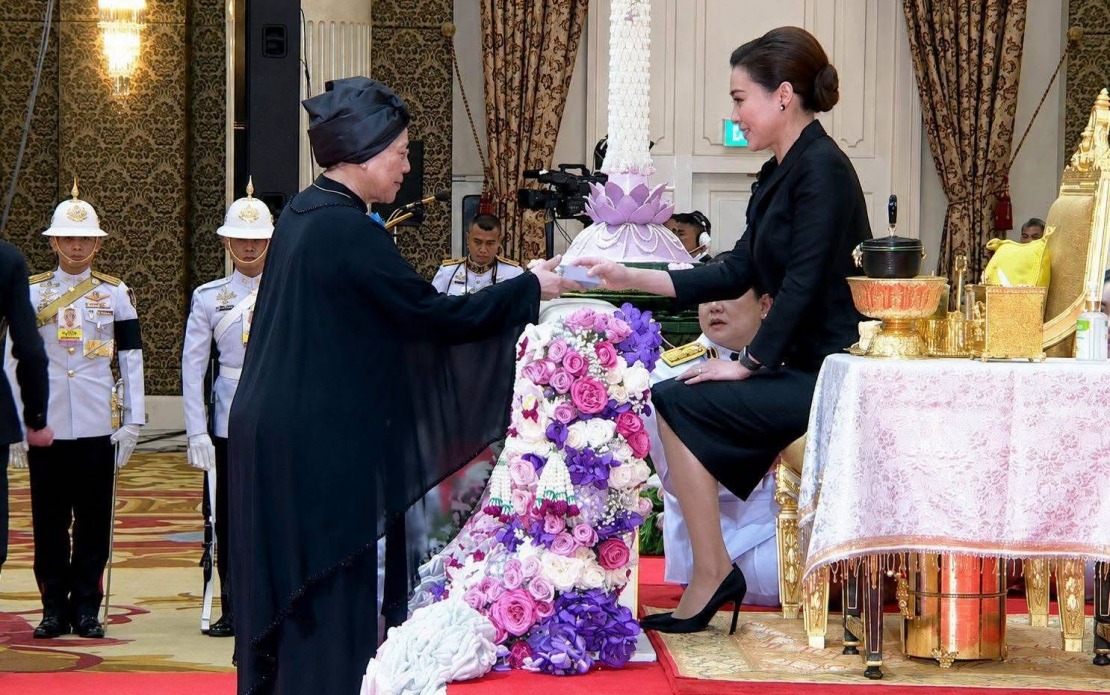
Prime Minister Datuk Seri Anwar Ibrahim and his wife Datuk Seri Dr Wan Azizah Wan Ismail have extended their congratulations to Prof Emerita Tan Sri Datuk Seri Dr Sharifah Hapsah Syed Hasan Shahabudin for receiving the Outstanding Woman Award for Social Development, conferred by Thailand's Queen Suthida Bajrasudhabimalalakshana. The honour underscores the growing international visibility of Malaysian women professionals and administrators in development work.
Anwar used the occasion to emphasise that such accolades transcend individual achievement, functioning instead as testament to the broader competency and influence that Malaysian women wield across multiple domains. In remarks posted on social media, he characterised the award not merely as a personal accomplishment but as validation of the nation's female workforce more broadly, whose contributions increasingly earn recognition beyond Malaysia's borders. This framing elevates the recognition from a biographical achievement to a national indicator of gender equity and meritocracy.
The Prime Minister's response reflects the MADANI Government's stated commitment to positioning women as central agents in the nation's development trajectory. By connecting the award to the Malaysia MADANI agenda—the administration's overarching vision for a more prosperous and inclusive society—Anwar signals that women's advancement aligns with core governmental objectives rather than constituting a separate social policy track. This integration suggests women's participation is viewed as essential infrastructure for broader national progress rather than supplementary to it.
Anwar's call for the recognition to inspire additional women toward greater participation through knowledge sharing, leadership roles, and compassionate engagement indicates an administration mindful of the pipeline challenge in professional advancement. The emphasis on knowledge, leadership, and compassion as the three pillars of women's contribution establishes a framework for participation that encompasses technical competence, decision-making authority, and values-driven engagement. This multi-dimensional approach acknowledges that simply opening institutional doors proves insufficient without cultivating the conditions for meaningful impact.
The timing and nature of the award itself carries significance for Malaysia's regional standing. Recognition from Thailand's monarchy, delivered through a formal award mechanism, suggests cross-border acknowledgment of Malaysian women's professional calibre. In Southeast Asian context, where regional cooperation increasingly emphasises human development and social progress, such awards function as soft power assets, elevating Malaysia's profile as a nation where women contribute substantially to development initiatives. The geographical proximity of the award adds regional dimension to what might otherwise appear a purely domestic narrative.
Governmental commitment to expanding women's participation remains subject to translation into concrete policy architecture. Anwar's statement commits the MADANI administration to several concrete undertakings: upholding women's roles, broadening sector-specific opportunities, and ensuring women's talent and leadership constitute developmental pillars. These commitments carry implications for budget allocation, legislative frameworks, and institutional practices across government agencies and statutory bodies. The depth to which these pledges translate into measurable outcomes will ultimately determine whether such rhetoric represents transformative commitment or rhetorical flourish.
The award also contextualises Malaysia within broader Southeast Asian conversations about women's advancement. Neighbouring countries pursue various approaches to gender integration in development work and governance. Malaysia's emphasis on recognising individual achievement while linking it to systemic advancement reflects a particular philosophy emphasising meritocratic pathways alongside structural support. Whether this approach proves more effective than alternatives remains contested, though the visibility of women achieving international recognition suggests the framework generates measurable results in at least some sectors.
Sharifah Hapsah's profile as a Prof Emerita indicates her recognition reflects extensive professional accumulation rather than early-career achievement. This detail matters because it suggests established institutional structures have enabled a woman to reach emeritus status—itself relatively uncommon across Southeast Asian academia. The award therefore functions partly as retrospective validation of career trajectories that earlier institutional configurations might have obstructed. For younger professionals observing from earlier career stages, such recognition provides both aspirational models and evidence that advancement pathways exist.
The involvement of Anwar's wife Datuk Seri Dr Wan Azizah in the congratulatory message carries its own significance. As a public figure in her own right with professional credentials, her participation underscores that women's advancement engages multiple stakeholders, including those in high-profile political roles. This joint acknowledgment demonstrates alignment between the government's chief executive and his spouse on women's development priorities, a positioning that may carry influence within governmental and social circles beyond what either statement alone would generate.
Looking forward, the challenge for Malaysian policymakers involves sustaining momentum beyond celebratory statements. International recognition of individual women achievers generates positive publicity and contributes to Malaysia's global reputation. Translating such recognition into systemic changes affecting the majority of Malaysian women—particularly those in rural areas, lower income brackets, or underrepresented professional sectors—requires sustained budgetary commitment, legislative reform, and institutional innovation. Awards and accolades serve valuable functions as markers and motivators, yet they function most effectively when embedded within comprehensive strategies addressing structural barriers and opportunity gaps across multiple domains.

