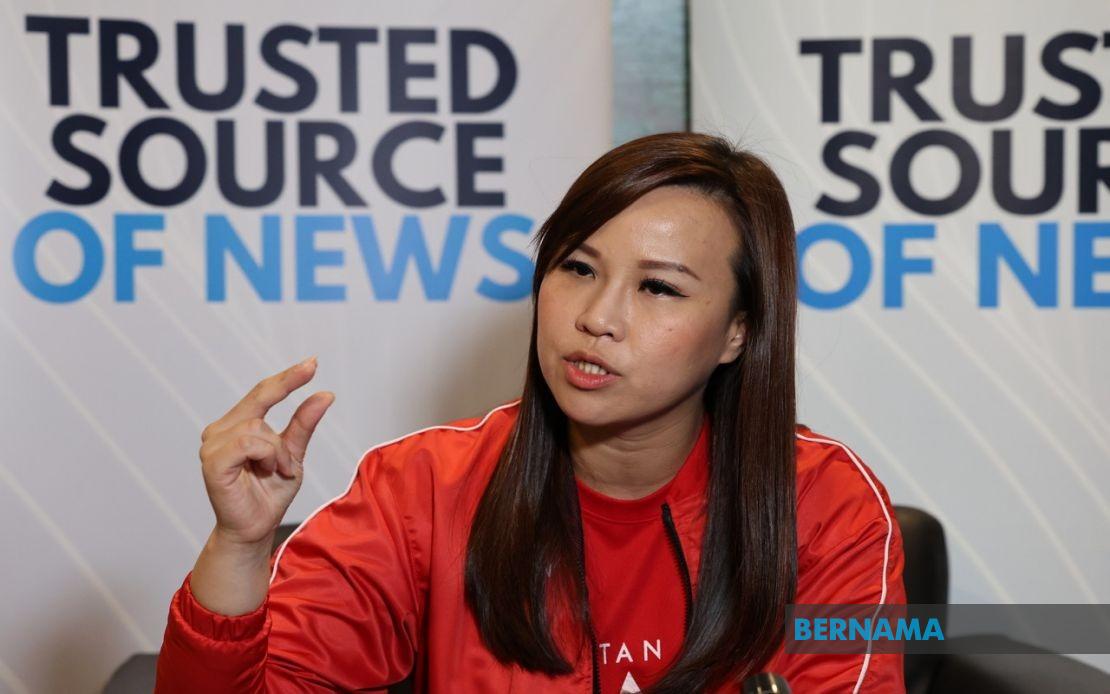
Sharon Teo Siew Hui, the Pakatan Harapan candidate contesting the Permas state seat in the Johor State Election, has made public service the cornerstone of her campaign platform, drawing deeply on the legacy of her former mentor, the late Datuk Seri Salahuddin Ayub. The 36-year-old politician credits her years working as a special officer to the late Minister of Domestic Trade and Cost of Living with instilling in her the values of accessibility, humility, and an unwavering dedication to serving constituents regardless of their social standing or ethnic background. Through her close association with Salahuddin, widely celebrated as the architect of Malaysia's cost-of-living assistance initiatives, Teo has absorbed a hands-on approach to governance that she now seeks to transplant into her own political career.
Teo's entry into electoral politics was itself shaped by her admiration for Salahuddin's character and approach to public life. She initially supported him as a volunteer but formalized her political commitment by joining Parti Amanah Negara in 2018 following a deeper appreciation of his leadership style and ethical framework. Rather than jumping directly into candidacy, she spent several years building institutional knowledge within Amanah, progressing from ordinary member to Assistant Secretary of the Johor branch and subsequently leading the women and youth division, Amanah Johor Wanita Muda. This gradual ascent within party structures has allowed her to establish grassroots credentials while developing a nuanced understanding of state-level politics.
During her tenure supporting Salahuddin through multiple electoral cycles, Teo witnessed firsthand the meticulous attention he devoted to constituent complaints. She recalls how the late minister would personally track the resolution of public grievances, often sending messages late into the evening to ensure that problems were actually being solved rather than merely acknowledged. This commitment to follow-through, rather than superficial responsiveness, represents the operational philosophy she intends to embed in her own constituency management. The distinction between simply receiving complaints and ensuring their resolution reflects a broader understanding that elected office carries accountability beyond the campaign trail.
Facing criticism that she represents a "parachute candidate" — an outsider imposed by party leadership rather than organically rising from community roots — Teo has actively countered this characterization by emphasizing her sustained involvement with Amanah since 2018 and her frequent presence in Permas during previous election cycles. Her familiarity with the constituency stems not from recent positioning but from years accompanying Salahuddin during his campaigns and community interactions in the area. Early campaign feedback suggests this groundwork is resonating with voters; within the first five days of campaigning, she reports a warming reception across diverse demographic segments, though this positive momentum will face significant tests as the contest intensifies.
Voter concerns raised during preliminary campaign engagement have painted a picture of a constituency grappling with infrastructure deficits and urban management challenges. Residents have repeatedly flagged issues including deteriorating road surfaces, neglected laneways behind commercial zones, traffic congestion during peak hours, and the degraded state of public facilities across various neighborhoods. These are not abstract policy concerns but tangible quality-of-life issues affecting daily routines and economic productivity. Teo's proposed response involves comprehensive auditing and prioritized remediation rather than piecemeal responses, suggesting an administrative approach grounded in systematic data collection before implementation.
A distinctive element of Teo's campaign positioning involves deliberate outreach to younger voters and first-time participants in electoral contests. Recognizing that school leavers and newly eligible voters represent a demographic often underserved by traditional political engagement, she has committed to leveraging digital platforms and emerging youth cultural spaces including competitive gaming communities. This reflects broader recognition within opposition parties that electoral success in urban-middle class constituencies increasingly requires meeting voters where their social lives actually occur, rather than relying solely on traditional town halls or community center events.
Teo's proposed governance framework for her first 100 days in office prioritizes diagnostic work over immediate policy announcements. She plans to identify the most pressing difficulties affecting constituents, assemble detailed empirical data regarding their scope and nature, and then construct phased solutions with realistic timelines. This methodology contrasts with approaches centered on grand promises made during campaigns but abandoned once elected offices are assumed. She has articulated three core initiatives including establishment of a dedicated complaint resolution center branded as PermasKu, conducting a full infrastructure assessment across the constituency, and undertaking direct community engagement to ground policy proposals in actual resident needs rather than assumptions.
The contest for the Permas seat has transformed into a four-way race testing different political visions and party machinery. Besides Teo, the incumbent Baharudin Mohamed Taib represents Barisan Nasional and possesses substantial advantages including previous electoral victory with a margin of 7,926 votes in 2022, established administrative networks, and continued backing from federal resources. The Perikatan Nasional candidate T. Vela and Parti Bersama Malaysia's Dr Zamil Najwah represent alternative political choices, fragmenting the anti-incumbent vote and complicating Teo's pathway to victory. The four-cornered contest introduces unpredictable dynamics where second-preference voting patterns and differential turnout among demographic groups could prove decisive.
For Malaysian observers and Johor residents assessing this electoral contest, Teo's candidacy encapsulates broader trends in opposition politics where younger candidates without deep historical baggage attempt to rebuild credibility through emphasis on competence and service orientation rather than party ideology alone. Her invocation of Salahuddin's legacy serves both as personal motivation and as brand positioning — implying continuity with popular governance associated with cost-of-living relief and accessible leadership. However, translating mentor-derived values into electoral victory and subsequently into tangible constituency improvement remains a formidable undertaking, particularly against entrenched incumbent advantage and fragmented opposition support.

