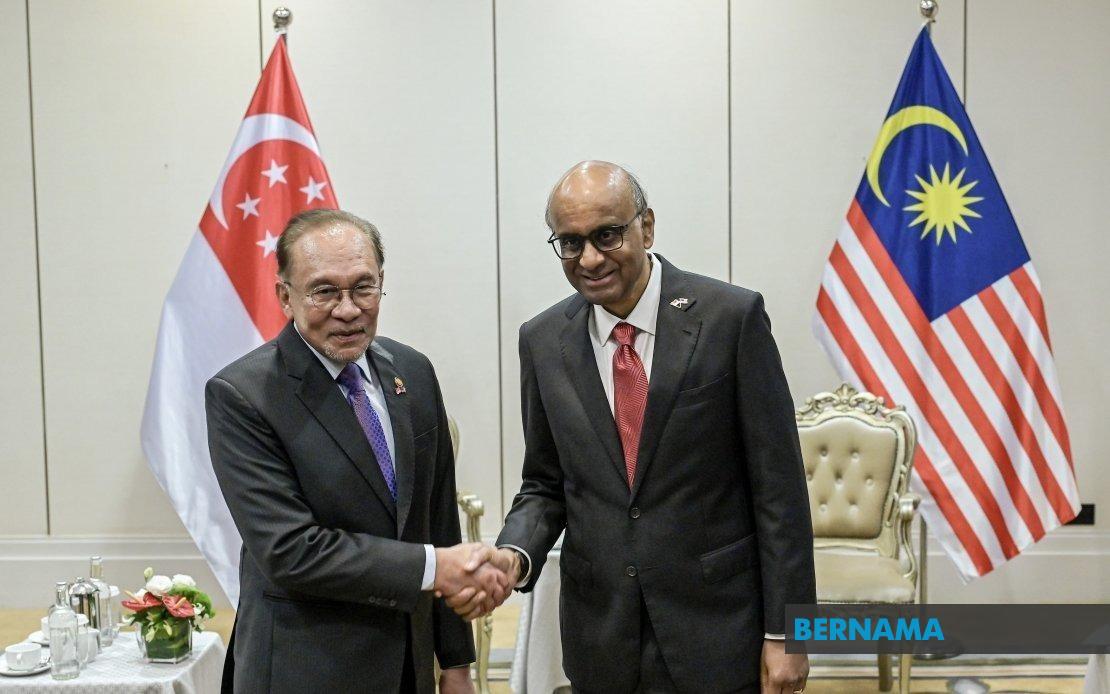
The relationship between Singapore and Malaysia has entered a fresh chapter of strategic alignment, with both nations committing to expand cooperation across several critical domains that carry implications far beyond their bilateral ties. During President Tharman Shanmugaratnam's first state visit to Malaysia, which concluded this week, Singapore's Foreign Ministry signalled a deliberate intensification of engagement on matters ranging from essential supply chains to broader regional security concerns. The timing of this visit, coming amid shifting geopolitical currents across Asia and beyond, underscores the mutual recognition that sustained coordination between these two closest neighbours remains essential for regional stability and prosperity.
Food security and energy cooperation emerged as the focal points of discussions between President Tharman and Prime Minister Datuk Seri Anwar Ibrahim during their formal meeting at Istana Negara on Monday. For Singapore, a densely populated island-state with minimal agricultural capacity, securing reliable food supplies from neighbouring Malaysia represents a matter of national resilience. Malaysia, conversely, stands to benefit from partnerships that enhance its position in regional food systems and energy markets. The emphasis on these sectors reflects pragmatic recognition that both economies face pressures—from climate volatility, supply chain disruptions, and shifting global trade patterns—that make bilateral coordination increasingly valuable. Such arrangements carry broader significance for Southeast Asia, where food and energy security challenges could trigger migration pressures, resource competition, or economic instability if left unaddressed through regional cooperation mechanisms.
The two leaders also directed attention toward developments unfolding in West Asia, where recent conflicts and geopolitical tensions have rippled across global markets and shipping lanes. Singapore's Foreign Ministry stressed that both President Tharman and Prime Minister Anwar reaffirmed their commitment to upholding international law, with particular emphasis on the United Nations Convention on the Law of the Sea and the preservation of freedom of navigation. This shared stance carries operational significance, given the region's reliance on sea routes for trade—approximately one-third of global maritime commerce transits Southeast Asian waters. Malaysia's position as a coastal nation with significant maritime interests aligns naturally with Singapore's concerns about maintaining open, secure waterways. By publicly reiterating these principles, both nations signal to regional and global actors their expectation that disputes will be managed through legal frameworks rather than coercive measures.
Beyond these strategic anchors, the visit unveiled an expanding agenda encompassing technical and vocational education, climate adaptation, flood mitigation, and entrepreneurial ecosystems. The inclusion of technical education reflects a shared interest in building human capital pipelines that can sustain economic competitiveness as automation and digital transformation reshape labour markets across Asia. Climate and flood management assumes particular urgency in Malaysia, where the northeastern monsoon brings annual flooding to multiple states, while Singapore faces existential challenges posed by rising sea levels. Collaborative frameworks in these areas can pool expertise, share early warning systems, and coordinate disaster response mechanisms that benefit both populations.
President Tharman's ceremonial reception at Istana Negara, with formal welcomes from His Majesty Sultan Ibrahim, King of Malaysia, and Her Majesty Raja Zarith Sofiah, Queen of Malaysia, reflected the protocol accorded to this inaugural state visit. Such ceremonial dimensions matter in diplomacy, signalling the political weight attached to bilateral relations at the highest levels. The subsequent engagement with Selangor's political leadership—including audiences with Sultan Sharafuddin Idris Shah and Menteri Besar Datuk Seri Amirudin Shari—demonstrates an intentional effort to embed cooperation at sub-national levels as well. For Malaysian states like Selangor, proximity to Singapore offers opportunities for integrated economic zones, shared infrastructure development, and coordinated urban planning that could enhance competitiveness across the region.
The articulation of commitments around start-up growth reveals forward-looking thinking about innovation ecosystems and technological entrepreneurship. Both Singapore and Malaysia harbour vibrant venture capital scenes and technology communities, yet these have historically operated in parallel rather than synergistically. Formal mechanisms to facilitate cross-border venture partnerships, regulatory harmonisation, and talent mobility could unlock value creation that benefits both economies while positioning the region as a credible counterweight to technology innovation clusters elsewhere in Asia. Singapore's mature financial infrastructure and Malaysia's growing engineering and software talent pool represent complementary assets that remain underutilised in many respects.
This visit occurs within a broader context of Southeast Asian nations seeking to calibrate relationships amid great power competition and shifting geopolitical alignments. By emphasising multilateralism, rules-based frameworks, and practical cooperation, Singapore and Malaysia are modelling an approach that prioritises regional stability and mutual benefit over zero-sum positioning. For other ASEAN members watching these developments, the Singapore-Malaysia trajectory offers lessons in how proximate nations can deepen ties without compromising autonomy or inviting external pressure. The success of these bilateral arrangements may also create templates for expanded regional cooperation on shared challenges like pandemic preparedness, cybersecurity, and supply chain resilience.
President Tharman's visit carries symbolic significance beyond official rhetoric. His presidency itself represents Singapore's diverse, multicultural identity, which resonates with Malaysia's own pluralistic composition. This representation sends subtle but meaningful signals about inclusive governance and shared values that can underpin substantive cooperation. The explicit welcome extended to intensified exchanges with Selangor—Malaysia's most developed and economically dynamic state—suggests both nations recognise that subnational actors will play increasingly important roles in driving innovation, investment, and cross-border integration.
Looking ahead, translating these pledges into concrete operational arrangements will determine their impact. Food security cooperation requires mechanisms addressing everything from supply contracts to quarantine standards and logistics coordination. Energy partnerships may involve liquefied natural gas arrangements, power grid interconnections, or joint exploration ventures. Climate adaptation projects demand sustained funding, technical capacity-building, and institutional frameworks capable of surviving political transitions. The depth of follow-up activity in coming months will reveal whether this visit represents a genuine reorientation of bilateral relations or largely ceremonial affirmation of existing arrangements.

