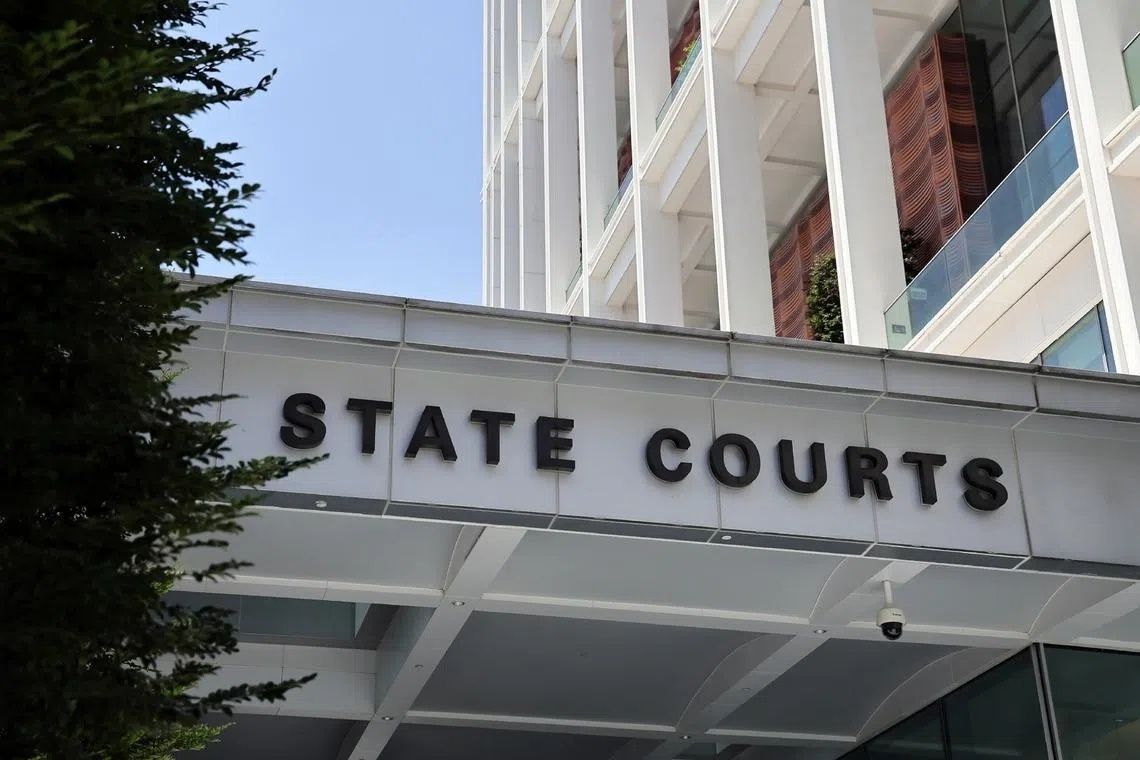
Singapore's Traffic Police intensified enforcement against drink driving this week, bringing 41 motorists before district courts on charges spanning alcohol-related traffic violations. Among those prosecuted were three drivers whose cases illustrated the acute dangers of impaired driving: all three allegedly dozed off while operating their vehicles under the influence of alcohol, creating hazardous situations for themselves and other road users.
The three men whose drowsy driving incidents made them stand out from the broader enforcement action were Tho Yu Wei Ronald, aged 34, Zhong Pengzhi, aged 38, and Dharuman Killivalavan, aged 29. In addition to facing drink-driving charges, each was charged with abandoning or leaving a vehicle in a position that caused undue inconvenience to others—a secondary offence arising from their incapacity to continue driving safely. All three appeared in district court on Thursday, June 25, facing the combined weight of these allegations.
Tho's case involved an incident on April 30, when he abandoned his vehicle at the entrance to a multi-storey carpark at Block 176 Hougang Street 13 at approximately 11:05 pm. Breath tests revealed his alcohol level at not less than 51 micrograms per 100 millilitres—significantly exceeding Singapore's legal limit of 35 micrograms per 100 millilitres. The excess of 16 micrograms represented a 45 per cent overage above the permissible threshold, indicating substantial impairment at the time he left his vehicle unattended.
Zhong's traffic violation occurred early on May 9, when at around 1:40 am he parked his car in the second lane of a two-lane road running along Clementi Avenue 5. His breath alcohol concentration measured at least 48 micrograms per 100 millilitres, placing him 37 per cent above the legal limit. The placement of his vehicle in an active traffic lane created an obstruction that endangered other drivers navigating the roadway in darkness.
Dharuman's case involved the most serious alcohol concentration among the three. Driving a lorry along Loyang Avenue at approximately 7:45 pm on June 15, he abandoned the vehicle along the extreme right lane. Breath analysis showed his blood alcohol level at not less than 87 micrograms per 100 millilitres—nearly two and a half times the legal limit. During his court appearance on June 25, Dharuman pleaded guilty to the charges. The court imposed a fine of $7,100 and imposed a mandatory driving disqualification of 36 months, reflecting the severity of his impairment while operating a heavy commercial vehicle.
Beyond these three cases, the broader enforcement sweep revealed a concerning pattern of repeat offending. Two of the 41 drivers charged that day had prior convictions for identical offences, signalling a failure of existing penalties to deter recidivism. Cheng Woon Siong, 44, represented one such repeat offender; stopped by police for routine checks, he recorded a breath alcohol level of at least 52 micrograms per 100 millilitres. Because Cheng had been convicted of drink driving in December 2019, sentencing escalated significantly: the court handed down one month's imprisonment alongside a $5,500 fine and a 60-month driving ban to commence after release. This harsher penalty structure aims to send a message that repeat violations will attract custodial sentences, not merely monetary fines.
Koh Choon Lye, 48, constituted the second repeat offender among the 41 charged. Officers stopped him along Tyrwhitt Road on April 16 for routine breath testing, which revealed an alcohol concentration of at least 51 micrograms per 100 millilitres. Koh's history included a drink-driving conviction from 2018, placing him outside the window of leniency courts typically extend to first-time offenders. The cumulative burden of prior conviction and current violation positioned him similarly to Cheng for enhanced penalties.
Police statistics underscore the scale of Singapore's drink-driving problem. Throughout 2025, authorities arrested 1,716 individuals for driving under the influence of alcohol—a figure that translates to approximately 4.7 arrests daily across the island state. More troublingly, 12 fatal traffic accidents directly attributable to alcohol impairment occurred that year, each representing a preventable tragedy resulting from irresponsible decision-making by intoxicated motorists.
The Traffic Police characterised drink driving as extraordinarily dangerous and fundamentally irresponsible, emphasising that no circumstance justifies operating a motor vehicle while intoxicated. Public messaging campaigns consistently encourage alternative transportation options for those planning alcohol consumption. Taxis and private-hire vehicle services like Grab provide readily accessible alternatives that eliminate both the risk of self-harm and potential harm to innocent parties. The enforcement action, concentrated in a single day with 41 prosecutions, represents an escalation in visible deterrence measures designed to reshape driver behaviour through certainty of detection and legal consequences.
For Malaysia and the broader Southeast Asian region, Singapore's approach offers instructive lessons in traffic law enforcement. While jurisdictions across the region grapple with rising fatality rates from drunk driving, Singapore's combination of regular enforcement operations, graduated penalty structures that escalate for repeat offenders, and sustained public education campaigns demonstrates that reducing impaired driving requires multi-faceted strategy. The concentration of 41 prosecutions in a single day, though reflecting one-day enforcement intensity, also illustrates the scale of the underlying problem that persistent public health messaging and deterrent penalties must address.

