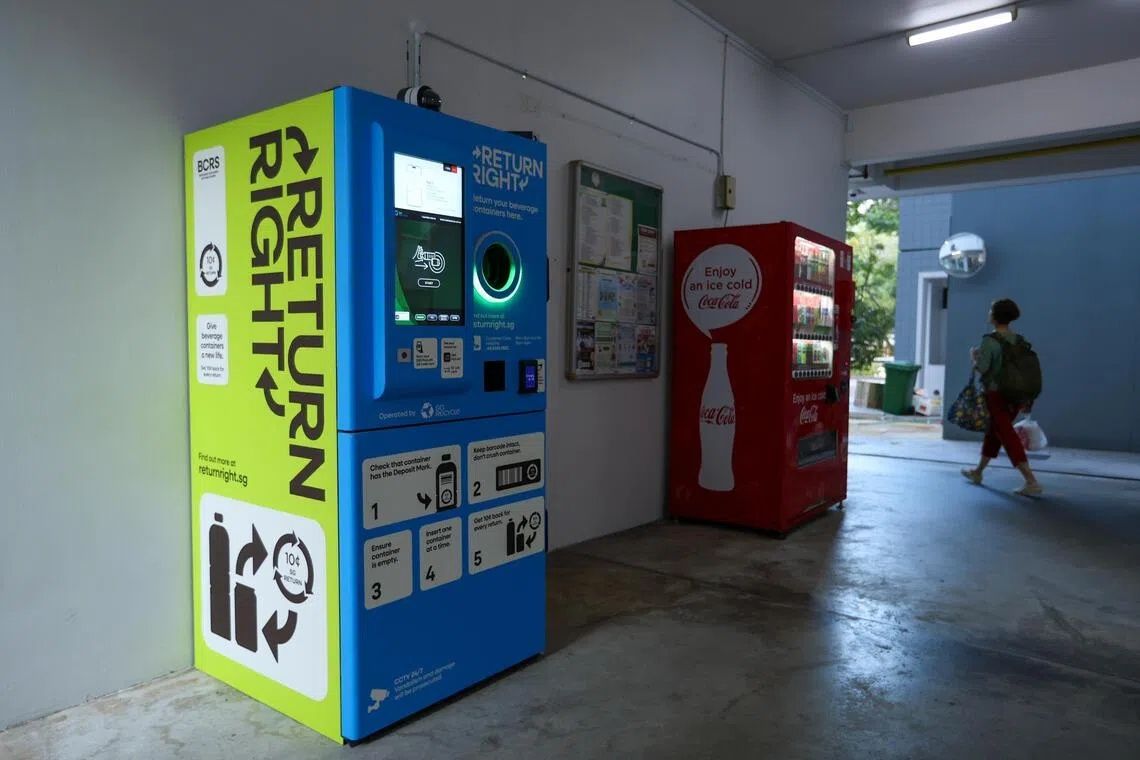
Singapore's environmental authority has pushed back firmly against suggestions of financial impropriety in the nation's nascent beverage container recycling initiative, attributing the controversy to a misunderstanding of how deposit refunds are processed through the reverse vending machine network. The National Environment Agency issued a public statement on August 15 to counter what it characterised as unfounded allegations circulating on social media platforms regarding the handling of consumer deposits and the financial mechanics of the four-month-old scheme.
The confusion appears to have originated from parliamentary remarks made by Senior Minister of State for Sustainability and the Environment Janil Puthucheary on August 5, when he provided lawmakers with performance metrics from the Beverage Container Return Scheme's inaugural phase. Mr Puthucheary reported that between April and July, the programme had processed more than one million successful refund transactions involving 5.5 million used bottles and cans that consumers had deposited at reverse vending machines across the island. The phrasing of his statement inadvertently triggered speculation among online observers who questioned whether the deposit amounts for the remaining four million containers remained unaccounted for.
The NEA's clarification addresses a fundamental misinterpretation of transactional data. The agency emphasised that the distinction between the number of successful refund transactions—over one million—and the total quantity of containers returned—5.5 million—reflects the reality of how consumers interact with the machines. Rather than each consumer completing only one transaction, data shows that most users returned multiple containers during single visits to the reverse vending machines. Statistical analysis indicates that consumers deposited an average of 5.5 containers per transaction, a figure that when multiplied by the number of transactions yields the total volume of returned vessels.
The financial implications of this clarification are substantial. With each beverage container carrying a standardised 10-cent deposit, the aggregate refund amount distributed during the four-month pilot phase reached approximately S$550,000, equivalent to roughly US$429,822. This figure aligns precisely with the mathematical relationship between the number of transactions, the average containers per transaction, and the per-unit deposit amount. The NEA's statement represents an effort to restore confidence in the scheme's financial transparency and administrative integrity following what officials view as a misconstrued interpretation of otherwise straightforward operational data.
The Beverage Container Return Scheme itself represents Singapore's latest effort to enhance recycling participation rates through economic incentivisation. Launched on April 1, the programme requires consumers to pay an additional 10 cents when purchasing canned or bottled beverages, with the deposit refundable upon returning the empty container to any of the reverse vending machines distributed throughout the country. The mechanism aims to address packaging waste while encouraging circular economy practices among the general population.
However, the scheme's rollout has not proceeded without operational friction. During its initial months, numerous users experienced technical difficulties with the automated machines, reporting that refunds failed to process immediately in certain instances. Some consumers resorted to contacting the scheme operator directly via email to recover their deposits, while others encountered situations where the machines rejected otherwise valid returns. These technical issues generated frustration among early adopters and potentially contributed to the broader skepticism reflected in subsequent online discussions about the programme's financial management.
Mr Puthucheary's August 5 parliamentary address acknowledged these growing pains, characterising the incidence of technical problems as isolated rather than systematic. He indicated that despite the sporadic malfunctions, the majority of transactions and container returns at the reverse vending machines proceeded successfully. Furthermore, he noted that the scheme operator BCRS had responded promptly to identified problems, collaborating with machine operators to implement remedial measures and minimise disruptions to consumer experience.
The governance structure surrounding the Beverage Container Return Scheme includes built-in accountability mechanisms designed to ensure financial propriety. BCRS is subject to mandatory annual reporting requirements, with the agency required to submit comprehensive financial statements to the National Environment Agency for review and oversight. This regulatory framework theoretically provides ongoing scrutiny of the programme's financial flows and operational expenditures, creating an institutional check against misappropriation or corrupt practices.
For Malaysian observers monitoring Singapore's environmental policy evolution, the BCRS represents a cautionary case study in the importance of clear communication regarding scheme mechanics, particularly when public funds or consumer deposits are involved. The ease with which parliamentary statistics were misinterpreted suggests that environmental agencies must invest in proactive public education about how incentive-based recycling programmes function. Singapore's experience underscores the vulnerability of new initiatives to scepticism when technical implementation challenges occur simultaneously with public confusion about financial figures.
The incident also highlights broader questions about public trust in government-administered environmental programmes across Southeast Asia. As more nations implement deposit-refund systems and extended producer responsibility schemes to address plastic pollution and packaging waste, the risk of similar misinterpretations grows. Clear documentation, transparent communication channels, and accessible explanations of programme mechanics become essential tools for maintaining public confidence and ensuring sustained participation rates among consumers.

