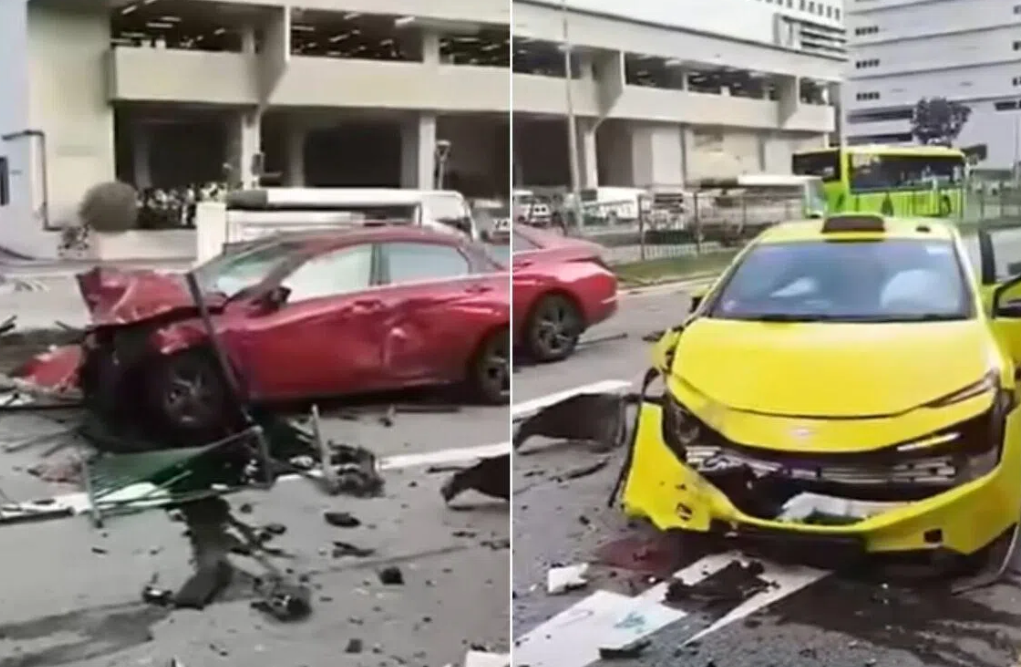
A 36-year-old Singapore driver faces multiple serious charges stemming from a morning collision in Kallang that resulted in injuries to a taxi driver and passenger. Mohamed Firdouz Mohamed Akram was formally charged on June 19 with offences including dangerous driving causing bodily harm, driving without proper licensing, possession of controlled substances, and unlawful possession of weapons. The incident has drawn attention to road safety concerns and the heightened risks posed by impaired driving in the island's urban areas.
The collision occurred on June 17 at approximately 8 a.m. along Kallang Bahru, when Firdouz allegedly lost control of his vehicle and struck a taxi. Court documents indicate that he had consumed methamphetamine, commonly known as Ice, prior to operating the car. The impact of the crash was significant enough to cause injury to both occupants of the cab—a 60-year-old driver who sustained chest pains and a 43-year-old passenger who suffered tailbone injuries. These injuries, while not described as life-threatening, underscore the unpredictable consequences of impaired vehicle operation in built-up urban zones where pedestrians and other road users are abundant.
What compounded the severity of the situation was Firdouz's conduct immediately following the accident. Rather than remaining at the scene to assist the injured parties or cooperate with authorities, he abandoned his vehicle and fled before police arrived. This decision to leave the scene—a matter of significant concern to law enforcement—only heightened the seriousness of his legal predicament. Police issued a statement on June 18 indicating that officers had swiftly identified the suspect through investigative work, apprehending him within five hours of the initial report.
The discovery of items during police investigation revealed a troubling picture of the circumstances surrounding the incident. Officers located suspected drugs, drug paraphernalia, and vaporising equipment inside the abandoned vehicle, all of which were seized as evidence. Additionally, court documents disclosed that Firdouz was found in possession of two knives in a room at the Village Hotel Katong on Marine Parade Road at approximately 1 p.m. on the same day as the crash. A knuckleduster was also recovered from his vehicle, suggesting a pattern of carrying weapons alongside his involvement with controlled substances.
The accumulation of charges reflects Singapore's stringent approach to traffic safety violations and drug-related offences. Driving under the influence of controlled substances carries penalties of up to one year imprisonment, fines reaching S$10,000, or both. The specific charge of causing injuries whilst engaged in dangerous driving operation carries additional sanctions of up to one year in jail combined with fines ranging between S$2,000 and S$10,000. These penalties are designed to deter reckless behaviour that endangers the lives of innocent road users and to reinforce the severity with which the legal system treats such transgressions.
For Malaysian readers, this incident illustrates enforcement patterns that differ in certain respects from local practices. Singapore's rapid response time and comprehensive investigation approach—identifying a suspect and effecting an arrest within hours—reflects the city-state's intensive law enforcement capabilities and dense surveillance infrastructure. The decision to charge multiple offences rather than consolidating charges also demonstrates a prosecutorial approach aimed at maximising accountability across the full spectrum of criminal conduct.
The case also highlights the intersection of drug abuse and road safety that affects multiple Southeast Asian jurisdictions. Methamphetamine remains a significant concern across the region, and its impact on driving ability and impulse control has been documented in various studies. The presence of drug-related paraphernalia and weapons alongside the controlled substance suggests a lifestyle pattern rather than isolated experimentation, potentially indicating deeper issues within Firdouz's circumstances that authorities may examine further during trial proceedings.
The incident raises important questions about substance abuse treatment and rehabilitation within the criminal justice system. Singapore has implemented various drug rehabilitation programmes and harm-reduction initiatives, though the relationship between substance abuse and criminal behaviour—particularly traffic violations—remains an area of ongoing policy concern. For individuals like Firdouz, the court process will determine not only punishment but potentially pathway recommendations toward intervention and recovery programmes.
Public safety implications are significant, particularly in densely populated urban environments where traffic incidents can quickly escalate in severity. The fact that this collision occurred during morning hours when traffic volumes are typically elevated underscores how drug-impaired driving poses threats not only to the impaired driver but to numerous innocent third parties. The injuries sustained by the taxi occupants were relatively minor in this instance, but the potential for far more catastrophic outcomes remains evident in such scenarios.
Looking forward, Firdouz's case will be mentioned again in court on July 17, at which point further developments in the proceedings are expected. The upcoming hearing will likely address bail conditions, consolidation of charges, and whether additional investigation findings warrant supplementary charges. Given the seriousness of the offences and the evidence gathered, including the flight from scene and possession of weapons, the prosecution appears positioned to pursue vigorous legal action. The eventual outcome will set precedent regarding how Singapore's courts treat the combination of impaired driving, dangerous operation, and weapon possession charges.
For regional observers, this case underscores the importance of comprehensive traffic safety policies that address not only vehicle regulation and road infrastructure but also substance abuse prevention and early intervention. The rapid escalation from driving impairment to criminal weapon possession suggests that multi-agency coordination and public health approaches may offer valuable complementary strategies to purely punitive measures in addressing the root causes of such incidents.

