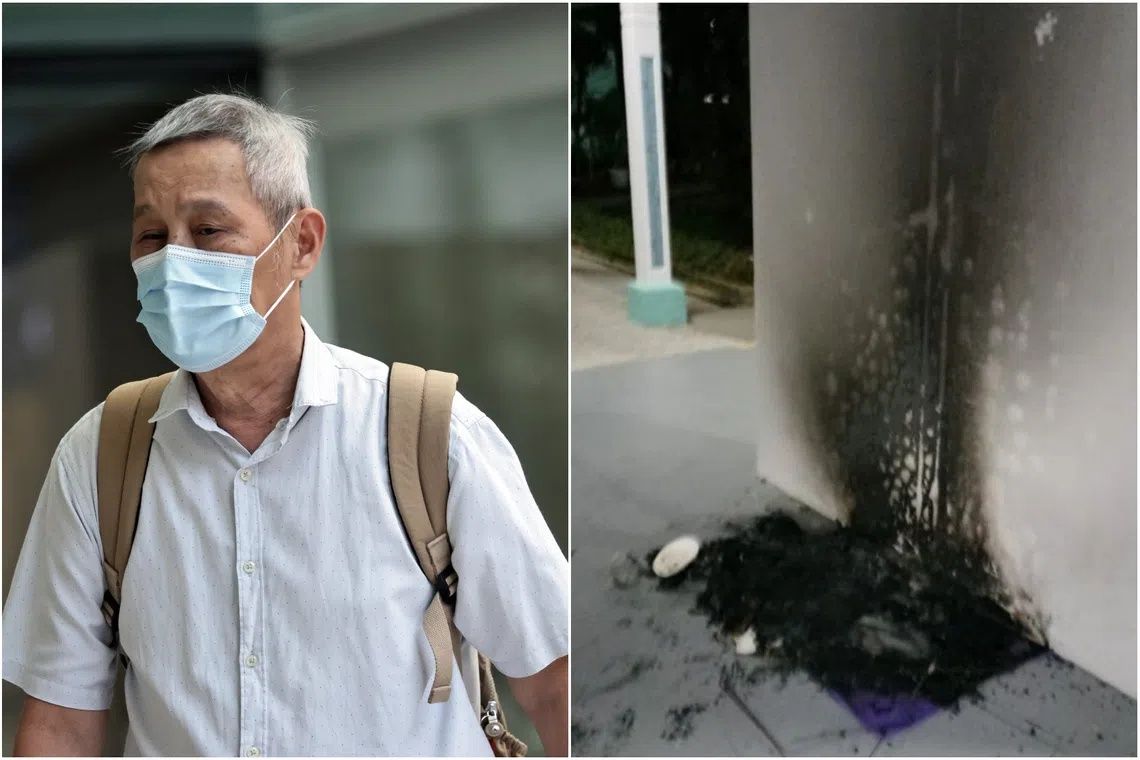
A Singapore retiree has been handed a three-month jail sentence after deliberately torching cardboard cat houses at a community void deck in Bukit Batok, marking a rare case in which animal welfare infrastructure became the flashpoint for property damage and neighbourhood tension. The incident underscores the friction that can emerge when community initiatives encounter resident opposition, particularly when concerns about public health and animal care collide in shared residential spaces.
Koh Teng Boo, 68, pleaded guilty to committing mischief by fire on Tuesday (Aug 4) following his August 2025 arrest. The court heard that Koh, who lives on Bukit Batok East Avenue 4, had objected strongly to the placement of cardboard structures intended to shelter stray cats, which were positioned near a pavilion and void deck close to his residence. The cat houses had been stocked with food and water as part of what prosecutors described as a community welfare initiative for animals in the area.
Koh's grievance, according to Deputy Public Prosecutor Stephen Yeo, centred on the alleged collateral consequences of housing strays. He claimed the structures attracted birds and created pest-related hazards in the common area. Rather than simply tolerating the situation, Koh attempted to escalate his concerns through official channels, raising the matter with his Member of Parliament in the hope that the authorities would intervene and remove or restrict the cat houses. His approach initially appeared to follow proper procedural lines, suggesting he sought formal redress rather than immediate confrontation.
When his complaint appeared to yield no visible action, however, Koh's patience eroded. In October 2025, he took matters into his own hands by throwing three cat houses into an incense burner bin and igniting them, causing what prosecutors later quantified as more than S$900 in damage to the ground and surrounding walls. The apparent lack of response to his parliamentary petition seemed to fuel his frustration, convincing him that voluntary intervention was the only avenue left.
The situation escalated further when, just two days after the first incident, additional cat houses reappeared in the vicinity of his block. This fresh evidence that his complaints were being disregarded appears to have hardened Koh's resolve. On November 17, Koh made a second formal approach to his MP, reiterating his hygiene concerns and emphasising that his objection was not rooted in animosity toward cats themselves but rather anxiety about sanitation and the accumulation of litter that residents were depositing into the structures.
These pleas likewise produced no concrete change. On the night of November 19, after consuming alcohol, Koh committed a further act of arson. At approximately 1.30am, he set fire to another cat house with a lighter and departed the scene, leaving the blaze unattended. The fire's eventual extinction and the precise timeline remain unclear from investigative records. Undeterred, and apparently emboldened by the absence of immediate consequences, Koh repeated the offence the following day, November 20, igniting yet another cat house before walking away.
This second overnight incident attracted the attention of passers-by, who spotted the burning structure and acted swiftly to extinguish it, preventing further damage. Their intervention proved crucial; shortly after, Koh was arrested. The accumulation of deliberate fire-setting incidents, combined with evidence of clear intent and persistent disregard for the cat houses' presence, provided prosecutors with a straightforward case for the mischief-by-fire charge.
The financial toll of Koh's actions fell upon the Jurong-Clementi-Bukit Batok Town Council, which spent S$913 repairing damage to flooring and walls caused by the fires. Notably, Koh has since made complete restitution to the council, suggesting either a shift in his stance or a pragmatic acceptance of financial accountability. However, this compliance has not altered his criminal culpability or the court's decision to impose imprisonment.
The sentencing carries broader implications for disputes within Singapore's densely populated public housing estates, where competing interests over shared spaces frequently arise. Community cat-feeding and trap-neuter-return programmes have become increasingly common across Southeast Asia, endorsed by animal welfare organisations as humane alternatives to culling. Yet such initiatives can generate friction among residents who harbour concerns about hygiene, noise, territorial disputes between animals, or perceived health risks. This case illustrates how such tensions, if left unresolved through dialogue or institutional mediation, can escalate into criminal conduct.
Under Singapore law, those convicted of mischief by fire with intent to cause property damage face sentences of up to seven years' imprisonment, with potential fines. Koh's three-month term represents a relatively lenient application of these penalties, likely reflecting his age, guilty plea, full restitution, and the lack of injury to persons. Nonetheless, the custodial sentence signals judicial disapproval of vigilante action, even when citizens feel their formal complaints have been disregarded.
The case also raises questions about how town councils and community organisations communicate with residents about animal welfare initiatives in high-density housing blocks. More robust advance notice, structured consultation with neighbouring residents, and transparent discussion of hygiene protocols might have prevented the deterioration that occurred. Alternatively, designated feeding zones, heightened maintenance standards, or clearer rules about waste management could mitigate legitimate public health anxieties while permitting compassionate animal care to continue.
For Malaysian observers, particularly those in urban condominium and flat-dwelling communities, the Singapore precedent offers instructive lessons about the risks of allowing neighbourhood disputes to fester unresolved. Malaysia, with its own growing urban cat populations and expanding animal welfare consciousness, may encounter similar conflicts as trap-neuter-return and community feeding initiatives expand in residential areas. The Bukit Batok episode underscores the importance of inclusive, proactive governance that acknowledges diverse resident perspectives and seeks middle-ground solutions before frustration metastasises into criminal conduct. Building consensus on shared-space management requires institutional agility and genuine responsiveness to resident concerns, a principle applicable well beyond animal welfare disputes.

