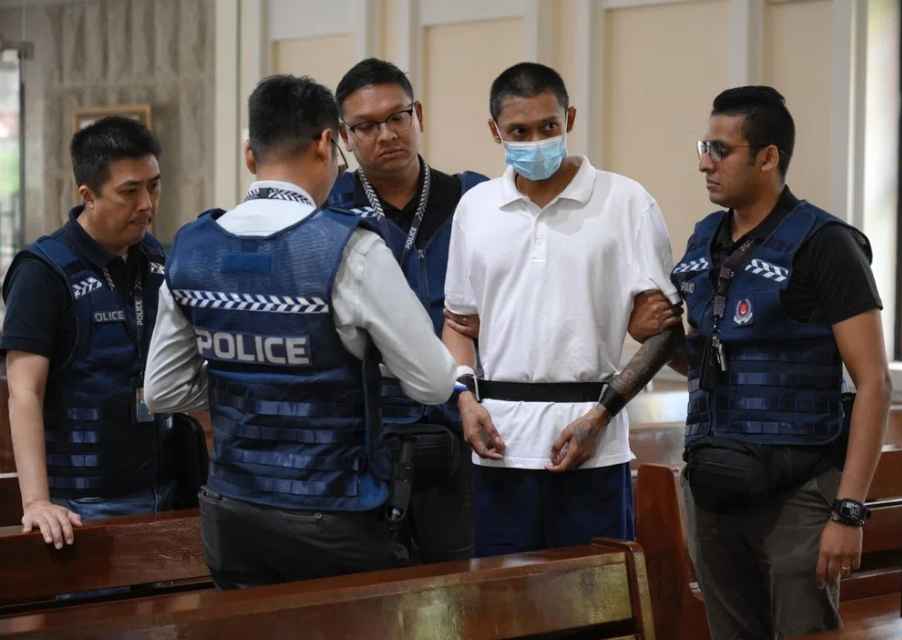
A 38-year-old Singapore resident has received a jail sentence exceeding four years following his guilty plea to stabbing a Catholic priest during evening mass at St Joseph's Church. Basnayake Keith Spencer's assault on Reverend Christopher Lee, then 57, occurred on November 9, 2024, during a service attended by approximately 900 parishioners. On August 21, District Judge Shaiffudin Saruwan imposed a sentence of four years and three months' imprisonment coupled with nine strokes of the cane for voluntarily causing grievous hurt with a dangerous weapon and weapon possession charges.
The attack unfolded during a particularly vulnerable moment in the religious ceremony. Basnayake had arrived at the church alone around 5.30pm and initially sat among the congregation. As the evening mass progressed and communion commenced, two priests, including Father Lee, positioned themselves to administer the sacrament to worshippers. The defendant, who had consumed five pills throughout the service—two for focus and three to calm himself upon realising it was a children's mass—initially queued behind a different priest before inexplicably switching to Father Lee's line. When his turn arrived, Basnayake produced a 23-centimetre foldable knife with a 10-centimetre blade and thrust it directly into the priest's mouth.
The physical consequences of the stabbing were severe and lasting. Father Lee sustained an eight-centimetre laceration on his tongue, a three-centimetre cut on his upper left lip, and a four-centimetre wound at the corner of his mouth. The priest bled profusely following the attack but managed to grab Basnayake's rear jeans pocket in an attempt to prevent further violence. His quick thinking proved crucial in limiting potential harm to the assembled congregation. Members of the congregation, including an off-duty police officer, rapidly restrained the attacker and summoned law enforcement. Basnayake was apprehended at the scene and subsequently hospitalised the victim, who remained hospitalised until November 15, receiving 40 days of medical leave and requiring extended speech therapy in the months following the incident.
Investigations revealed concerning details about Basnayake's possessions and history. Police discovered he carried multiple weapons including a 14.5-centimetre penknife, a flip knife, and a fishing gaff—a pole with a sharp hook. This arsenal suggested premeditation or at least a pattern of carrying weapons. More troubling was the discovery that Basnayake had a previous conviction dating to 2019 for voluntarily causing hurt with a dangerous weapon, when he had stabbed his then-girlfriend in the buttocks with a kitchen knife while under the influence of methamphetamine. The prosecution argued this history demonstrated an established pattern of violent behaviour and substance-related offences, presenting him as exceptionally dangerous with high reoffending risk.
During sentencing proceedings, prosecutors contended that although Basnayake was intoxicated and operating in a drug-induced psychotic state at the time of the offence, he retained sufficient cognitive awareness to understand the gravity of his actions. The prosecution sought a sentence between four years and three months to four years and eleven months, alongside nine strokes of the cane. The defence counsel, Ashwin Ganapathy from the Public Defender's Office, advocated for leniency, requesting a sentence under four years with caning. He emphasised his client's remorse, describing Basnayake as regretful and ashamed, and appealing for proportionality in sentencing.
Judge Shaiffudin Saruwan's decision reflected the seriousness of the transgression. The magistrate emphasised that the attack was entirely unprovoked, inflicted severe physical injury on a defenceless victim, and occurred at a moment of profound religious significance—during the administration of communion, a sacred Catholic ritual. The judge noted the attack created a genuine risk of mass panic within the crowded church environment, potentially endangering other worshippers. By striking at this particular moment during the ceremony, Basnayake had committed his violence in a manner calculated to maximise disruption and fear. The sentence handed down—four years and three months imprisonment plus nine strokes—fell at the lower end of the prosecution's requested range, though it substantially exceeded the defence's plea.
This case carries troubling implications for personal security within religious spaces across Southeast Asia. The attack on Father Lee occurred despite the presence of hundreds of worshippers and an off-duty law enforcement officer, illustrating the vulnerability of even well-attended services to unexpected violence. Religious institutions throughout the region have traditionally operated as open, welcoming spaces with minimal security measures. The incident raises difficult questions about balancing religious accessibility and community safety, particularly given the attacker's prior history of weapon-related violence. For Malaysia's diverse religious communities, the Singapore case provides a sobering reminder of security considerations that had previously received limited attention.
The timeline of the case also warrants examination. Basnayake spent more than one year and nine months in remand before sentencing, having been denied bail in December 2024 when prosecutors successfully argued he posed a severe danger to the public. The prosecution's bail opposition proved consequential, as the extended pretrial detention effectively prolonged consequences before formal sentencing. Meanwhile, Father Lee's recovery extended well beyond his November 15 hospital discharge, with speech therapy requirements underscoring the ongoing physical and functional impact of the injuries sustained during the assault.
Under Singapore law, the offence of voluntarily causing grievous hurt with a dangerous weapon carries potential penalties ranging from life imprisonment to fifteen years' incarceration, along with fines and caning provisions. The sentence imposed represented a mid-range response to Basnayake's particular circumstances, accounting for his substance intoxication, prior violent history, and the extraordinarily vulnerable context in which the attack occurred. The nine strokes of the cane—a mandatory punishment component—aligns with Singapore's sentencing framework for serious violent offences involving weapons. The judgment signals that violent attacks within religious institutions, particularly during sacred ceremonies, will attract substantial custodial sentences and corporal punishment.
For Southeast Asian policymakers and religious leaders, the St Joseph's Church incident underscores the intersection of mental health, substance abuse, and violence prevention. Basnayake's documented methamphetamine use and the prosecutor's characterisation of him as experiencing drug-induced psychosis point to underlying addiction and psychological issues that may warrant treatment-oriented interventions alongside punishment. However, his prior 2019 conviction for similar weapon-based violence suggests that treatment alone has proven insufficient in preventing escalation. The case illustrates the challenging reality that some individuals pose persistent danger despite prior criminal justice interventions, necessitating extended incapacitation through imprisonment as a public safety measure.
Looking forward, the sentencing outcome will likely influence how regional courts handle violence within religious settings. The explicit judicial acknowledgment that the attack created potential for mass panic, coupled with the unprovoked nature of the assault and severity of injuries sustained, establishes precedent for serious penalties. Father Lee's ongoing recovery requirements and the psychological trauma experienced by worshippers present as additional considerations in similar future cases. For Malaysia, with its own religious diversity and security considerations, monitoring how Singapore and other regional jurisdictions address weapon violence in religious spaces provides valuable insight into emerging public safety challenges and appropriate legal responses.

