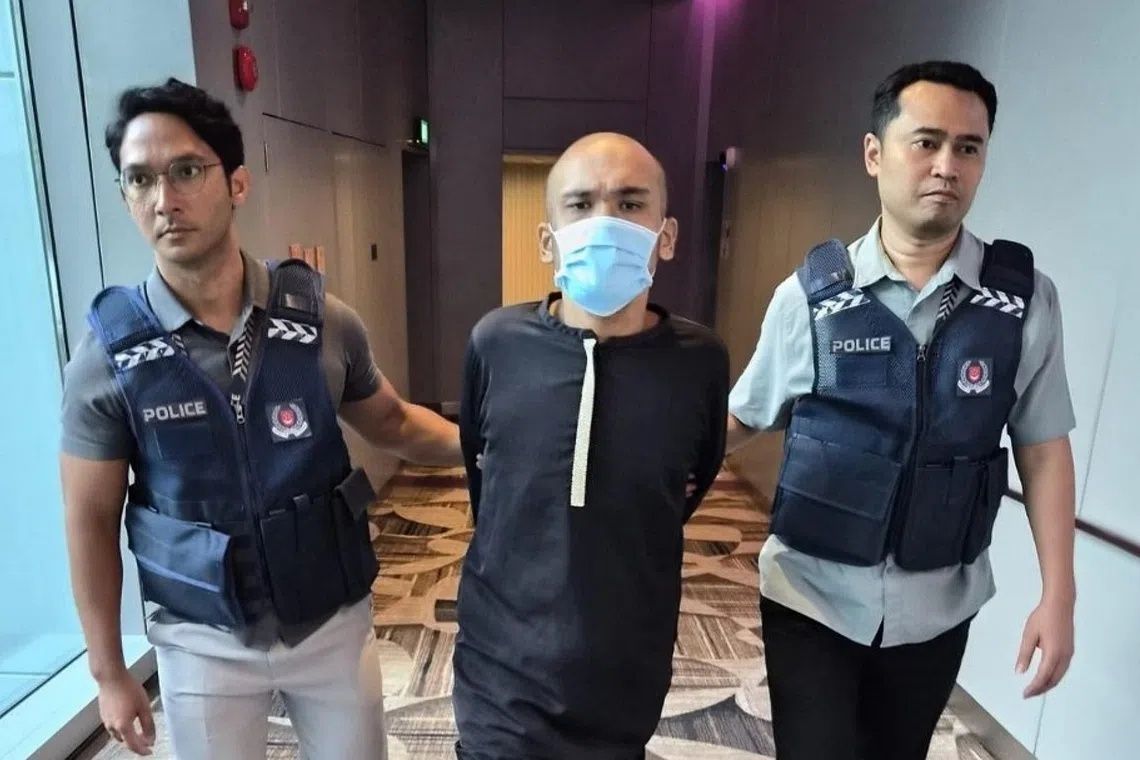
A 27-year-old man will appear in Singapore court on Friday, August 7, to face charges related to a series of insulting and profane posts he made about the Muslim community on social media platforms earlier this year. The case highlights the island nation's stringent approach to protecting religious sensitivities and maintaining communal harmony in one of Asia's most religiously diverse societies.
Singapore's police force received a formal report about the man's offending content on March 1, 2026, but by that time he had already departed Singapore, complicating efforts to apprehend him. The situation escalated when authorities discovered his whereabouts in Malaysia, prompting them to seek assistance from the Royal Malaysia Police. Acting on this request, Malaysian authorities deported the man on August 6, whereupon Singapore police immediately took him into custody upon his arrival. The swift coordination between the two neighbouring nations demonstrates the region's commitment to enforcing laws against religious incitement.
The charges stem not only from the original insulting remarks but also from a separate, more graphic incident that has drawn considerable attention. Police investigations have revealed that the same individual also appeared in a video circulating on social media that shows him stepping on a Quran, Islam's holiest text. This second incident, believed to have been filmed aboard a public bus in Singapore, represents an even more deliberate and provocative act of religious desecration that compounds the severity of his alleged conduct.
Under Singapore's Penal Code, insulting the religion of another person is a criminal offence that carries substantial penalties. If convicted, the 27-year-old faces a maximum sentence of five years imprisonment, a monetary fine, or both. These penalties reflect Singapore's determination to treat religious transgressions as serious matters that strike at the heart of the nation's foundational commitment to peaceful coexistence among its Hindu, Muslim, Christian, Buddhist, and Sikh populations.
The response by Singapore's authorities has extended beyond criminal prosecution to include direct intervention with social media platforms. On March 7, following initial reports of the offensive content, police issued five disabling directions to Meta—which operates Facebook, Instagram, and WhatsApp—ordering the company to remove access to the offending material within Singapore. This demonstrates how modern law enforcement now operates at the intersection of traditional criminal justice and digital platform governance, recognising that social media's amplifying effect on divisive content poses unique challenges to religious and racial harmony.
For Malaysian readers, this case carries particular regional significance. The cooperation between Singapore and Malaysia in apprehending and deporting the suspect illustrates how Southeast Asian nations increasingly coordinate on law enforcement matters affecting neighbouring countries. Malaysia's willingness to facilitate the deportation underscores shared regional values around protecting religious sensibilities, even as both nations navigate the complexities of managing diverse populations and competing speech freedoms.
The case also reflects broader patterns across Asia, where multiple countries have strengthened laws against religious insult in recent years. Singapore's approach, while stricter than some Western democracies, aligns with prevailing sentiment across much of the region, where insulting remarks about religion are viewed as threats to social stability rather than merely offensive expression. The concern is not merely about protecting individuals' feelings, but about preventing the kind of communal tensions that can escalate into violence and undermine economic and social progress.
The timing of the offences—initially reported in early March and now being prosecuted in early August—indicates that investigations proceeded methodically, with authorities attempting to build a comprehensive case that addresses both the original social media posts and the subsequent bus incident. This deliberate approach suggests prosecutors will argue that the accused engaged in a pattern of deliberate provocation rather than isolated incidents of poor judgment.
For the broader Malaysian and Southeast Asian context, this case reinforces the legal and social boundaries that governments have established around religious expression. While this creates certain constraints on absolute freedom of speech, policymakers in the region have concluded that protecting religious sensitivities is essential to maintaining the delicate pluralistic balance that enables these diverse societies to function. The case will likely serve as a cautionary example for others tempted to use social media platforms to make inflammatory religious statements, whether in Singapore, Malaysia, or elsewhere in the region.

