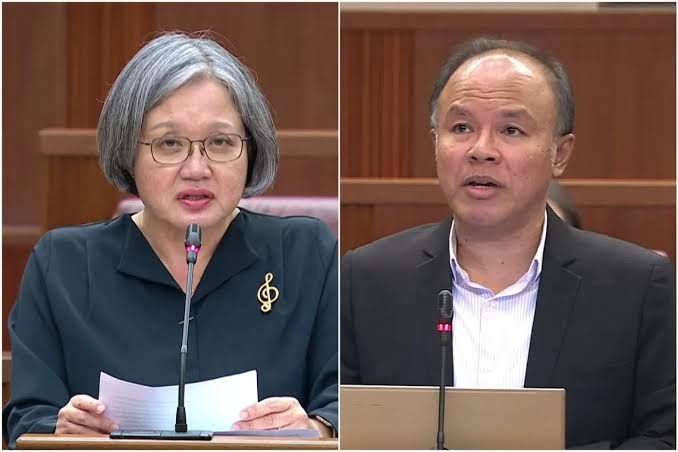
Singapore's Parliament has formally closed its extended investigation into Workers' Party leaders Sylvia Lim and Faisal Manap, concluding that no further disciplinary action can be pursued as the statutory time limit for imposing penalties has expired. Leader of the House Indranee Rajah announced the decision during a ministerial statement on July 7, effectively bringing an end to a protracted saga that has dominated Singapore's political discourse for years and carrying implications for how regional democracies handle parliamentary accountability.
The case originated from false statements made by former Workers' Party MP Raeesah Khan during a 2021 parliamentary speech, which triggered a Committee of Privileges investigation. The committee subsequently determined that three Workers' Party figures—party leader Pritam Singh, Sylvia Lim, and Faisal Manap—had misled investigators regarding what was discussed at a critical August 2021 meeting. The committee found that Pritam Singh had allegedly instructed Khan to "take her lie to the grave," while Lim and Manap denied the matter had been raised, despite both being present at the gathering.
The resolution hinges on technical provisions within the Parliament (Privileges, Immunities and Powers) Act that establish narrow windows for Parliament to act on parliamentary misconduct. Under Section 22 of this legislation, the current 15th Parliament—which commenced following the 2025 general election—can only impose penalties for violations occurring either in the present session or during the second session of the preceding 14th Parliament. Since the original lying incident occurred during the first session of the 14th Parliament, which has now been dissolved, the legal clock has run out, regardless of when the violations were formally documented.
Indranee explained that Parliament's prolonged handling of the matter stemmed from deliberate procedural choices rather than oversight. When the Committee of Privileges first presented its findings in 2021, Parliament chose to delay action on Lim and Manap, granting them "the benefit of the doubt" while awaiting the outcome of Pritam Singh's separate criminal prosecution. Pritam's case proceeded through the courts more slowly than the disciplinary clock allowed—he was convicted in the District Court in February 2025, appealed unsuccessfully, and had his conviction upheld by the High Court in December 2025. By then, the 14th Parliament had been dissolved, and penalties could no longer be pursued.
The distinction in how Parliament treated the three party leaders reflected assessments of their respective culpability. Pritam Singh, whose conduct was deemed most serious, was referred to the public prosecutor for independent criminal investigation, allowing him to mount a full legal defence with counsel. In contrast, Lim and Manap were found to have played subsidiary roles and demonstrated somewhat greater cooperation with the committee, though still within significant limits. This graduated approach—referral to prosecution for the most serious violation, mere delay for the others—ultimately created a temporal mismatch that prevented Parliament from acting once the legal window closed.
Indrannee emphasised that this outcome contradicted what she would ordinarily pursue. Under typical circumstances, she indicated she would initiate formal proceedings under the parliamentary privileges legislation to address what constituted "dishonourable conduct and serious contempt of Parliament." Most parliamentary violations are resolved expeditiously, often within the same session in which they occur. The fact that nearly four years elapsed between the original lying and the High Court's confirmation of those facts in December 2025 highlighted the unusual duration of this particular case and the systemic constraints that prevented timely action.
Parliament retains one residual remedy—the ability to pass a motion formally expressing regret at the conduct of Lim and Manap. However, Indranee noted that such a measure would be largely symbolic at this juncture. Parliament had already signalled its disapproval of lying to parliamentary bodies when it passed a motion in January declaring Pritam Singh unsuitable to serve as Leader of the Opposition. The original motion concerning Pritam's unfitness effectively communicated Parliament's broader condemnation of dishonest dealings, leaving little additional impact from a separate expression of regret regarding his colleagues' conduct.
The timing of the case's formal closure followed internal developments within the Workers' Party itself. Just one week prior, on June 28, party members voted to retain Pritam Singh as party leader during internal elections, despite his conviction and the cloud of controversy surrounding the lying scandal. That internal ballot demonstrated the party's determination to move forward and suggested that Workers' Party cadres did not view the misconduct as disqualifying for continued leadership. The subsequent parliamentary closure now removes the final institutional hurdle, allowing both Pritam and his party to attempt to rebuild their political standing without active parliamentary investigations or pending disciplinary proceedings.
Sylvia Lim, responding briefly after Indranee's statement, confirmed she was not objecting to the closure and reiterated that she had already provided responses to the issues during the January parliamentary debate. Notably, Lim emphasised that references to her in Pritam's appellate judgment were grounded in prosecution evidence, and that she had been denied the opportunity to present her own account in court proceedings, having never been called as a witness. This procedural point underscores a broader tension in the case—that Lim and Manap were implicated through others' testimony and committee findings, yet the evolving legal timeline prevented Parliament from giving them a dedicated disciplinary hearing of their own.
From a Southeast Asian perspective, the Singapore case illuminates how parliamentary privileges legislation, designed to protect legislative bodies from contempt, can become entangled with electoral cycles and procedural timelines in ways that complicate accountability. Many regional parliaments maintain similar provisions to guard against dishonest testimony before legislative committees, yet this case demonstrates how the interaction between statutory time limits and parliamentary dissolution can inadvertently create accountability gaps. For Malaysian observers and other regional democracies, the episode raises questions about whether parliamentary privileges frameworks should include mechanisms to ensure that serious misconduct allegations are resolved on their merits rather than technical clock-running considerations.
The closure also reflects broader questions about institutional legitimacy and public confidence in parliamentary processes. A majority of the political dispute has now been settled—the High Court confirmed that lying occurred, Pritam Singh was convicted and his appeal dismissed, and the Workers' Party has reaffirmed its leadership direction. Yet the formal parliamentary disciplinary mechanisms that might have underscored the gravity of parliamentary lying have been rendered inaccessible by legal technicality. Whether this outcome—simultaneous confirmation of facts but impossibility of institutional penalty—strengthens or undermines public respect for parliamentary accountability mechanisms remains an open question, particularly as it may influence how future alleged parliamentary misconduct is handled across the region.

