Singapore police have arrested a 49-year-old woman in connection with the Fun Coffee investment scheme, a sprawling cryptocurrency fraud operation that has ensnared hundreds of victims across multiple Asian jurisdictions. The arrest on August 6 marks a significant enforcement action against what authorities characterize as an unlicensed investment platform operating under the guise of a lifestyle brand. The woman, taken into custody following an ongoing investigation, actively promoted the scheme and recruited participants, roles that have placed her squarely in authorities' crosshairs as investigators work to dismantle the operation.
The mechanics of the Fun Coffee scheme reveal a familiar pattern of modern investment fraud adapted for the digital age. Prospective investors must download a mobile application, then transfer Tether (USDT)—a stablecoin cryptocurrency pegged to the United States dollar—into wallet addresses accessible through the app. This technical infrastructure enables rapid, borderless movement of funds while creating distance between perpetrators and victims. The promise of extraordinarily high returns forms the bait, while the scheme's structural incentive involves rewarding participants who successfully recruit others into the platform. Such mechanisms represent classic pyramid selling elements repackaged in contemporary technological language, blurring the line between investment opportunity and recruitment-based fraud.
Legal consequences for the arrested woman are severe. She faces charges under Singapore's Multi-Level Marketing and Pyramid Selling (Prohibition) Act, legislation designed specifically to combat such schemes. If convicted, she risks up to five years imprisonment, fines reaching S$200,000, or both penalties imposed concurrently. These substantial potential sentences reflect Singapore's serious approach to policing financial fraud, particularly schemes that exploit retail investors and destabilize market confidence. The prosecution represents official acknowledgment that Fun Coffee operates beyond legitimate boundaries and constitutes a genuine threat to consumer welfare.
The scheme's reach extends across Asia with troubling breadth. Hong Kong and Macau authorities have separately arrested eight individuals connected to Fun Coffee operations, indicating coordinated enforcement efforts among regional regulatory bodies. Within those jurisdictions alone, approximately 200 victims have lost nearly HK$100 million—equivalent to approximately S$16.3 million—representing substantial accumulated losses across what remains a relatively small sample of overall victims. A single victim in Singapore invested approximately S$400,000 with zero recovery prospects, illustrating the devastating financial impact on individual participants who became ensnared by promotional promises. Such figures suggest the total victim population and aggregate losses significantly exceed currently documented cases, indicating the scheme's scale and persistence.
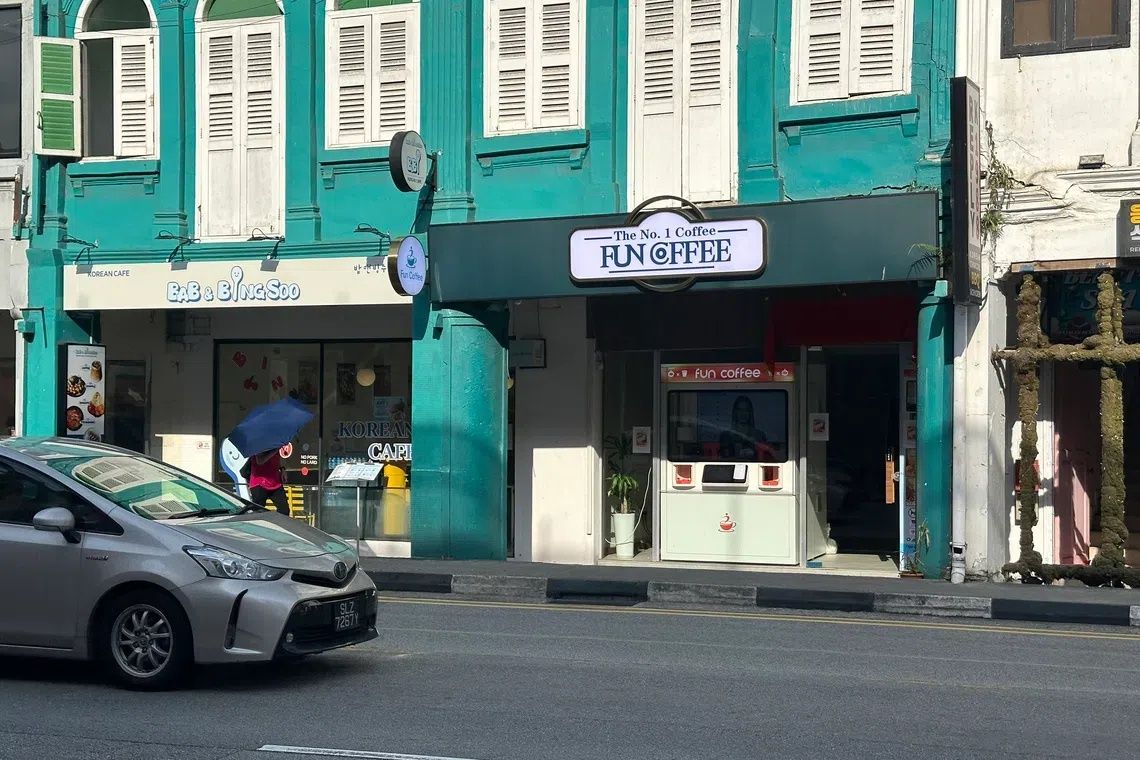
Fun Coffee's operational facade presents interesting contradictions. The organization claims status as a "lifestyle brand combining coffee, wellness and digital innovation into a community experience," language calculated to sound contemporary and aspirational. It purports to operate from Phu Quoc, Vietnam, with claimed assets exceeding US$1 billion and a team numbering more than 5,000. Yet these representations lack credibility given the scheme's documented behaviour and enforcement actions against it. The organization entered the Singapore market sometime during 2025, suggesting recent expansion into new jurisdictions following possible enforcement pressure elsewhere. When journalists from The Straits Times visited its registered address at 202 Jalan Besar on August 7, they discovered merely a coffee vending machine—a physical touchpoint that projects legitimacy while facilitating QR code-based payment capture, hardly evidence of the billion-dollar operation claimed online.
The technological sophistication employed by Fun Coffee operators reflects broader trends in cryptocurrency-enabled fraud. Tether, functioning as a stablecoin rather than volatile cryptocurrency, provides fraud operators with the advantages of blockchain technology—speed, borderlessness, pseudonymity—whilst avoiding the price volatility that might complicate fraud schemes. The integration of mobile applications creates seamless user experience for victims whilst facilitating operational opacity for perpetrators. Wallet addresses within applications enable fund concentration and rapid dispersal, complicating recovery efforts for law enforcement. These technical choices appear deliberate, suggesting the scheme's architects understood financial crime interdiction capabilities and designed systems to minimize detection risk.
Singapore police have issued explicit public warnings directing citizens to cease further contributions to Fun Coffee, regardless of recruitment pressure or false claims about fund recovery opportunities. Authorities specifically identify private PayNow QR codes, personal mobile numbers, and overseas bank accounts as red flags indicating illegitimate payment requests. Such warnings acknowledge the scheme's continued operational presence and ongoing recruitment despite enforcement actions. They also recognize that victims previously invested often receive pressure to contribute additional capital under false pretences—a common exploitation tactic wherein existing victims become recruiting agents, either willingly seeking recovery of prior losses or under explicit coercion.
The scheme's exploitation of legitimate-seeming infrastructure deserves analytical attention. The coffee vending machine at the registered address suggests physical operations designed to create surface legitimacy. The application interface mimics legitimate financial platforms. Promotional materials employ lifestyle branding rather than explicit investment claims, potentially creating legal ambiguity. Yet these superficial legitimacy markers cannot obscure the underlying structure: unsustainable return promises, recruitment-based compensation, wallet-based fund trapping, and cross-border operation specifically designed to complicate enforcement. Such patterns indicate sophisticated fraud architecture rather than legitimate business mismanagement.
For Malaysian and broader Southeast Asian readers, the Fun Coffee affair carries important cautionary implications. The scheme's multi-jurisdictional presence and the coordinated enforcement responses demonstrate that investment fraud increasingly transcends borders whilst regulatory coordination, though improving, remains inconsistent. Victims across Singapore, Hong Kong, Macau, and Vietnam suggest Malaysian exposure, particularly given Malaysia's substantial cryptocurrency adoption rates and investment-seeking population demographics. The scheme's reliance on cryptocurrency and recruitment-based compensation structures—both relatively novel to many Southeast Asian investors—exploits genuine knowledge gaps within less financially sophisticated market segments. Regional regulators including Malaysia's Securities Commission should consider heightened monitoring of similar schemes demonstrating comparable characteristics: blockchain-based fund transfers, unrealistic return promises, recruitment incentives, and operational bases in lower-regulatory-jurisdiction nations.

