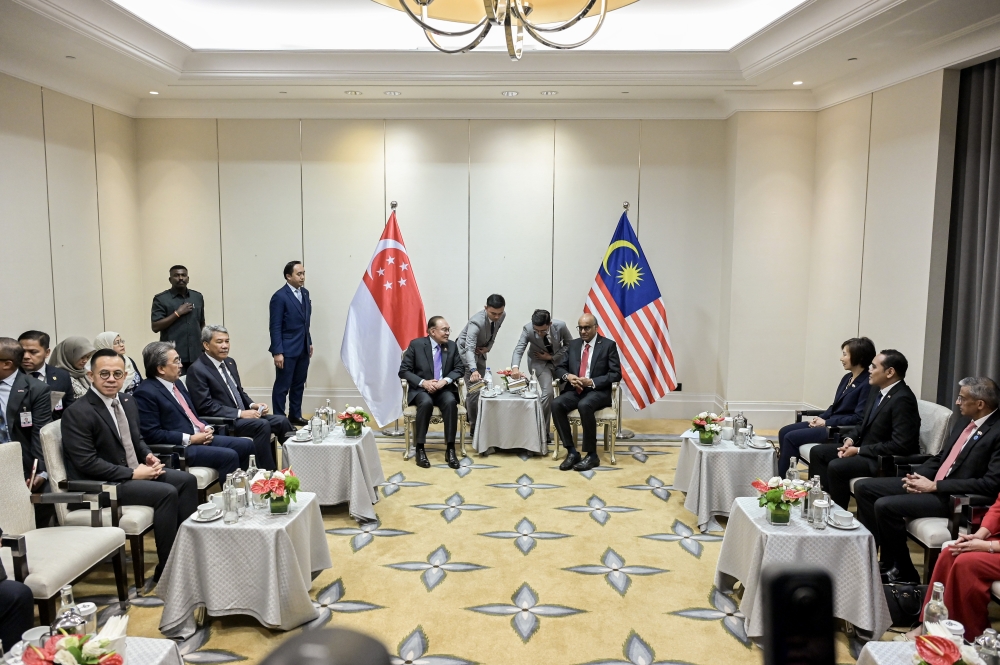
Singapore President Tharman Shanmugaratnam held substantive discussions with Malaysian Prime Minister Datuk Seri Anwar Ibrahim during an official state visit to Kuala Lumpur on Monday, with the 40-minute meeting reflecting the strategic importance both nations place on bilateral engagement at the highest levels.
The courtesy call, conducted in a closed-door setting, brought together the constitutional heads of two of Southeast Asia's most economically influential states. The extended duration of the meeting suggested both leaders had significant ground to cover, moving beyond ceremonial formalities to address substantive matters affecting their respective nations and the broader region.
As neighbouring island and peninsular states sharing maritime boundaries, complex historical relationships, and deeply integrated economies, Malaysia and Singapore maintain one of the region's most consequential bilateral relationships. The presidential visit underscores the commitment of both capitals to maintaining robust diplomatic channels and exploring avenues for enhanced cooperation. Such high-level engagements serve as crucial mechanisms for resolving outstanding issues and identifying new partnership opportunities.
The timing of President Tharman's visit carries particular significance given the broader geopolitical context of Southeast Asia. Both Malaysia and Singapore face similar challenges in navigating shifting regional dynamics, managing economic vulnerabilities, and positioning themselves advantageously within evolving great power relationships. Direct dialogue between their leaders helps coordinate responses to transnational issues and ensures aligned approaches on regional security matters.
Economic integration between Malaysia and Singapore remains substantial, with trade flows and investment relationships spanning multiple sectors from finance and manufacturing to technology and energy. The bilateral economic architecture has been built gradually over decades, creating interdependencies that make regular high-level policy dialogue essential. Leadership meetings such as this provide opportunities to address trade irritants, discuss infrastructure projects, and explore fresh sectors for collaboration.
Beyond commerce, Malaysia and Singapore share security concerns ranging from maritime safety and counterterrorism to transnational crime prevention and cybersecurity threats. The presidential meeting likely included discussions on these shared vulnerabilities and mechanisms for enhanced intelligence sharing and coordinated responses. Singapore's vulnerability as a densely populated island state with critical regional shipping lanes makes maritime security particularly important to its strategic calculus.
The state visit format reflects protocol recognition of President Tharman's constitutional standing, though substantive power dynamics in Singapore's political system rest primarily with the Prime Minister. Nevertheless, the presidential engagement signals respect for institutional practices and maintains the diplomatic formality that both nations consider important for bilateral relations. Malaysia similarly extends such courtesies to reflect the mutual dignity both nations seek in their interactions.
Regional observers monitor Malaysia-Singapore interactions carefully, as tensions between the countries periodically surface over maritime disputes, water agreements, and historical grievances. Regular engagement at the presidential and prime ministerial levels helps prevent misunderstandings from escalating and provides channels for managed dialogue when disagreements emerge. The positive tone of this meeting contributes to maintaining a stable bilateral environment.
The visit also reflects President Tharman's broader diplomatic outreach since assuming office, establishing his role in international relations. As Singapore's constitutional president, his state visits carry ceremonial weight while the prime minister handles day-to-day governance. This division allows Singapore to maintain multiple channels of high-level engagement with important partners, reinforcing the relationship's significance.
For Malaysian readers and policymakers, the meeting represents an opportunity to recalibrate the relationship with Singapore based on shared regional interests. Malaysia's strategic position as a larger nation with significant regional influence means Singapore cooperation is valuable for advancing Malaysian objectives in ASEAN and beyond. The bilateral relationship, while occasionally strained, remains fundamentally important to Malaysia's regional architecture.
Looking forward, both nations will likely continue regular exchanges through various forums—whether bilateral government-to-government meetings, ASEAN platforms, or specialized working groups addressing specific sectors. These institutional mechanisms, reinforced by periodic high-level summits, constitute the backbone of stable regional diplomacy. The Kuala Lumpur meeting reinforces both nations' commitment to managing their relationship professionally and pursuing collaboration where mutual interests align.
The successful completion of this state visit and productive engagement between President Tharman and PM Anwar sends reassuring signals to regional stakeholders, investors, and Singapore and Malaysian citizens alike that leadership in both capitals remains focused on constructive bilateral relations. In an era of regional uncertainty and shifting alliances, the stability and functionality of Malaysia-Singapore ties provide an anchor for broader Southeast Asian stability and prosperity.

