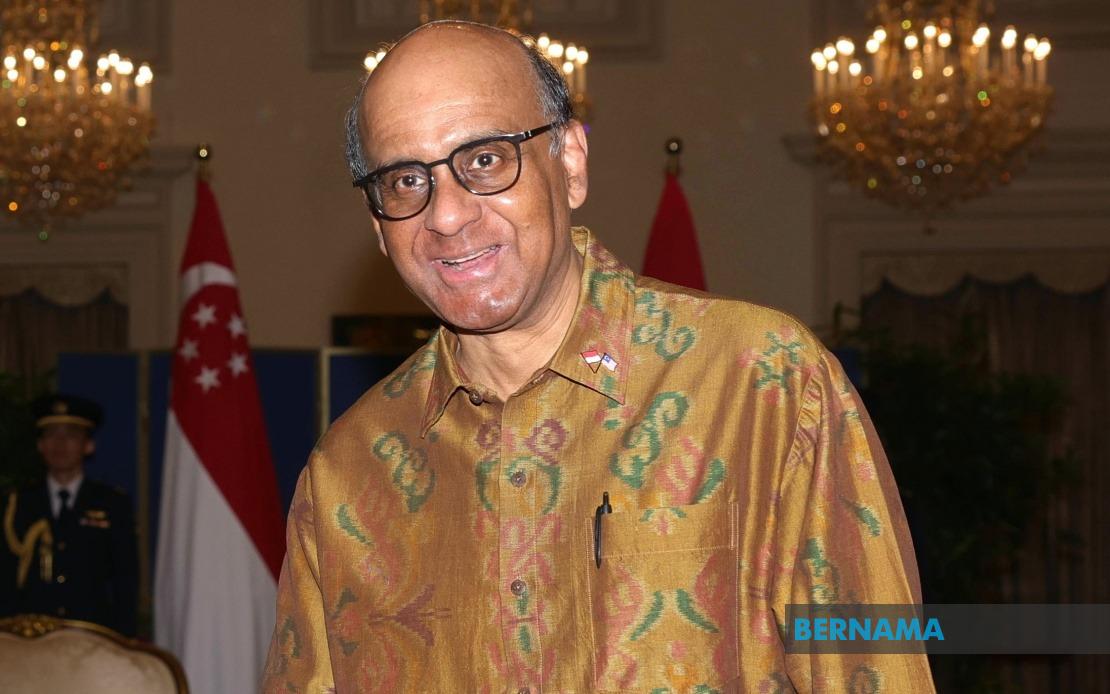
Singapore President Tharman Shanmugaratnam will arrive in Malaysia on July 13 for a three-day state visit that represents a milestone in bilateral diplomacy and underscores the deepening strategic relationship between the two neighbouring nations. The visit, which concludes on July 15, has been formally scheduled at the invitation of His Majesty Sultan Ibrahim, King of Malaysia, and marks Tharman's inaugural state visit to the country since he assumed the presidency on September 14, 2023.
This carefully timed engagement serves as a formal reciprocation of His Majesty's own state visit to Singapore on May 6 and 7, 2024, demonstrating the reciprocal nature of high-level diplomatic engagement between Kuala Lumpur and Singapore. The exchange of state visits at the presidential and royal level reflects the commitment both governments place on maintaining robust institutional ties and ensuring continuity in bilateral relations despite the periodic changes in political leadership. Such reciprocal visits have become standard practice in modern Southeast Asian diplomacy, signalling mutual respect and commitment to shared interests.
The Malaysian Foreign Ministry characterised the visit as emblematic of the "strong and enduring partnership" between Malaysia and Singapore, emphasising that cooperation spans multiple sectors of mutual concern. This diplomatic language masks the complexity of the relationship, which has historically encompassed both deep commercial interdependence and occasional friction over territorial and maritime issues. The framing of the visit as advancing "deepening cooperation across key areas of mutual interest" signals official intent to emphasise convergence rather than divergence.
Tharman will be accompanied by his spouse, Jane Ittogi Shanmugaratnam, along with a delegation comprising several cabinet ministers and senior government officials. The composition of the accompanying delegation typically reflects the priority areas both governments wish to highlight during substantive bilateral discussions. The presence of multiple ministers suggests that discussions will extend beyond ceremonial courtesies to encompass substantive policy coordination across defence, trade, maritime security, and regional stability concerns.
The formal programme features several carefully orchestrated ceremonial elements. President Tharman will be granted a State Welcoming Ceremony upon arrival, followed by an audience with His Majesty at Istana Negara, Malaysia's royal palace. These protocols underscore the formal state visit status and accord Tharman the highest diplomatic honours. The itinerary will culminate in a State Banquet, providing an intimate setting for candid discussions between the two leaders. Additionally, Prime Minister Datuk Seri Anwar Ibrahim will extend a courtesy call to the visiting president, ensuring that Malaysia's chief executive engages directly with Singapore's head of state.
The economic dimension of Malaysia-Singapore relations provides crucial context for understanding the significance of this visit. Singapore functions as Malaysia's second-largest trading partner globally and its largest partner within the ASEAN community, a position reflecting decades of integration through supply chains, financial services, and energy trade. In 2025, bilateral commerce reached RM402.35 billion (US$93.97 billion), representing a modest 1.5 per cent annual increase that suggests relatively stable commercial flows despite broader global economic uncertainties.
More tellingly, the growth trajectory in 2026 demonstrates accelerating momentum in the relationship. From January through May 2026, bilateral trade surged 14.5 per cent year-on-year to RM189.90 billion (US$47.87 billion), compared to RM165.93 billion (US$37.65 billion) during the corresponding period in 2025. This sharper growth rate suggests that both economies are successfully navigating recent geopolitical headwinds and that trade diversion from China or other sources may be flowing through the Malaysia-Singapore corridor. For Malaysian policymakers and business leaders, this trajectory indicates that the bilateral relationship remains resilient and potentially poised for further expansion.
The timing of Tharman's visit carries additional regional significance. Southeast Asia faces mounting pressures from great power competition, South China Sea tensions, and technological disruption. Singapore and Malaysia, as core ASEAN members with significant economies and strategic geography, play outsized roles in shaping regional responses to these challenges. High-level diplomatic engagement between their leaders provides an opportunity to align positions on critical issues ranging from maritime security to digital governance and sustainable development.
Tharman's presidency itself represents continuity in Singapore's political leadership while also signalling the city-state's commitment to multiethnic governance and inclusive policymaking. As the ninth Singapore president and the first of Tamil descent to hold the office, Tharman embodies Singapore's meritocratic values and multicultural identity—principles that resonate across diverse Malaysia. His personal background and political trajectory may facilitate deeper people-to-people connections and demonstrate that high office in Southeast Asia increasingly reflects the region's demographic diversity.
For Malaysia, hosting a visiting Singapore president offers opportunities to advance specific bilateral agendas. These likely include harmonising approaches to regional trade arrangements, coordinating on maritime boundary management, facilitating cross-border investment, and aligning on responses to transnational challenges such as maritime piracy and environmental degradation. The state visit format allows both governments to signal seriousness about these issues and to generate political momentum for their resolution.
The visit also occurs against the backdrop of ASEAN's evolving role in regional architecture. As China's influence expands and as the United States recalibrates its regional engagement, ASEAN members like Malaysia and Singapore must calibrate their strategic partnerships carefully. High-level bilateral visits among ASEAN members reinforce intra-regional cohesion and demonstrate that Southeast Asian countries prioritise internal solidarity even as they manage relationships with external powers.
Looking ahead, the substantive outcomes of this visit—whether reflected in joint statements, new trade initiatives, or coordinated regional positions—will carry implications extending beyond the bilateral relationship. The messaging conveyed by Malaysian and Singapore leaders during this engagement will influence perceptions among other ASEAN members, major powers, and international observers regarding the health of Malaysia-Singapore relations and the prospects for ASEAN unity on critical regional questions. In this sense, President Tharman's three-day visit transcends ceremonial formality to represent a significant moment in Southeast Asian geopolitics.

