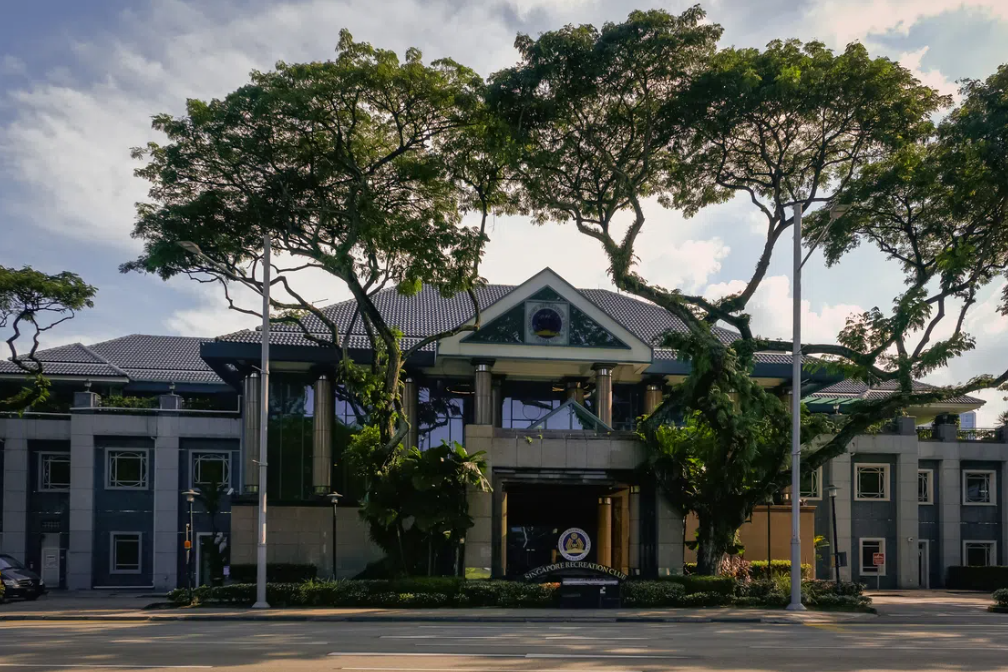
A Singapore High Court judge has cleared the way for a full trial to examine whether the Singapore Recreation Club properly conducted a vote to transform its billiards room into a co-working space, dealing a setback to the club's management committee and signalling that procedural fairness in member governance remains a contentious issue in member-driven organisations.
Senior Judge Chan Seng Onn's written decision, released on August 26, reversed an earlier ruling that would have dismissed the case entirely. The judge found that the two challenging members—Sean Kerwin Mathews and Mu Yee Shyong, both from the club's billiards section—had raised legitimate questions about the validity of an October 2025 extraordinary general meeting resolution that warrants full examination in open court rather than dismissal at an early stage.
The legal dispute centres on a fundamental governance question: whether voting rules embedded in the Singapore Recreation Club's constitution were properly applied when members decided on the billiards room's future. Mathews and Mu argue that a specific constitutional rule required any resolution to be approved by a majority of members physically present at the meeting—in this case, at least 280 of the 559 attending members. Since only 151 voted in favour of the resolution, they contend it lacked the necessary support and should be invalidated.
The background to this conflict reveals the complicated financial pressures facing even well-established recreational institutions. In March 2024, club members had approved an ambitious $16.6 million transformation plan to shift the billiards room from the second floor to the basement level and construct a co-working space in its place. However, when Singapore's land betterment charges—a tax on increased land value—unexpectedly climbed to $4.9 million, well above the $1.5 million budgeted amount, the management committee concluded the relocation was no longer financially viable. This reassessment forced the club to seek alternative solutions.
What makes this voting procedure particularly contentious is the structure the management committee employed. At the October 2025 general meeting, members received two separate voting slips to choose between three paths forward. The first slip allowed members to vote simply yes or no on proceeding with the original relocation plan and paying the higher charges. Critically, voting yes on the first slip rendered the second slip invalid. The second slip, available only to those voting no on the first, presented two mutually exclusive options: either converting the billiards room into a co-working space without relocation, or integrating it within a new co-working space.
This voting architecture created what the judge identified as a significant problem: members effectively could not vote no against both resolutions simultaneously. If they rejected the relocation plan by voting no on the first slip, they were obliged to choose between the two remaining options on the second slip. Out of 514 total votes cast, 151 supported the second resolution to convert the billiards room to a co-working space, while 125 opposed it. However, 183 votes were marked as spoilt and 55 remained blank. The management committee counted only the 151 affirmative votes as supporting the resolution, claiming a simple majority of 54.7 per cent of valid votes, and declared it passed.
Judge Chan's reasoning reveals the subtle but important issues at stake. He found that a triable question exists regarding whether the club's constitutional voting rule—requiring support from a physical majority of attending members—applied to this particular resolution. He also identified a triable issue concerning how spoilt and blank votes should be treated. While acknowledging that blank or spoilt votes normally do not register support or opposition, he observed that this case presented unusual circumstances where members faced conflicting instructions and their ability to reject all options was effectively curtailed by the voting mechanism itself. The judge suggested that such constraints might have infringed members' fundamental voting rights.
The management committee's lawyers argued that invalidating the resolution would serve no purpose and would leave the club paralysed in indecision. The judge rejected this reasoning, noting that a fresh vote conducted with clearer, fairer procedures could resolve the matter. He emphasised that the claimants were simply seeking a legitimate opportunity to vote without artificial procedural constraints—hardly an unreasonable demand in a democratic member organisation.
The Singapore Recreation Club, with approximately 7,000 members, operates as one of the island's significant social institutions with long-standing traditions. The billiards section represents a constituency with particular interests that differ from the general membership, and this dispute reflects broader questions about how sectional interests are protected within larger member organisations. The outcome of this trial could establish important precedents for how Singapore's courts view voting procedures in private member clubs and whether constitution rules that mandate particular voting thresholds must be strictly observed.
For Malaysian and Southeast Asian readers, this case illustrates the continuing importance of procedural fairness in member-driven organisations, from sports clubs to professional associations. It demonstrates that courts remain willing to scrutinise voting processes, particularly when management structures voting mechanisms in ways that appear to predetermine outcomes or limit members' genuine choices. The trial will examine whether commercial pressures—such as the unexpected $4.9 million land betterment charge—can justify bending procedural rules that govern how members exercise democratic control over their own organisations.
The dispute also underscores challenges that established recreational institutions face in adapting to modern real estate economics and commercial pressures. The original vision of transforming the clubhouse to accommodate contemporary co-working demand represents a sensible strategic adaptation, yet the execution has become mired in governance disputes that could have been avoided through clearer initial communication and simpler voting procedures. As the case moves toward trial, both sides will have opportunity to present full arguments about voting procedures, constitutional interpretation, and member rights in the context of this significant capital project.

