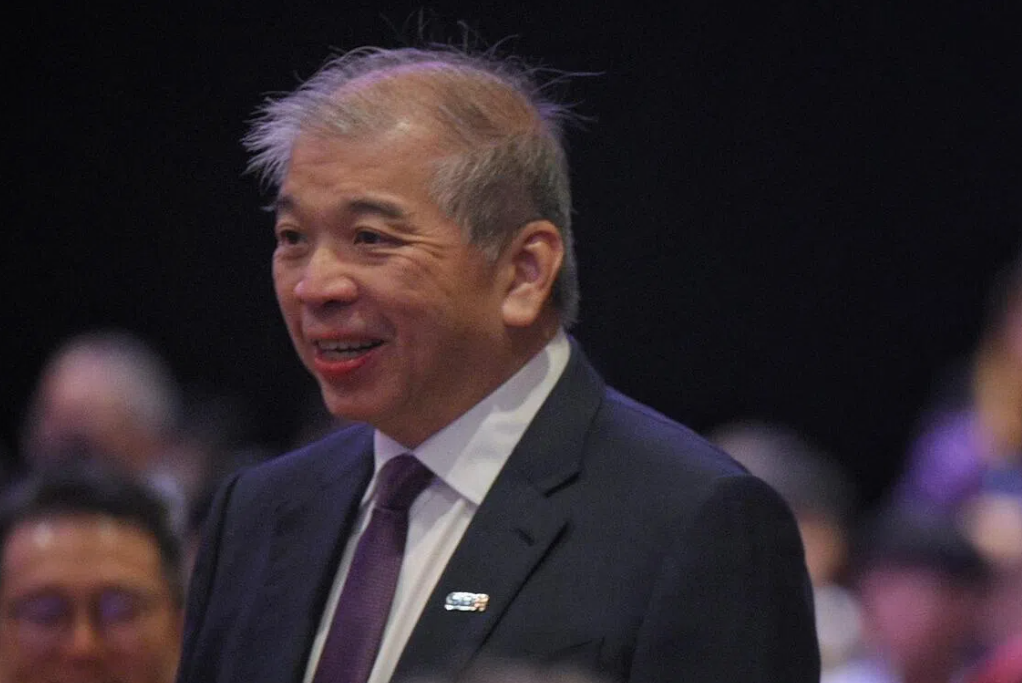
Singapore's prominent shipping magnate Teo Siong Seng faces mounting legal pressure following his involvement in an alleged international container cartel, with two civil lawsuits now filed against him and other industry executives in California courts. The legal action, initiated through separate class-action cases in the District Court for the Northern District of California, marks a significant escalation beyond the criminal charges already brought by the US Department of Justice, opening a fresh avenue for American businesses to pursue damages through private litigation.
The two civil suits were filed on June 2 and 9 respectively, with manufacturing firm C.A. Spalding Company and transportation firm Daybreak Express each seeking to recoup substantial financial losses they claim resulted from the alleged cartel's activities over several years. Rather than relying solely on criminal prosecution, these cases position private American enterprises as active parties demanding compensation for their economic harm—a development that extends the scope and complexity of the allegations facing the named defendants. This dual-track legal approach, combining criminal and civil proceedings, creates multiple fronts of legal jeopardy for those implicated.
The accusations centre on a sophisticated price-fixing arrangement allegedly orchestrated by executives at several major container manufacturers. The criminal indictment, filed in January and unsealed in May, identified China International Marine Containers (CIMC), Shanghai Universal Logistics Equipment, CXIC Group Containers, and Singamas Container Holdings—where Teo serves as chief executive—as principal members of a cartel controlling approximately 95 percent of global standard dry container production. The alleged conspiracy involved calculated measures to artificially restrict supply and maintain elevated pricing across the international market.
According to investigators' findings detailed in court documents, the cartel members implemented a multi-layered scheme to suppress production output and ensure pricing discipline. The tactics included deliberate restrictions on operating shifts and daily production hours for manufacturing lines, designed to cap container output across factories. Most remarkably, the conspirators installed 87 video surveillance cameras distributed across 49 production lines at their various facilities—an extraordinary measure demonstrating the systematic nature of alleged oversight mechanisms to prevent any member from exceeding agreed production quotas.
The financial impact on global markets proved substantial. Between 2019 and 2021, prices for standard 20-foot shipping containers approximately doubled, rising from roughly US$1,600 to US$3,500 during this critical period when supply chain pressures were reshaping global commerce. This dramatic price escalation imposed significant costs on importers, exporters, and transportation companies worldwide, including the American firms now pursuing legal remedies. The timing coincided with post-pandemic economic recovery when businesses were desperately seeking container capacity, rendering them particularly vulnerable to inflated pricing.
The cartel's profitability soared during this period, with financial data revealing extraordinary improvements in company performance. CIMC's container manufacturing division reported profit increases from approximately 137 million yuan in 2019 to 1.99 billion yuan in 2020, then skyrocketing to 11.3 billion yuan in 2021. Singamas experienced an even more dramatic transformation, transitioning from a substantial loss of roughly US$110 million in 2019 to a profit of approximately US$186.8 million by 2021—a remarkable turnaround concentrated precisely during the alleged cartel operations.
The civil litigation introduces treble damages provisions, creating potential financial consequences far exceeding actual proven losses. Under this damages framework, companies and executives found liable could face penalties amounting to three times the verified financial harm inflicted on affected American businesses. This multiplication factor serves as both a punitive mechanism and a deterrent against future cartel behaviour, substantially increasing the stakes for defendants. Such provisions encourage private litigation as a means of enforcement when criminal penalties alone may seem insufficient.
Court records indicate that summonses were formally issued on June 8 and 11, requiring named defendants and their organisations to file formal responses within 21 days of service. The failure to respond within this timeline could result in default judgments being entered against them, effectively determining liability without contested proceedings. The defendants include several CIMC executives—Mai Boliang (former president and chief executive, now chairman), Huang Tianhua (vice-president), and Wan Yongbo (general manager of the Operation Management Centre)—alongside Li Qianmin from Shanghai Universal Logistics Equipment and Zhang Yuqiang from CXIC Group Containers. All are identified as Chinese nationals.
Teo's inclusion among the named individuals alongside Singamas marketing director Vick Ma adds particular significance given his prominence within Singapore's business establishment. Ma, a Chinese national, is currently fighting extradition to the United States following his April arrest in France, creating an additional enforcement dimension to these proceedings. The 71-year-old Teo has declined public comment on the civil suits, maintaining a cautious approach to the mounting legal challenges.
In response to his indictment in the criminal case, Teo has strategically withdrawn from multiple high-profile positions across Singapore's business and public sectors. He announced leaves of absence from Pacific International Lines, where he serves as executive chairman, and subsequently from the Singapore Business Federation (where he held the chair), the Singapore Economic Resilience Taskforce, Enterprise Singapore's board, and his pro-chancellor role at the National University of Singapore. His stepping back from these positions underscores the reputational and operational complications his involvement in the alleged cartel has generated.
Perhaps most significantly, Teo announced on May 28 that he would not seek re-election as Singapore Business Federation chairman when his term concludes on June 24. His tenure, which began just weeks earlier on May 20 following his election by the apex chamber's membership, represents one of the shortest terms ever in that position. His predecessor, Lim Ming Yan, had vacated the role early to assume the chairmanship of Changi Airport Group, creating an opportunity that Teo initially accepted before circumstances fundamentally changed. This departure contrasts sharply with Teo's earlier prominence—he had previously served as SBF chairman from 2014 to 2020, completing three consecutive two-year terms and establishing himself as a central figure in Singapore's business leadership.
In his sole public statement addressing the allegations since their emergence, Teo explained that he had proactively decided to assume leaves of absence to allocate sufficient time and attention to the legal matters while prioritising the institutional interests of the various organisations he had represented. His measured, brief response suggests a legal strategy focused on minimising public commentary while the proceedings unfold across multiple jurisdictions. The contrast between his previous stature as a prominent business leader and his current legal predicament illustrates how allegations of international cartel participation can rapidly reshape corporate reputations and leadership trajectories, even among individuals previously regarded as pillars of business integrity.