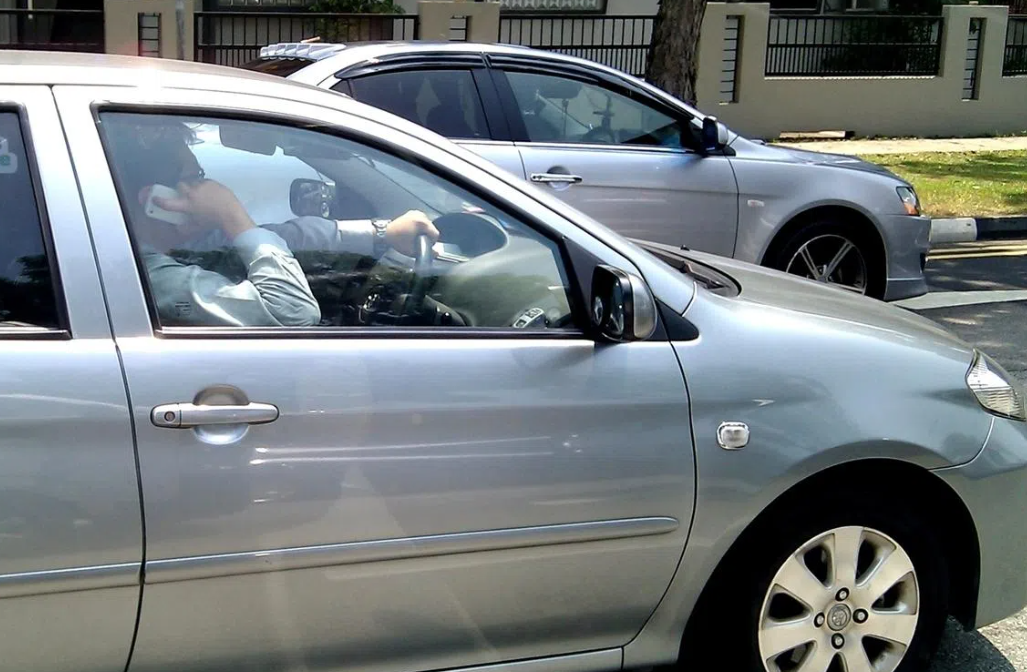
Singapore is moving to crack down severely on distracted and dangerous driving by introducing legislation that will make merely holding a smartphone while driving a prosecutable offence, regardless of whether the device is actively being used. The Road Traffic (Miscellaneous Amendments) Bill, tabled by the Ministry of Home Affairs on Tuesday, marks a significant hardening of penalties across multiple traffic violations, signalling the government's determination to reverse deteriorating road safety statistics that have alarmed policymakers.
The impetus for these sweeping changes is rooted in alarming road safety figures. Between 2021 and 2025, traffic fatality rates surged by roughly 24 per cent, while traffic violations climbed by about 38 per cent. The absolute numbers are sobering: Singapore recorded 149 deaths on its roads in 2025, the highest toll in a decade, compared with 141 deaths in 2016. Injuries also worsened, jumping from 9,342 casualties in 2024 to 9,955 the following year. These trends have prompted the authorities to shift from reactive enforcement to preventive legislation that removes ambiguity from enforcement.
Under existing laws, drivers caught texting or calling while holding a phone face administrative penalties of 12 demerit points and fines ranging from $400 to $500. The critical weakness in the current framework is that prosecution requires proof the device was actually being used—a burden that demands real-time observation and manual verification by traffic officers. This evidentiary requirement has made enforcement cumbersome and inconsistent. The proposed bill strips away this proof requirement, making the act of holding a phone while the vehicle is in motion itself the offence. This procedural shift is designed to streamline enforcement and leverage technology: traffic cameras can now document violations, and members of the public can submit photos and videos to support enforcement action.
For those convicted under the new regime, the consequences will be far more severe than existing administrative penalties. First-time offenders face up to six months imprisonment and fines of $1,000, while repeat offenders can be sentenced to as long as one year in jail with fines reaching $2,000. The law will not affect drivers using mounted devices, and holding a phone while the vehicle is stationary remains permitted, preserving flexibility for navigation and communication at rest stops or traffic lights.
Beyond mobile phone use, the bill addresses a darker dimension of road danger: deliberate vehicle-based violence. The case of Jarrett Tee Lee Kiat exemplifies the sentencing gap that prompted this change. Tee, who orchestrated an expressway race that killed an 18-year-old, received five years and eight months imprisonment despite showing no remorse. The Ministry argued such conduct warranted harsher justice, noting that current dangerous driving charges carry a maximum eight-year sentence—a ceiling some judges have questioned as potentially inadequate for the most egregious cases.
The bill introduces a novel offence of purposeful endangerment using a vehicle causing death or grievous hurt. This new category allows sentences of up to 15 years imprisonment, fines, caning, and lifetime driving disqualification, or at minimum a 10-year ban if extenuating circumstances apply. This sentence range reflects the government's view that using a vehicle as an instrument of intentional harm warrants penalties approaching those for serious violent crimes, even if murder or culpable homicide charges cannot be sustained beyond reasonable doubt.
The legislation also recalibrates sentences for reckless driving that causes injury. The case of Yoong Kok Kai, a drunk driver whose loss of control at Tuas Checkpoint left an auxiliary police officer in a vegetative state, prompted judicial questioning about whether maximum sentences fully captured the gravity of such incidents. His jail term was increased from three-and-a-half to five years on appeal, but the judge noted this was ultimately a legislative matter. In response, the bill elevates the maximum jail term for dangerous driving causing grievous hurt from five years to seven years for first offences, and from ten to thirteen years for repeat offences. Serious aggravating factors, particularly drink driving, will trigger up to eighteen months additional imprisonment, up from the current one year.
These amendments carry implications beyond Singapore's immediate context. As Southeast Asian cities grapple with rapid motorisation and congested urban roads, Singapore's approach of deploying technology and legislative precision to enforce road safety offers a potential model. The shift from requiring active-use proof to penalising possession mirrors trends in other developed jurisdictions, where legislators have recognised that distraction from any source—not merely confirmed use—compromises driving. The willingness to create new statutory offences for specific dangerous scenarios also reflects an evolving recognition that older frameworks designed for slower traffic and smaller vehicle populations may no longer capture modern hazards.
For Malaysian drivers and policymakers, Singapore's experience provides instructive lessons. Mobile phone use while driving is a documented risk factor in traffic accidents across the region, and enforcement has proven difficult in multiple jurisdictions. Singapore's shift toward technology-enabled detection and presumptive liability (possession rather than use) may inform discussions about road safety legislation in Malaysia, where fatality rates remain stubbornly high. However, the approach also raises questions about civil liberties and burden of proof that Malaysian legislators and courts would need to weigh carefully against public safety objectives.
The bill's treatment of dangerous driving causing injury or death reflects a broader philosophical shift in how jurisdictions calibrate penalties for recklessness. By introducing proportionality between culpability and sentence—recognising that deliberate endangerment deserves harsher treatment than mere negligence—Singapore is attempting to differentiate among degrees of blameworthiness. This tiered approach may resonate in other jurisdictions struggling to balance deterrence with fairness in road safety law.
Implementation of these measures will require coordination between the Traffic Police, court system, and public reporting infrastructure. The reliance on camera evidence and public submissions introduces scalability advantages but also risks inconsistent enforcement if resources are unevenly distributed across Singapore's diverse neighbourhoods and road types. The bill's passage is expected later this year following parliamentary procedure, and the effectiveness of the new offences will likely be scrutinised closely by road safety advocates, driver organisations, and the judiciary interpreting the legislation's scope.
Ultimately, Singapore's legislative response signals that marginal tweaks to existing traffic law have exhausted their utility in reversing road danger trends. The government has opted for more invasive but arguably more enforceable prohibitions, paired with significantly escalated penalties for the most culpable conduct. Whether this combination will bend the trajectory of fatalities and injuries upward remains to be seen, but the boldness of the approach—making possession itself the offence and introducing a 15-year sentence tier for deliberate endangerment—represents a threshold moment in Singapore's traffic safety policy.

