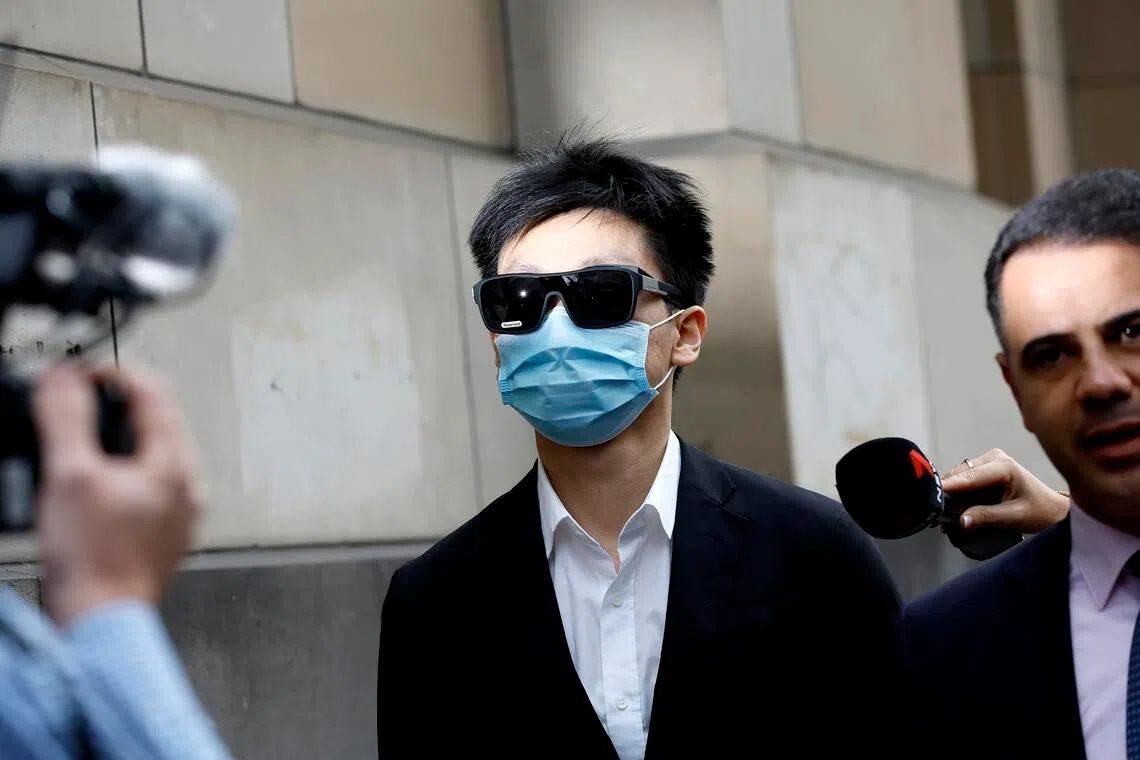
A Singaporean trainee doctor working in Melbourne has entered guilty pleas to charges stemming from an extensive campaign to secretly record hundreds of colleagues in intimate settings across three major Australian hospitals. Ryan Cho, 28, faced the Melbourne Magistrates Court on Thursday to admit to 13 consolidated charges including stalking, unauthorised installation of recording devices, and production of intimate images without consent. The case represents one of Australia's most serious breaches of workplace privacy in recent years and has drawn intense scrutiny from authorities, victim support organisations, and the wider medical community across the Asia-Pacific region.
The extent of Cho's offending became apparent only after his arrest in July 2025, when hospital security discovered a concealed mobile phone recording in a staff toilet at Austin Hospital. Subsequent police investigations uncovered a systematic operation spanning four years, during which Cho deployed hidden cameras and recording devices in facilities used by colleagues at Austin Hospital, Royal Melbourne Hospital, and Peter MacCallum Cancer Centre. Forensic examination of electronic devices seized from his residence revealed a staggering archive of compromised material: more than 10,000 video and photograph files documenting the violation of more than 500 individuals. The volume of evidence was so substantial that Victorian police initially laid 910 separate charges, a figure later consolidated to allow the court to manage proceedings more effectively.
Cho's background provides some context for understanding how he gained access to these facilities. Having arrived in Australia in 2017, he pursued medical studies at Monash University before beginning work as a trainee doctor in 2021. His employment across the three hospitals spanned until 2025, providing him with legitimate access to staff areas while simultaneously enabling his criminal conduct. The Australian Health Practitioner Regulation Agency suspended his medical registration in 2025 following discovery of his activities, effectively ending his career in Australian medicine. Beyond workplace violations, Cho also admitted to filming residents he shared accommodation with, indicating his offending extended into his private life and affected individuals beyond the hospital environment.
During the brief 30-minute hearing, Magistrate Michelle Mykytowycz confirmed she was satisfied that sufficient evidence existed to support conviction on all charges before asking Cho to formally state his pleas. Standing in court dressed formally in a black suit and white shirt, Cho acknowledged his guilt across all 13 counts without contest. The magistrate acknowledged numerous victims present in the courtroom and those observing via video link, recognising the emotional weight of the proceedings for those whose privacy had been violated. Cho's father, Wilson Cho, a logistics manager from Singapore, attended the hearing but remained at the rear of the courtroom. In previous court appearances, the father stated he had been entirely unaware of his son's behaviour prior to arrest.
Cho remains free pending sentencing, released on strict bail conditions guaranteed by a A$50,000 surety lodged by his parents in 2025. His parents have committed to maintaining residence in Melbourne throughout the legal proceedings to ensure their son's compliance with bail requirements. The conditions imposed are comprehensive and restrictive: Cho must report to police three times weekly, maintain absolute no-contact protocols with all witnesses, obtain police permission before attending any medical facility except in genuine emergencies, surrender all access to photographic and video equipment outside his home, and engage with required psychological treatment. His passport has been surrendered to authorities, preventing international travel. These stringent measures reflect the serious nature of his offending and the court's concerns regarding his conduct.
The case will now progress to sentencing hearings scheduled to commence on November 23 at Melbourne's County Court, with proceedings expected to span three days. The court will hear impact statements from victims, allowing those affected to address the court regarding the consequences of Cho's actions on their professional wellbeing, personal safety, and psychological health. Cho's legal representation, provided by barrister Julian McMahon, has previously characterised his client as a "complicated young professional" suffering from "complex psychological issues" that would likely require recognition and treatment. The defence strategy appears oriented toward mitigation through psychological assessment and evidence of mental health challenges, though such arguments face significant headwinds given the premeditated nature of the offending and its extensive scope.
The ramifications extend well beyond criminal proceedings. Approximately 100 victims, predominantly women, have lodged human rights complaints against the three hospitals with the Australian Human Rights Commission, alleging systemic failures in workplace safety, sexual harassment, and discrimination. These complaints argue that hospital management failed to maintain adequate security protocols in staff facilities and failed to detect and prevent the ongoing violations. Legal firms representing affected employees anticipate that additional victims will join collective action against the institutions. Tony Carbone, managing partner at Carbone Lawyers, which is coordinating the human rights complaints, has publicly indicated expectations of expanded participation from hospital workers.
For Malaysian observers, this case carries particular significance given Cho's Singapore origins and the implications for professional accountability in the region. The incident underscores vulnerabilities within supposedly secure institutional environments and raises questions about background screening, workplace monitoring, and duty-of-care obligations that extend across Australian and Southeast Asian medical contexts. The case also highlights evolving challenges posed by increasingly sophisticated recording technology in breach-of-privacy scenarios. Medical regulators and hospital administrators throughout Malaysia and the broader region will likely review their own security protocols and staff vetting procedures in light of Cho's systematic violations.
The psychological dimensions of the case remain noteworthy. Cho's barrister has indicated that psychiatric assessment will form part of the mitencing process, suggesting a trajectory from criminal prosecution toward therapeutic intervention. However, the sheer scale of his offending—deliberately targeting hundreds of individuals across multiple locations over an extended period—indicates a pattern far exceeding impulsive misconduct. The deliberate installation and maintenance of concealed devices, coupled with systematic collection and storage of intimate material, demonstrates planning and persistence that complicate any narrative of mental health emergency.
As Australia's medical community and legal system process this case, attention has naturally turned to questions of institutional accountability. How did violations persist across three major hospitals for four years before detection? What systemic weaknesses in supervision and security monitoring allowed an individual to install and maintain hidden cameras in staff facilities without earlier discovery? These questions will likely feature prominently in the human rights complaints and may influence future protocols adopted by hospitals across Australia and potentially elsewhere in the region. The case has already become a reference point in discussions about workplace safety and privacy protection in healthcare settings.
Cho's sentencing in November will establish important precedent regarding appropriate punishment for large-scale privacy violations within professional environments. Australian courts have limited recent experience with offences of this magnitude and nature, making the outcome significant for future cases involving technology-enabled breaches of intimate privacy. Given the number of victims, the duration of the offending, the deliberate and repeated nature of the violations, and the apparent lack of remorse prior to arrest, sentencing is likely to be substantial. The case will be closely observed not only in Australia but also in Singapore and throughout Southeast Asia, where similar regulatory frameworks and professional standards apply, and where questions of international accountability and professional misconduct continue to evolve.

