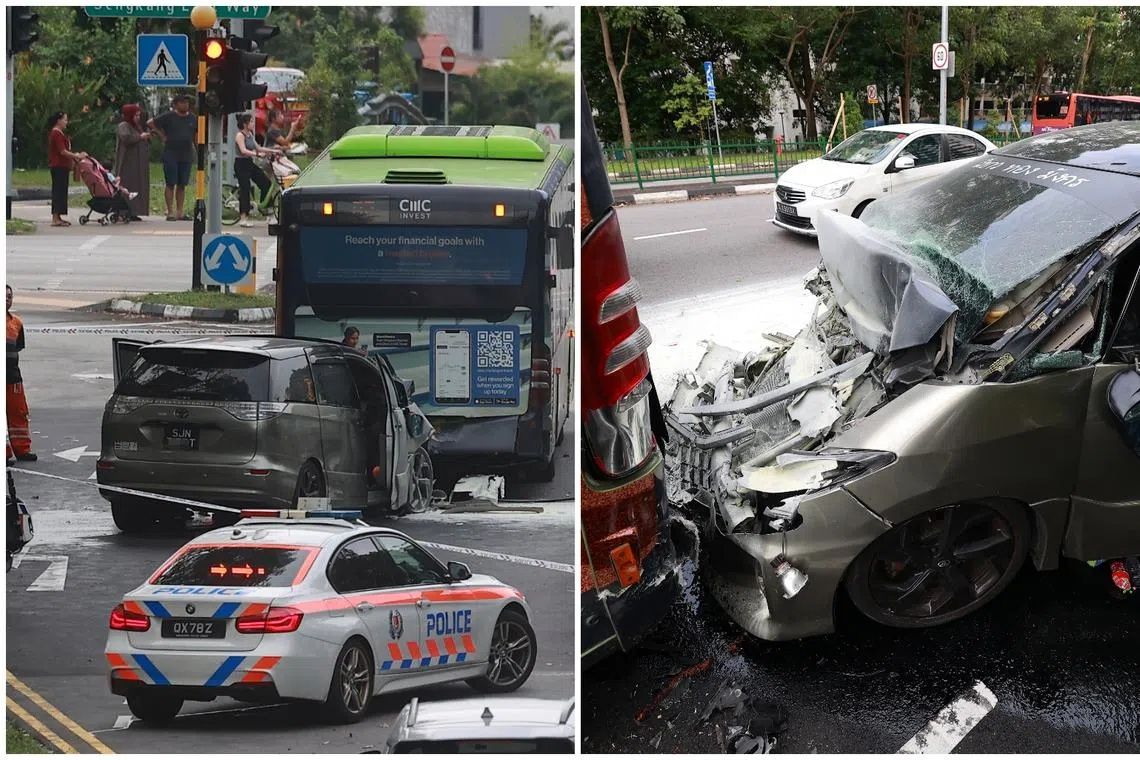
Singapore's roads are facing an escalating public health crisis stemming from a troubling convergence of substance abuse and vehicle operation. Over a span of just twelve days in June, three men faced court charges for operating motor vehicles while under the influence of prohibited substances—all cases detected only after they had collided with other road users. The pattern reflects a broader, more alarming trend that medical professionals say threatens the safety of an entire motoring community.
What distinguishes this crisis from traditional drink-driving enforcement is the nature of the substances involved. Two of the accused men had consumed methamphetamine, commonly known as Ice, while the third had used etomidate, a pharmaceutical anaesthetic increasingly distributed through e-vaporisers marketed as Kpods. The emergence of etomidate as a recreational substance has caught authorities and health professionals off guard, creating enforcement and detection challenges that differ markedly from conventional drug screening. Clinical toxicologist Jonathan Tang from the Emergency Medicine Department at the National University Hospital has personally treated trauma patients whose accidents were precipitated by etomidate intoxication, positioning him among the first medical voices to publicly articulate the specific dangers this substance poses when combined with the responsibility of controlling a vehicle.
The human toll of this phenomenon became starkly apparent in May 2025, when a collision in Punggol involving a car and bus resulted in the death of a twenty-eight-year-old female passenger. Investigation revealed that the vehicle's driver and the deceased passenger both had etomidate in their bloodstream. Police subsequently recovered forty-two vaporisers and more than twelve hundred pods from the vehicle, some containing the anaesthetic. This single tragedy encapsulates the randomness and preventability of the broader pattern—an impaired driver's poor decisions or delayed reactions claiming innocent lives of fellow passengers and other road users.
Parliamentary scrutiny of the issue emerged in February when Member of Parliament Valerie Lee, representing Pasir Ris-Changi GRC, pressed the government on whether traffic police routinely assess motorists involved in accidents for evidence of vaping or drug consumption. Coordinating Minister for National Security K. Shanmugam responded by outlining the standard protocol: traffic police are empowered to assess drivers for signs of impairment following any accident, and if drug or etomidate use is suspected, blood testing becomes mandatory. Drivers found culpable face liability under laws prohibiting operation of vehicles while under the influence. Shanmugam's parliamentary answer also disclosed statistics that shocked observers: between 2023 and 2025, authorities had documented thirty-eight traffic accidents linked to drug and etomidate use, resulting in nineteen fatalities. Among these fatal crashes, ten involved traditional drugs while nine involved etomidate specifically.
The statistical trajectory reveals an accelerating problem. Of the thirty-eight documented accidents, twenty-nine occurred during 2025 alone—a dramatic concentration in the most recent year. Within that 2025 cohort, eighteen accidents involved etomidate use, while seven involved combinations of both drugs and etomidate. This clustering suggests that either the prevalence of these substances has surged recently, detection and reporting mechanisms have improved, or both factors are operating simultaneously. The specificity of the 2025 data also underscores how quickly this particular threat has materialized on Singapore's roads, catching both law enforcement and public health officials in a reactive posture.
Dr. Tang's medical assessment of etomidate's cognitive and physiological effects provides essential context for understanding why this substance poses particular danger behind the wheel. The anaesthetic disrupts reaction time, compromising a driver's ability to perceive hazards and respond appropriately. Vehicle control becomes imprecise or erratic. These pharmacological impacts mirror those of alcohol intoxication in their functional consequences, though etomidate's origins as a medical anaesthetic may create false confidence among users that it poses lesser risks. The toxicologist further notes that etomidate use triggers psychiatric complications including depressed mood, heightened aggression, and impulsivity—psychological states fundamentally incompatible with safe driving. The drug's psychiatric effects can even precipitate suicidal ideation, introducing an additional dimension of unpredictability to road safety.
Singapore's overall traffic mortality trajectory has worsened significantly, establishing a broader context into which the drug-driving phenomenon fits. The island recorded one hundred forty-nine traffic deaths in 2025, representing a ten-year high and exceeding the previous peak of one hundred forty-one in 2016. The 2024 fatality count of one hundred forty-two indicates that 2025 marks a sharp deterioration. Injuries have similarly climbed, from nine thousand three hundred forty-two in 2024 to nine thousand nine hundred fifty-five in 2025. These figures suggest that the drug-driving problem, while serious, exists within a broader ecosystem of road safety challenges that warrant comprehensive, multi-pronged interventions.
The specific court cases adjudicated in June exemplify the consequences and enforcement responses. Mohamed Firdouz Mohamed Akram, aged thirty-six, faced multiple charges on June 19 after consuming Ice and colliding with a taxi in Kallang, injuring both the taxi driver and a passenger. He subsequently abandoned his vehicle and fled the scene before arrest, with police discovering drugs, vaporisers, and weapons within his car. On June 10, Puah Zhe Cong, thirty-four, received seven charges under road traffic legislation for allegedly operating a vehicle under the influence of etomidate, resulting in one death and two injuries. Sivakandesh, thirty-two, was charged on June 8 following a methamphetamine-influenced collision involving a Mercedes-Benz that struck multiple structures including bollards, a parked vehicle, and a rubbish chute in Yishun, with the driver removing registration plates after impact. These incidents, captured within days, illustrate the consistency of the problem and the formal machinery available to respond.
Legal penalties attempt to deter such conduct through graduated severity. A first-time offender convicted of operating a vehicle while under the influence of intoxicating substances faces potential imprisonment for up to one year, a fine not exceeding ten thousand Singapore dollars, or both sanctions combined. Repeat offenders confront more stringent consequences: imprisonment up to two years and fines reaching twenty thousand Singapore dollars. These penalties, while substantial, occur within a criminal justice system that operates after the fact—punishing conduct after accidents have already occurred and harm has been inflicted. Police issued statements in mid-June characterizing drug-impaired driving as both extremely dangerous and fundamentally irresponsible, positioning enforcement and deterrence as critical public safety measures.
For Malaysian and broader Southeast Asian observers, Singapore's etomidate crisis carries important cautionary implications. The emergence of pharmaceutical anaesthetics within recreational vaping ecosystems demonstrates how rapidly new substance abuse patterns can establish themselves across interconnected urban populations. The enforcement challenges Singapore faces—detecting impairment from substances unfamiliar to traditional roadside testing protocols, establishing causation between substance use and impaired driving—will likely confront other regional traffic authorities as these substances inevitably circulate across borders. Malaysia's own road safety record remains concerning, and the importation of both traditional drugs and emerging novel substances through e-vaporiser vectors represents a plausible future threat to Malaysian motorists and pedestrians.

