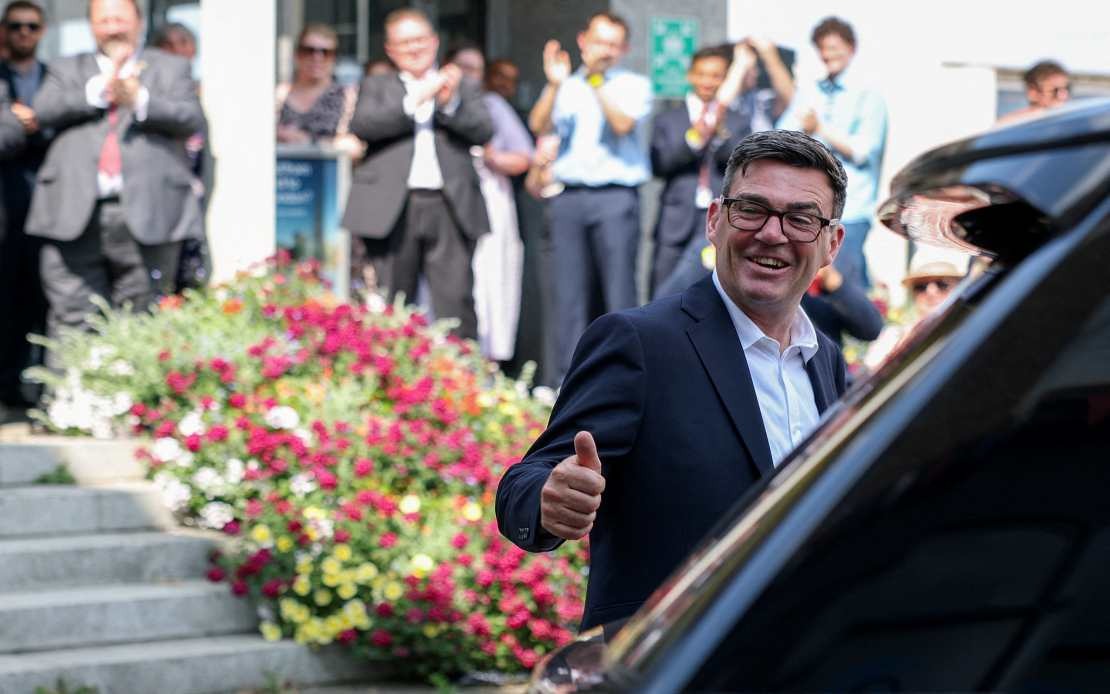
Singapore Prime Minister Lawrence Wong has extended formal congratulations to Andy Burnham following his appointment as the United Kingdom's new prime minister, signalling the city-state's commitment to maintaining strong bilateral ties with London despite the change in British political leadership.
In a carefully worded congratulatory message released on Monday, Wong expressed confidence in Burnham's ability to steer the UK through what he described as a period marked by significant geopolitical and economic instability. The Singapore premier framed his message around shared values and historical partnership, emphasising that both nations face common challenges that demand collaborative responses from trusted allies.
The relationship between Singapore and the United Kingdom extends back to the colonial era, but Wong's message deliberately focused on the contemporary framework that binds the two democracies. He referenced the Strategic Partnership that currently anchors bilateral engagement, underscoring how this arrangement encompasses cooperation across multiple sectors and reflects decades of accumulated trust and mutual commitment. This diplomatic language carries particular weight given the broader regional context in which Singapore operates as a small island nation heavily reliant on international partnerships for its security and prosperity.
Wong identified several priority areas for future cooperation, with particular emphasis on innovation, science and technology, and defence capabilities. These sectors represent not merely bilateral concerns but reflect Singapore's strategic positioning within a region increasingly focused on technological advancement and security resilience. The mention of defence cooperation holds particular significance for Malaysia and other Southeast Asian nations, as it underscores how the UK continues to project influence in the Indo-Pacific through security arrangements and military partnerships.
A notable dimension of Wong's message concerns Singapore's recognition of the UK's broader regional engagement. He explicitly praised London's status as an ASEAN Dialogue Partner and its participation in the Five Power Defence Arrangements, a Cold War-era security mechanism that includes Malaysia, Singapore, the United Kingdom, Australia, and New Zealand. This acknowledgement reflects Singapore's appreciation for external powers that engage with Southeast Asia through established multilateral frameworks rather than pursuing unilateral strategies, a concern that has grown more pressing amid great power competition in the region.
Looking ahead, Wong identified a particularly opportune moment for enhanced Singapore-UK cooperation. Singapore currently holds the ASEAN Chairmanship while the United Kingdom is positioned to assume the G20 Presidency in 2027, creating what Wong characterised as a unique convergence of influence and responsibility. This alignment presents both nations with the platform to champion multilateral cooperation on global and regional issues, from economic governance to climate action and security concerns that increasingly transcend traditional borders.
The announcement of Burnham's appointment came after Buckingham Palace confirmed that the Labour Party leader had met with King Charles III and received the royal invitation to form a government. This succession marks a significant political transition in the UK, and Singapore's swift and comprehensive diplomatic response demonstrates the importance London places on its Asian partnerships and the priority Singapore assigns to maintaining strong connections with major Western powers.
For Malaysian observers, this diplomatic exchange carries several implications. The continued emphasis on Five Power Defence Arrangements and ASEAN Dialogue Partnership mechanisms underscores how traditional security frameworks remain central to regional stability discussions, even as new security challenges emerge. The explicit reference to trusted partners achieving more through collaboration speaks to Singapore's preference for institutionalised multilateralism—a model that extends benefits to countries like Malaysia that participate in these same arrangements.
The timing of this message also reflects broader geopolitical calculations within Southeast Asia. As regional powers navigate relationships with major external actors including the United States, China, and Europe, Singapore's proactive engagement with incoming British leadership demonstrates how smaller nations carefully cultivate connections with influential partners to maintain relevance and influence within regional councils. Malaysia similarly maintains critical partnerships with London across defence, education, and trade, making Singapore's diplomatic overture part of a wider pattern of regional engagement with the UK.
Wong's emphasis on addressing "shared global and regional challenges" through cooperation aligns with Singapore's stated position on issues ranging from maritime security in the Strait of Malacca—through which Malaysia's economy remains intimately connected—to supply chain resilience and technological governance. The invocation of these shared challenges implicitly acknowledges that regional security and prosperity cannot be achieved through isolated national efforts but require coordination among multiple stakeholders.
The broader significance of this diplomatic exchange extends beyond ceremonial protocol. It reflects a deliberate strategy by Singapore to position itself as an essential partner for major powers seeking to engage meaningfully with Southeast Asia. By explicitly welcoming the new British PM and mapping out cooperation opportunities, Singapore reinforces its role as a diplomatic hub and trusted interlocutor for external powers, a position that generates influence disproportionate to its small territorial size.
As the UK under Burnham's leadership recalibrates its global strategy and considers its Indo-Pacific engagement, Singapore's warm reception and clearly articulated cooperation framework provides London with a foundation for sustained regional involvement. For Malaysia and other neighbouring nations, this exchange illustrates how the regional architecture continues to accommodate major power engagement while maintaining the principle that such engagement should occur through established multilateral mechanisms rather than bilateral competition that might destabilise the region.

