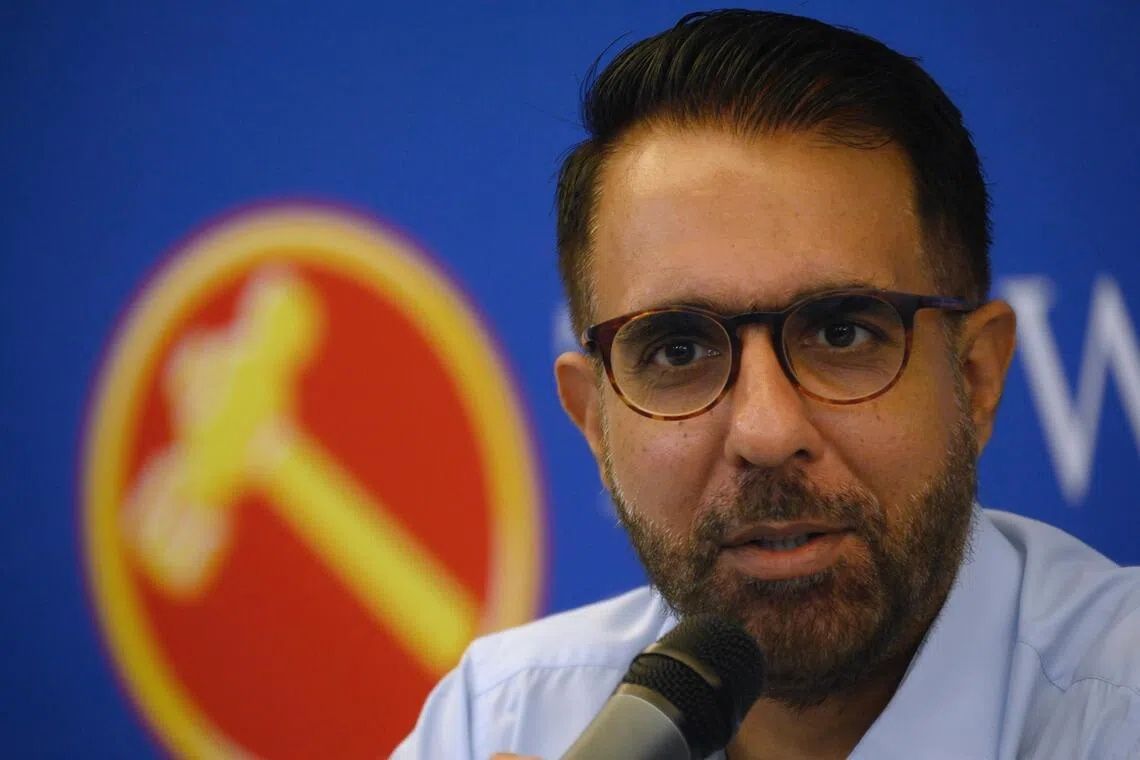
Singapore's opposition Workers' Party is heading toward a significant internal power struggle as disaffected members prepare to contest the party's leadership elections scheduled for June 28. The mounting discontent stems from secretary-general Pritam Singh's December 2025 High Court conviction for lying to a parliamentary committee, an outcome that has crystallised frustrations among the party's cadre membership—a group of roughly 100 senior members who form its decision-making core. This marks the first serious challenge to Singh's leadership in the eight years since he assumed the role, representing a critical juncture for an opposition party already under intense scrutiny.
The push for change has gained concrete momentum with a group of cadres actively canvassing senior party figures to stand against Singh. According to party insiders, potential challengers discussed include Aljunied GRC MP Gerald Giam, Hougang MP Dennis Tan, and Sengkang GRC MPs He Ting Ru and Jamus Lim. Notably, the latter two served on the disciplinary panel that found Singh in breach of party rules, a connection that underscores the depth of institutional concern about his continued leadership. However, none of these figures has publicly confirmed their intentions, reflecting the tense internal climate where members fear disciplinary action for openly criticising the party leadership.
The special conference scheduled for June 28 will provide the immediate platform for this confrontation. Twenty-five cadres—including former central executive committee members and election candidates—triggered this extraordinary gathering in December 2025, explicitly calling for Singh to account for his actions and to resign from his position. Should he refuse to step down voluntarily, the conference will hold a secret ballot to decide his fate. The subsequent ordinary cadres' conference will then proceed with regular elections for all party positions, including the secretary-general post. This two-stage process creates multiple exit points for Singh, though it also provides strategic flexibility for his supporters to manage the situation.
For Malaysian observers and Southeast Asian political analysts, Singh's predicament illustrates the intense pressures facing opposition leaders in tightly contested political environments. The Workers' Party has built its electoral brand on claims of integrity and moral superiority—a positioning that makes Singh's conviction particularly damaging. Party cadres who spoke to media outlets articulated this concern bluntly: voters choose the Workers' Party precisely because they expect higher ethical standards. A leader convicted of facilitating parliamentary dishonesty fundamentally undermines that differentiation in an environment where the ruling party already possesses overwhelming institutional advantages. This vulnerability in the opposition's core brand proposition explains why the conviction has triggered such visceral internal opposition.
The scandal's origins trace back to August 2021, when former Sengkang GRC MP Raeesah Khan made false statements in Parliament about a supposed encounter with a sexual assault victim. Rather than instructing her to immediately correct the record—standard parliamentary practice—Singh allegedly guided her toward maintaining the falsehood. Khan eventually admitted the deception in November 2021, but by then the damage to party credibility was substantial. When courts subsequently found Singh culpable of misleading a parliamentary privileges committee investigating the matter, it transformed what might have been manageable as a cadre-level mistake into an existential leadership question. The conviction essentially validated criticisms that Singh had failed in his primary responsibility to uphold party principles.
Former party chief Low Thia Khiang has emerged as a pivotal figure in the unfolding drama, though his intentions remain ambiguous. Low led the Workers' Party from 2001 to 2018 and secured its historic 2011 general election victory, when it captured Aljunied GRC—the first opposition group representation constituency in Singapore's history. He retains significant influence among cadres, many of whom are party veterans from his era. Rumours circulating within party circles suggest Low voted against Singh during the central executive committee's discussion of the disciplinary panel findings, signalling a potential shift in allegiances. Analysts note that Low's backing could provide a critical endorsement, potentially delivering the roughly 30 additional votes needed to unseat Singh beyond those already agitating for change.
Interestingly, Low himself faced a leadership challenge in 2016 when former Aljunied GRC MP Chen Show Mao contested the secretary-general position. That election involved many of the same veteran cadres now calling for Singh's removal, suggesting this is not merely reactive discontent but a collision between different factions with competing visions for the party's future. The parallel raises questions about whether institutional tensions around strategy, generational change, or personality have been simmering beneath the surface for some time, with Singh's conviction simply providing the catalyst for their expression.
The political stakes extend beyond internal party dynamics. In January 2026, Prime Minister Lawrence Wong removed Singh from his position as Leader of the Opposition, a role that traditionally grants the main opposition party enhanced parliamentary visibility and speaking rights. The Workers' Party was offered the opportunity to nominate another elected MP to assume the role but declined, choosing instead to preserve unified support for Singh. Some cadres have privately questioned this decision, arguing that it surrendered meaningful parliamentary leverage to show solidarity with a compromised leader. This criticism suggests disagreement not merely about Singh's fitness for leadership but about fundamental strategic choices regarding the party's approach to opposition politics.
The Workers' Party's performance in the 2025 general election has compounded internal frustrations. Party insiders acknowledged that expectations had been set for the opposition to capture an additional constituency, given what they characterised as a strong slate of candidates. The failure to achieve this breakthrough, combined with Singh's decision to withdraw the party's Marine Parade-Braddell Heights GRC team on Nomination Day, has generated additional unhappiness. For an opposition party facing overwhelming structural disadvantages in Singapore's political system, such electoral underperformance carries disproportionate weight. Members interpret failure to advance as evidence of leadership deficiency, particularly when combined with the parliamentary conviction crisis.
The situation remains genuinely fluid, with multiple variables still in play. Singh retains the advantages of incumbency and could conceivably secure re-election even if a challenger emerges, requiring only a simple majority among the roughly 100 voting cadres. His supporters maintain organisational advantages and can frame the contest as an internal matter requiring discretion and restraint. Conversely, the convergence of the conviction, electoral disappointment, leadership removal, and potential backing from Low Thia Khiang creates genuine momentum for change. Party insiders indicated that even the identity of any challenger remains uncertain, with several senior figures apparently weighing their political futures against the risks of overtly opposing an incumbent.
For Singapore's opposition ecosystem, the Workers' Party's internal turmoil carries broader implications. The party represents the only opposition formation with consistent parliamentary representation, making its institutional health crucial to Singapore's democratic vitality. A bitter internal conflict could weaken the party's ability to mount coherent legislative scrutiny, while leadership uncertainty might demoralise cadres and donor networks. Conversely, a managed transition could rejuvenate party morale and signal to voters that the Workers' Party takes accountability seriously—potentially strengthening its long-term competitive position. The June 28 elections will therefore determine not merely who leads the party, but something more fundamental about opposition politics in Singapore's constrained democratic space.
For Malaysian observers, the Workers' Party drama offers instructive parallels about opposition governance. While Malaysian opposition coalitions have experienced their own leadership convulsions, Singapore's tighter cadre system and smaller membership base concentrate power and make leadership transitions simultaneously more urgent and more consequential. The contrast raises questions about whether larger, more federalised opposition structures might better insulate against individual leaders' liabilities, or whether they simply diffuse accountability. As Malaysian politics continues to evolve beyond the UMNO-BN hegemony that characterised the pre-2018 period, understanding how neighbouring opposition parties navigate ethics, accountability, and succession carries practical relevance for regional democratic development.

