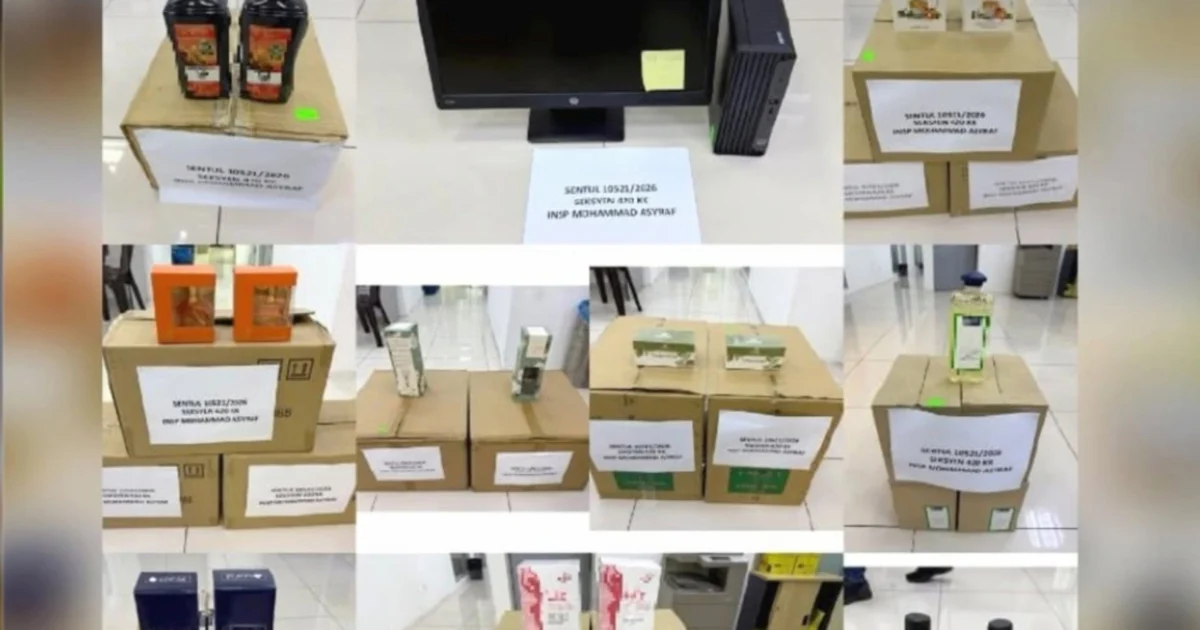
Authorities in Kuala Lumpur have successfully dismantled a sophisticated investment fraud operation centred on perfume sales, with six individuals taken into custody following a targeted enforcement action at a commercial premises in KL Eco City on Wednesday. The coordinated police operation represents the latest development in the authorities' intensified campaign against investment-related crimes that have proliferated across Malaysia's urban centres, particularly targeting unsuspecting retail investors seeking alternative income streams.
The raid at the KL Eco City location, a mixed-use development in the heart of Kuala Lumpur's business district, underscores how scam syndicates continue to establish operations within high-profile commercial spaces, lending unwarranted legitimacy to fraudulent schemes. Such illicit enterprises frequently exploit the professional veneer associated with premium business addresses to persuade potential investors of their authenticity and operational credibility. The perfume investment sector has emerged as a particularly attractive vehicle for scammers, as it combines elements of legitimate product sales with investment returns that appeal to consumers seeking both tangible goods and financial gains.
The mechanics of perfume investment scams typically involve promising investors substantial returns on their capital through bulk purchases of fragrances, often marketed as exclusive designer items or rare blends with purportedly consistent demand from luxury retail outlets. Perpetrators utilise sophisticated marketing materials and testimonials to create an illusion of legitimacy, frequently establishing membership tiers that encourage escalating investment levels. Unsuspecting participants are presented with contractual arrangements suggesting their money will generate passive income through company redistribution networks or supposed direct sales channels.
For Malaysian investors, the appeal of such schemes lies in their apparent tangibility compared to purely financial products. The promise of receiving physical perfume inventory alongside investment certificates creates psychological comfort, as participants believe they possess collateral should the investment falter. However, in reality, the perfume either never materialises in promised quantities, is significantly lower in quality than advertised, or proves impossible to resell at claimed market prices. The cyclical nature of these operations means later investors' capital is often siphoned to pay earlier participants, creating a classic pyramid structure that inevitably collapses when recruitment slows.
The law enforcement action in this instance reflects coordinated efforts between Malaysian police divisions to identify and prosecute investment fraud networks that operate with increasing sophistication. Intelligence gathering often involves analysis of financial transaction patterns, victim testimonies, and undercover operations. The arrest of six individuals suggests the syndicate maintained a structured hierarchy, likely comprising masterminds directing operations, recruiters enlisting investors, and administrative personnel managing documentation and fund transfers. Such organisational complexity indicates these are not opportunistic criminals but rather organised groups with established modus operandi and distribution networks.
From a regional perspective, investment fraud in Malaysia mirrors broader Southeast Asian trends where developing economies witness surging demand for alternative income opportunities. The proliferation of digital platforms and social media has exponentially amplified scammers' reach, allowing them to target victims across borders with minimal geographical constraint. Malaysian investors, particularly younger demographics and retirees seeking supplementary income, have become increasingly vulnerable to professionally executed fraudulent propositions that exploit economic anxieties and the desire for financial independence.
The perfume investment scheme category specifically has gained traction across multiple Southeast Asian jurisdictions, suggesting coordinated or copycat operations functioning across the region. Thailand, Indonesia, and Singapore have each reported similar cases, indicating either transnational syndicate networks or franchised fraud models where successful schemes in one country are replicated elsewhere. This regional dimension complicates enforcement efforts, as authorities must coordinate across borders to trace fund flows and pursue perpetrators who may flee jurisdiction once local investigations intensify.
Authorities consistently warn that legitimate investment opportunities require transparent regulatory registration, clear contractual terms free of pressure tactics, and realistic return projections. Investment vehicles offering exceptional returns substantially exceeding market averages warrant heightened scrutiny. The Malaysian Securities Commission and Bank Negara Malaysia have issued repeated advisories highlighting red flags including unsolicited recruitment approaches, requirements for immediate capital deployment, and promises to bypass conventional financial institutions.
The successful execution of this enforcement action should serve as a deterrent, though scam syndicates demonstrate remarkable adaptability, merely rebranding their propositions when particular schemes attract regulatory attention. Moving forward, sustained public education campaigns targeting vulnerable demographics remain essential, coupled with expedited prosecution frameworks ensuring swift consequences for perpetrators. For Malaysian consumers, exercising scepticism toward investment propositions featuring emotional appeals, inflated return promises, and emphasis on product scarcity or time-limited opportunities remains the most effective personal protective measure against sophisticated contemporary fraud.

