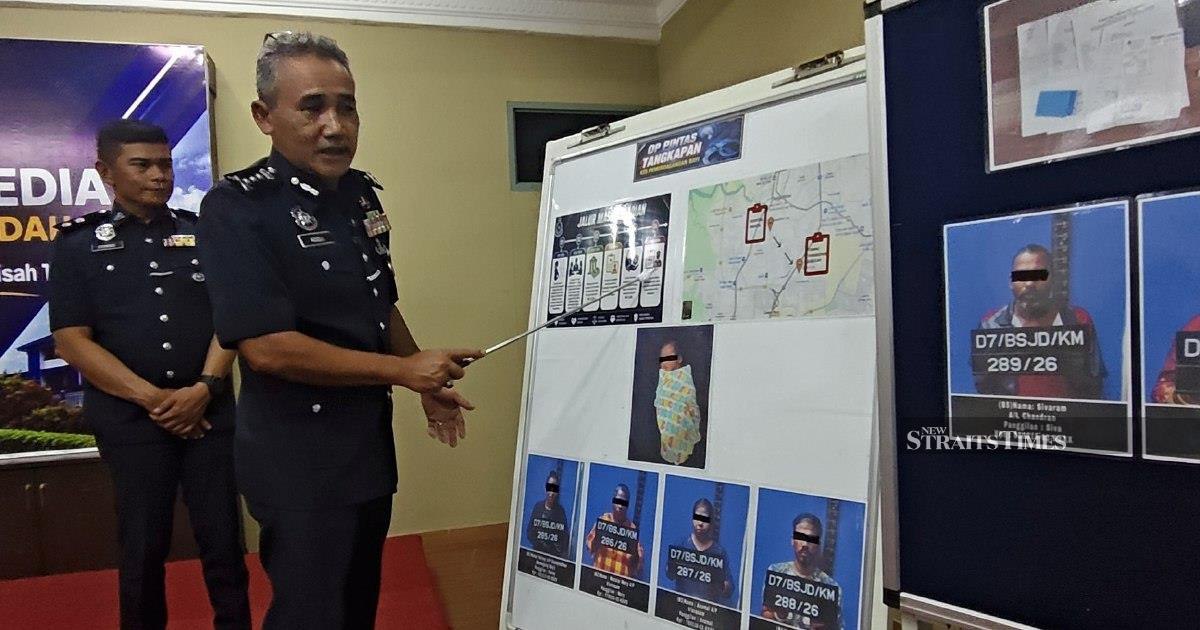
Police in Kedah have apprehended six individuals in connection with a suspected baby trafficking network uncovered in Kuala Muda, marking another significant law enforcement intervention against organised child exploitation in Malaysia. Among those detained is a mother who had given birth merely five days before her arrest, indicating the complex and troubling circumstances surrounding this investigation. The operation underscores how traffickers often target vulnerable women in desperate circumstances, exploiting their economic hardship and maternal vulnerability to facilitate the illegal movement and sale of infants.
The arrest of a postpartum woman raises critical questions about the mechanisms used by trafficking networks to coerce or manipulate new mothers into surrendering their babies. In many cases, women facing severe financial pressure, absent support systems, or limited knowledge of their legal rights become prime targets for traffickers who promise financial assistance or promise to find suitable families for their children. The timing of this woman's arrest—just days after delivery—suggests authorities may have identified her through medical facilities or social services, pointing to the crucial role healthcare providers and community workers play in detecting trafficking operations before they escalate.
The Kuala Muda district in Kedah has emerged as a focal point for this type of organised crime, reflecting broader patterns of human trafficking throughout the northern Malaysian peninsula. The region's geographic positioning near the Thai border, combined with lower-cost living and certain socioeconomic vulnerabilities, can make it attractive to criminal syndicates seeking to operate with reduced oversight. Understanding why specific localities become trafficking hubs helps authorities allocate resources more effectively and develop targeted prevention strategies that address root causes rather than merely responding to discovered cases.
Baby trafficking represents one of the most insidious forms of human exploitation, combining elements of child trafficking, document fraud, and often domestic adoption fraud. Networks typically target newborns and infants who cannot report their circumstances, making investigations particularly challenging. These operations frequently intersect with other crimes including the production of false documents, money laundering, and corruption of public officials. The involvement of six individuals in this single operation suggests a structured organisation with multiple roles—from recruiters who identify vulnerable mothers to facilitators who arrange document falsification and connect buyers with sellers.
For potential buyers, baby trafficking operations often pose as legitimate adoption services, creating false impressions of legality and safety. Many families unaware of trafficking's reality may inadvertently participate in these schemes, believing they are engaging with licensed intermediaries. This opacity in the supply chain means that the arrest of traffickers upstream protects not only vulnerable infants and mothers but also innocent families who might otherwise become unwitting participants in criminal enterprises. The reputational and legal consequences for families unknowingly involved in trafficking cases can be devastating.
Malaysia's legal framework criminalises trafficking comprehensively under the Human Trafficking Act 2015, which covers all forms of exploitation including child trafficking for various purposes. However, enforcement remains challenged by limited resources, jurisdictional complexities, and the sophistication of organised networks that span multiple states and sometimes international borders. The Kedah operation demonstrates that law enforcement agencies continue to pursue these cases actively, yet the continued emergence of new trafficking networks suggests demand remains sufficiently high to incentivise criminal operations despite legal risks.
The trafficking of infants and young children carries particular urgency because victims cannot advocate for themselves and face lifelong consequences of exploitation. Beyond immediate physical harm, trafficked children often experience severe developmental trauma, severed identity connections, and psychological damage that compounds throughout their lives. The infants involved in this Kuala Muda operation face uncertain futures regardless of whether they remain with traffickers, are recovered by authorities, or are placed in state care—all pathways carry significant challenges for child welfare systems already stretched across Malaysia.
The broader Southeast Asian context reveals baby trafficking as a persistent regional challenge that transcends national borders. Criminal networks often operate across Thailand, Malaysia, and other countries, creating complex jurisdictional investigations requiring international coordination. Increasing economic inequality, limited access to legitimate adoption services, and demand from wealthy families seeking infants create persistent market conditions that incentivise trafficking. Malaysia's position as a middle-income nation with both vulnerable populations and affluent communities makes it simultaneously a source, transit, and destination point for trafficked children.
Authorities investigating this case must balance urgent child protection with thorough evidence gathering. The five-day-old infants and young children potentially involved require immediate psychological assessment, medical evaluation, and safe placement in certified care facilities. Simultaneously, investigators must document evidence chains, identify buyers and sellers, trace financial flows, and potentially uncover connections to international trafficking networks. This operational complexity explains why trafficking cases often take months or years to fully resolve, frustrating observers seeking immediate answers and accountability.
The arrest of these six individuals provides opportunity for law enforcement to understand the operation's full scope and network architecture. Each person detained likely plays specific roles—identifying vulnerable mothers, arranging hospital or private deliveries, handling documentation, facilitating payments, and placing infants with buyers. Following investigative threads backward and forward through this network can reveal connected operations, potentially exposing larger trafficking structures. Information gathered from this case will inform intelligence databases that help authorities anticipate and prevent similar operations elsewhere in Malaysia and the region.
Civil society organisations and international bodies increasingly emphasise prevention approaches alongside prosecution. Strengthening social safety nets, improving maternal healthcare access, providing economic support to vulnerable families, and enhancing public awareness about trafficking mechanisms helps reduce the population vulnerable to traffickers' manipulation. In Kedah and throughout Malaysia, community-based intervention programs that connect at-risk mothers with legitimate support services represent critical complements to law enforcement responses. These preventive investments, while less visible than arrests, ultimately prove most effective at reducing trafficking's root causes.
The incident also highlights the responsibility of healthcare facilities and social welfare agencies in trafficking detection. Hospitals and clinics encounter mothers in vulnerable moments, creating potential opportunities to identify trafficking situations before infants leave the facility. Many jurisdictions have developed screening protocols and staff training programs to recognise trafficking indicators, though implementation varies significantly across Malaysian healthcare institutions. Standardising these protocols nationally and ensuring adequate training could multiply detection capabilities substantially.
For Malaysian citizens, this case underscores the importance of reporting suspicions about unlicensed childcare arrangements, unusually facilitated infant adoptions, or women appearing in distress with newborns. The national Human Trafficking and Migrant Smuggling Operations Room provides reporting channels, and maintaining public vigilance creates an additional layer of detection beyond formal law enforcement. As investigations into this Kuala Muda operation progress, the recovered evidence and testimony from arrested individuals will contribute valuable intelligence for combating baby trafficking throughout Southeast Asia's interconnected criminal landscape.

