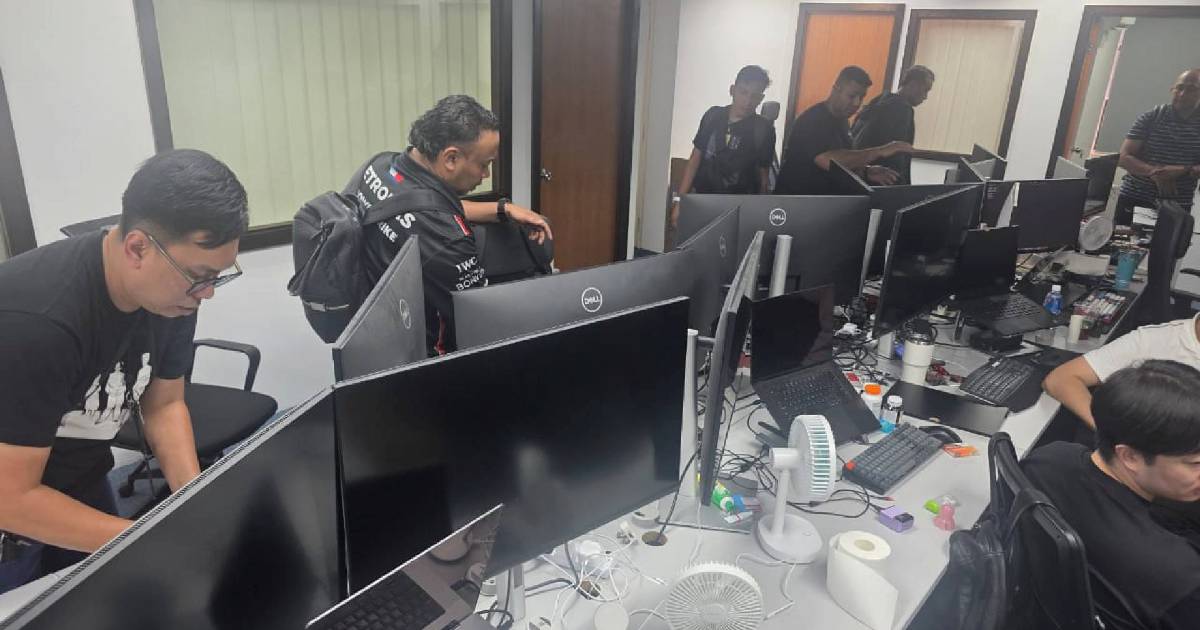
Eleven suspects have been taken into custody following a police operation against an illegal World Cup football betting organisation operating from a commercial office in the Taman Desa area of Brickfields, Kuala Lumpur. Among those arrested were six South Korean nationals, signalling the international dimensions of underground gambling networks that exploit major sporting tournaments to launder money and generate illicit profits across Asia.
The raid represents another chapter in Malaysia's ongoing struggle against organised underground betting syndicates that proliferate during high-profile football tournaments. The World Cup, as the world's most-watched sporting event, creates a surge in illegal gambling activity across the region, with criminal networks establishing temporary operations to capitalise on global betting fervor. These operations typically target affluent bettors willing to wager substantial sums beyond the reach of legitimate licensed betting platforms.
The location chosen—an office building in a mixed commercial and residential zone—reflects a deliberate operational strategy employed by these syndicates. Brickfields, a bustling business hub with constant foot traffic and numerous office complexes, provides ideal cover for illegal betting operations. Perpetrators deliberately select inconspicuous premises that blend seamlessly with legitimate commercial activity, making detection and enforcement considerably more challenging for law enforcement authorities.
The presence of multiple South Korean nationals within the syndicate structure underscores the transnational nature of contemporary organised gambling. Southeast Asia has emerged as a strategic hub for illegal betting rings operated by international organised crime networks, who exploit geographical proximity, regulatory gaps, and established underground financial channels. South Korea, with its tech-savvy population and sophisticated understanding of digital betting platforms, has long supplied both operatives and technological expertise to regional syndicates.
These betting call centres operate as sophisticated enterprises, employing multiple staff members to manage customer accounts, process bets in real-time, and handle financial transactions. The call centre model allows syndicates to operate with minimal physical footprint while servicing a geographically dispersed client base across Asia. Bettors contact the centre via secured phone lines or encrypted messaging platforms, place wagers on World Cup matches, and receive payouts through informal money transfer networks that circumvent banking regulations.
The enforcement action carries significant implications for Malaysia's efforts to combat organised gambling. The Commercial Crime Investigation Department and federal police units have escalated operations during major sporting tournaments, recognising that these periods represent peak activity windows for underground betting networks. Each successful raid generates actionable intelligence about operational methods, financial flows, and supply chains connecting Malaysia to regional crime syndicates.
World Cup betting attracts enormous volumes of illegal money globally, with underground networks processing significantly higher transaction volumes than legitimate operators. These operations generate substantial unreported income that enters unmonitored informal financial systems, facilitating money laundering, corruption, and funding for other criminal enterprises. The interconnection between gambling, organised crime, and financial crime makes betting syndicate enforcement critical to broader law enforcement objectives.
For Malaysian authorities, tackling these operations requires sustained intelligence work and coordination between multiple agencies. The International Crime Coordination Centre works alongside domestic units to track cross-border money flows and identify organisational structures spanning multiple Southeast Asian jurisdictions. Intelligence sharing with regional partners, particularly Korea and Thailand, has become essential for disrupting international supply chains.
The arrest of six South Korean nationals suggests this particular operation likely marketed services primarily to Korean-speaking bettors across Asia, including those in Malaysia. Transnational gangs deliberately recruit co-ethnics to manage client relationships and handle sensitive communications, reducing language barriers and building trust within target communities. This specialisation allows larger syndicates to compartmentalise operations across different ethnic or linguistic markets.
World Cup tournaments create recurring enforcement challenges because they concentrate betting activity into predictable periods. Criminals rapidly establish temporary infrastructure specifically designed for tournament duration, then dismantle operations to avoid detection. Authorities must therefore mobilise resources quickly to identify, monitor, and disable these time-sensitive networks before they complete major transactions.
The investigation will likely reveal the identity of upstream organisers and financial beneficiaries beyond those arrested. Call centre staff typically represent the lowest operational tiers, while financial management and client acquisition remain concentrated at higher levels. Police forensic examination of communication records, betting ledgers, and financial documentation may expose broader syndicate structures and connection points to other illegal enterprises.
These enforcement successes, while important, address symptoms rather than underlying demand factors driving underground betting. Malaysia's legal betting environment, restricted primarily to licensed operators, creates systematic incentives for customers to utilise unregulated alternatives offering higher odds and unrestricted betting volumes. Longer-term solutions require balancing regulatory frameworks against recreational gambling preferences across the population.
The World Cup betting operation dismantled in Brickfields joins dozens of similar raids conducted annually throughout Malaysia and the region. These operations collectively cost syndicates significant operating costs while disrupting customer bases and supply chains. However, the persistent reappearance of underground betting networks after each tournament indicates that enforcement alone proves insufficient without addressing deeper structural factors enabling their operation and profitability across Southeast Asia.

