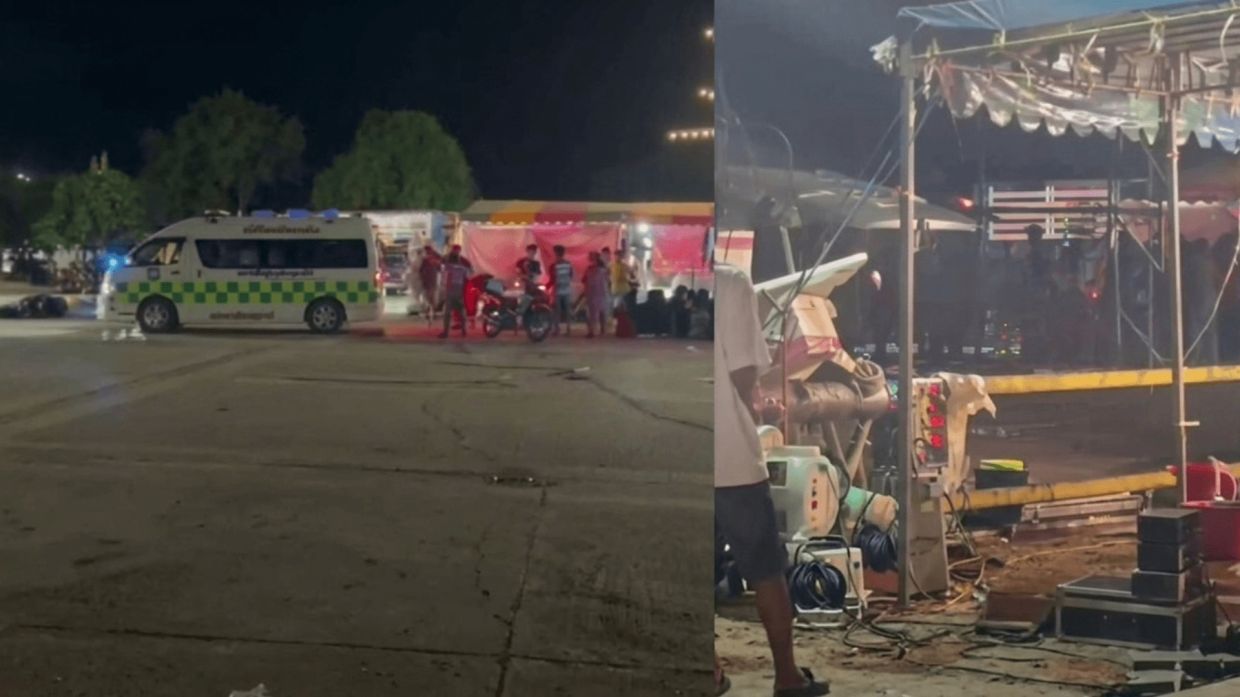
A shooting at a community shopping fair in northeastern Thailand has left six people injured, with one victim still in critical condition. The violence erupted at the "Chim Shop Chai" event in Dan Khun Thot district, Nakhon Ratchasima province, on Wednesday night around 10.30pm, when a gunman and accomplices attacked vendors and shoppers with knives and firearms.
According to event organiser Prakob Patin, the incident occurred during the final stages of the fair as traders were preparing to leave. The shooting happened during a particularly vulnerable time when the venue was busy with staff winding down operations. Prakob reported that all six victims were initially transported to Luang Pho Koon Parisuttho Dan Khun Thot Hospital. Two people sustained serious injuries severe enough to warrant transfer to Maharat Nakhon Ratchasima Hospital, where one remains in critical condition, having fallen into a coma.
Police officers from Dan Khun Thot Police Station, led by Deputy Investigation Inspector Pol Lt Col Akom Chutkhunthot, moved swiftly to apprehend a 32-year-old suspect and recovered a homemade firearm from the scene. Preliminary investigations revealed a troubling sequence of events that triggered the violence. The suspect had allegedly attempted to steal a motorcycle parked at the fair. When the vehicle's owner confronted him about the theft attempt, tensions escalated dramatically.
Rather than backing down, the suspect fled the scene but then returned with additional armed accomplices. This calculated return, with reinforcements equipped with weapons, suggests the assault was not a spontaneous outburst but rather a deliberate escalation. Police indicated that the confrontation itself served as the flashpoint, prompting the suspect to gather backup and launch a coordinated attack on the venue.
The sequence of events reflects a concerning pattern seen across Thailand in recent years, where personal disputes can rapidly transform into armed violence. The suspect's decision to recruit accomplices and acquire weapons underscores the accessibility of firearms in Thailand, even crude homemade variants, and the willingness of individuals to resort to lethal force when challenged. The fact that the attack targeted a community gathering frequented by ordinary civilians demonstrates the indiscriminate nature of the violence.
Authorities have charged the primary suspect with jointly attempting to murder others using firearms. However, police investigations continue as several accomplices remain at large. The successful apprehension of the main perpetrator represents progress, but the ongoing manhunt for additional suspects heightens concerns about potential further incidents while the investigation unfolds.
This incident assumes particular significance within Thailand's broader security context. The shooting represents the third major firearms violence incident in Thailand within a single week, indicating a troubling spike in gun violence across the kingdom. On August 7, a shooting at Debsirin Nonthaburi School resulted in nine deaths, marking one of the deadliest attacks in Thailand's recent history. Days later, on Monday, the president of the Nonthaburi Provincial Administrative Organisation (PAO) was allegedly shot by a former Thai lawmaker, further extending the pattern of violence.
The clustering of these incidents within such a compressed timeframe has prompted alarm among Thai citizens and renewed scrutiny of the nation's firearms regulations and law enforcement capabilities. The repetition of shooting incidents suggests systemic vulnerabilities, whether in gun control enforcement, mental health services, or conflict resolution mechanisms. For regional observers, Thailand's spike in gun violence raises questions about the effectiveness of existing security measures and the adequacy of preventive strategies.
For Malaysian readers, this situation in Thailand carries implications for transnational security and regional stability. Thailand remains a significant destination for Malaysian tourists and business people, and shooting incidents at public events underscore the importance of maintaining awareness regarding personal safety while travelling. The incidents also reflect challenges common across Southeast Asia regarding firearms proliferation and the capacity of authorities to respond to armed violence.
The Dan Khun Thot incident, despite occurring at a local community fair, demonstrates how violence can erupt unpredictably in civilian spaces. The fair represented a gathering place where residents engaged in commerce and leisure, yet became a scene of sudden violence. This underscores how Southeast Asian nations grapple with balancing public accessibility and community engagement while addressing security threats.
Police efforts to trace remaining accomplices continue, and investigators are examining whether broader criminal networks or organized activities motivated the assault. The preliminary findings suggest the incident stemmed from a personal dispute over motorcycle theft, yet the rapid escalation and recruitment of armed associates raises questions about whether established criminal connections facilitated the response.
The incident also highlights the operational challenges facing Thai law enforcement when responding to armed incidents, particularly in provincial areas. The rapid police response and suspect apprehension demonstrate procedural competence, yet the escape of accomplices points to gaps in coordination or prevention mechanisms. As investigations deepen, authorities will likely examine whether improved intelligence gathering or community policing approaches could have prevented the escalation from a theft confrontation to armed violence.

