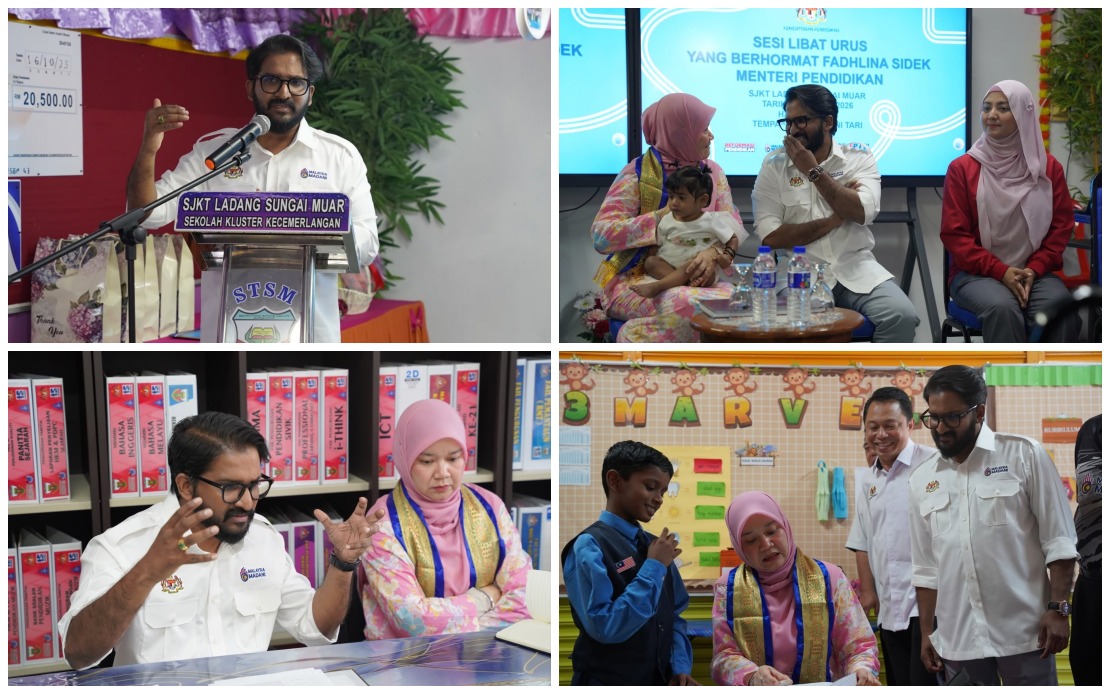
The long-standing proposal to relocate Sekolah Jenis Kebangsaan Tamil (SJKT) Ladang Sungai Muar in Segamat has entered a critical phase, with land ownership procedures now underway through collaboration between state authorities and the school. Segamat Member of Parliament R. Yuneswaran confirmed the development during a visit by Education Minister Fadhlina Sidek to the school, underscoring the federal government's engagement with the relocation project that has become a defining education initiative in the constituency.
The presence of the Education Minister at the engagement session served as visible affirmation that the relocation—a longstanding concern for the Tamil-language education community—enjoys support at the ministerial level. Yuneswaran's statement emphasised that this ministerial involvement demonstrates the seriousness with which authorities are treating the matter, elevating what has been a persistent community grievance into a priority within Malaysia's broader education landscape. The Segamat Land and Mines Office is managing the procedural aspects of securing appropriate land for the new school facility, a necessary precursor before construction can commence.
Since his election in 2022, Yuneswaran has made the school's relocation a focal point of his parliamentary work, consistently raising concerns about the current site's inadequacy. The existing location presents multiple challenges that extend beyond mere inconvenience: safety hazards associated with the school's position have been documented concerns, while the distance from residential areas compounds access difficulties for families. These infrastructure deficiencies are not merely administrative issues but directly affect the learning environment and daily operations of an institution serving a vulnerable community segment.
The relocation initiative reflects broader Malaysian policy emphasis on ensuring equitable educational access across different linguistic and ethnic communities. Tamil vernacular schools, while integral to preserving cultural and linguistic heritage, often operate with fewer resources than their Malay-medium counterparts and frequently face physical infrastructure constraints. SJKT Ladang Sungai Muar's case exemplifies these systemic challenges, making its relocation symbolically significant beyond Segamat's borders.
The transition from announcement to active land acquisition represents tangible progress on an initiative that could have easily stalled amid bureaucratic inertia or resource constraints. Securing appropriate land requires navigating multiple stakeholders—federal education authorities, state land administration, local government, and the school community itself—each with distinct priorities and jurisdictional claims. That these entities are coordinating through the Segamat Land and Mines Office suggests a level of administrative alignment often absent from such initiatives.
For the broader Tamil-language education sector in Malaysia, the Segamat relocation carries precedential weight. Successfully executing this project could establish a model for addressing infrastructure deficiencies at other vernacular schools facing similar constraints. Conversely, delays or complications could reinforce perceptions that such schools remain peripheral to government development priorities, a perception that periodically surfaces in community discourse regarding minority language education funding and infrastructure investment.
Yuneswaran's commitment to ongoing oversight and follow-up reflects the political reality that such projects require sustained parliamentary attention to maintain momentum. Government initiatives involving land acquisition and construction often experience protracted timelines influenced by factors ranging from land disputes to budget allocation cycles. Maintaining political will throughout these inevitable delays becomes crucial for eventual project completion, particularly when the beneficiary community lacks the political leverage that larger, Malay-majority constituencies might mobilise.
The Education Ministry's involvement, symbolised by Fadhlina Sidek's visit, also signals alignment with the MADANI government's stated priority of enhancing educational infrastructure across all communities. The administration has rhetorically emphasised inclusive development, and educational access forms a cornerstone of such rhetoric. Translating this rhetoric into completed physical infrastructure remains the enduring challenge, however, as previous administrations have similarly pledged commitments to vernacular school improvements with varying outcomes.
The timeline for completing land acquisition procedures remains unspecified, yet the entry into this phase suggests that design and planning stages have been sufficiently advanced. Once land ownership is resolved, subsequent phases—architectural planning, tender processes, and construction—will consume considerable additional time. The school community's immediate circumstances remain unchanged, meaning the current inadequate facilities will continue serving students throughout this extended transition period.
For Malaysian policymakers and administrators observing the Segamat initiative, the project demonstrates that vernacular school relocation, while logistically complex and administratively demanding, remains achievable through coordinated action across educational and land administration agencies. The success or failure of SJKT Ladang Sungai Muar's relocation will inevitably influence policy responses to similar infrastructure inadequacies at other Tamil and Chinese vernacular schools nationwide, making this initiative's progression matter beyond Johor's borders and extend into the fundamental question of how Malaysia prioritises educational equity across its multilingual, multicultural landscape.

