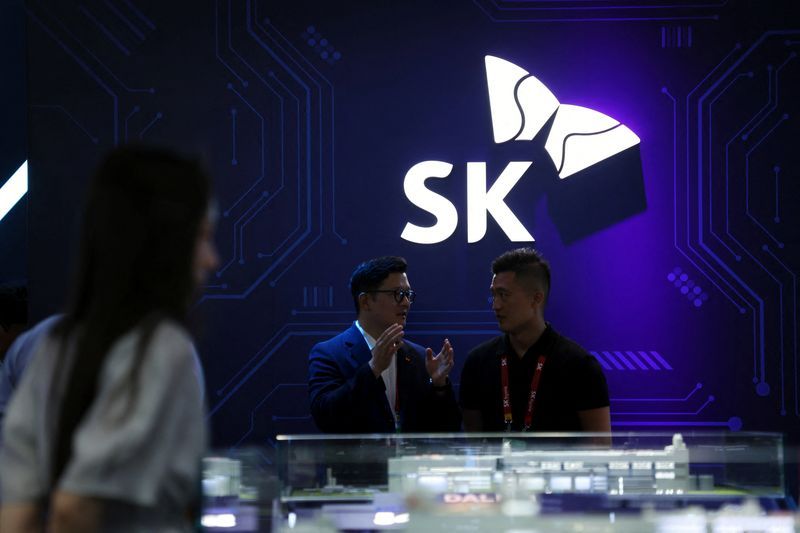
South Korea's SK Hynix, the world's second-largest memory chipmaker, has announced plans to raise up to 45.45 trillion won ($29.43 billion) through a listing of American Depositary Receipts on the Nasdaq market scheduled for July 10. The ambitious capital raising move underscores the company's determination to strengthen its footing as a critical supplier to the booming artificial intelligence sector, while simultaneously broadening its investor base beyond traditional Korean markets. Should the offering proceed at the upper end of its indicated price range, it would surpass the $21.8 billion raised by Alibaba during its 2014 New York debut, establishing itself as the largest ADR offering in history.
The Seoul-based chipmaker intends to issue 17.79 million new shares to support the ADR listing, with the conversion ratio set at ten ADRs equating to one common share. According to regulatory filings, the final fundraising amount remains subject to adjustment following the bookbuilding process, a standard procedure where underwriters gauge investor demand and refine pricing. This flexibility reflects market realities in capital raising of this magnitude, though the company has signalled confidence in its ability to attract substantial institutional and retail investment.
The timing of SK Hynix's capital raise reflects its meteoric ascent within the global semiconductor landscape. On Monday this week, the company clinched the title of South Korea's most valuable enterprise, surpassing longtime heavyweight Samsung Electronics. This milestone represents a remarkable shift in corporate valuations, driven primarily by the explosive growth in artificial intelligence applications and the accompanying demand for high-bandwidth memory chips that sit at the technological core of AI systems. SK Hynix's emergence as a dominant supplier to major technology firms including Nvidia and Google positions it perfectly to capitalise on this structural shift in the sector.
The proceeds from the offering will be strategically deployed across multiple manufacturing and infrastructure initiatives designed to expand production capacity. Specifically, SK Hynix plans to construct a new chip factory in Yongin, establish an advanced packaging fabrication facility in Cheongju, and acquire critical chipmaking equipment including an Extreme Ultraviolet Scanner. These investments represent substantial capital commitments typical of the semiconductor industry, where manufacturing facilities and specialised equipment demand enormous financial outlays. The EUV scanner, in particular, represents cutting-edge technology essential for producing the most advanced chips demanded by AI applications.
The listing carries particular significance for Malaysia and Southeast Asia's semiconductor ecosystem. SK Hynix is a key participant in the regional supply chain, and its expanded capacity directly influences pricing, availability, and technological advancement of chips used across the region. Increased competition and enhanced production capabilities from major players like SK Hynix can have cascading effects on the competitiveness of semiconductor assembly, testing, and packaging operations throughout Southeast Asia, including Malaysia's own chip manufacturing and design sectors.
A consortium of major investment banks is coordinating the offering, reflecting both its scale and perceived attractiveness to institutional investors. BofA Securities, Citigroup Global Markets, Goldman Sachs, and JP Morgan Securities are managing the underwriting process. The involvement of these heavyweight financial institutions suggests strong confidence in both the transaction's completion and the fundamental strength of SK Hynix's business prospects. Such high-profile backing also signals to investors globally that this represents a credible, well-structured opportunity.
The capital raising arrives at an inflection point for the semiconductor industry broadly. Generative artificial intelligence and large language models have catalysed unprecedented demand for computing infrastructure, with data centres requiring vast quantities of specialised memory chips. SK Hynix's high-bandwidth memory products represent essential components in this infrastructure expansion, positioning the company to benefit from what many analysts characterise as a multi-year growth cycle. The company's strategic decision to tap international capital markets reflects its ambition to scale operations commensurate with this opportunity.
From an investor perspective, the ADR listing structure provides a pathway for global capital to access SK Hynix's equity, historically concentrated among Korean institutional and retail shareholders. ADRs simplify the mechanics of investing for foreign institutions and individuals by eliminating currency conversion requirements and settlement complications. This structural innovation in accessing Korean equities has periodically attracted substantial international capital flows, particularly when the underlying company commands compelling growth narratives.
The offering also reflects evolving capital markets dynamics in East Asia. South Korean companies are increasingly tapping US equity markets for growth capital, recognising that American institutional investors command significant dry powder and maintain strong appetite for exposure to semiconductor and technology leaders. For SK Hynix, the international listing complements its existing Korean listings and provides additional liquidity channels for shareholders. The timing suggests management confidence that current market conditions and investor sentiment favour bringing this capital raise to fruition during a period of heightened AI-related enthusiasm.
Looking ahead, the successful completion of this offering would reshape SK Hynix's capital structure and potentially accelerate its competitive positioning against other leading memory chipmakers. The infusion of capital would equip the company with substantial financial firepower to invest in next-generation manufacturing technologies and expand production volumes precisely when global demand for AI-capable chips appears to be at an inflection point. For Malaysian technology investors and companies within the semiconductor value chain, SK Hynix's expanded capacity and technological advancement represents both competitive pressure and potential opportunities for supply chain integration and collaboration.

