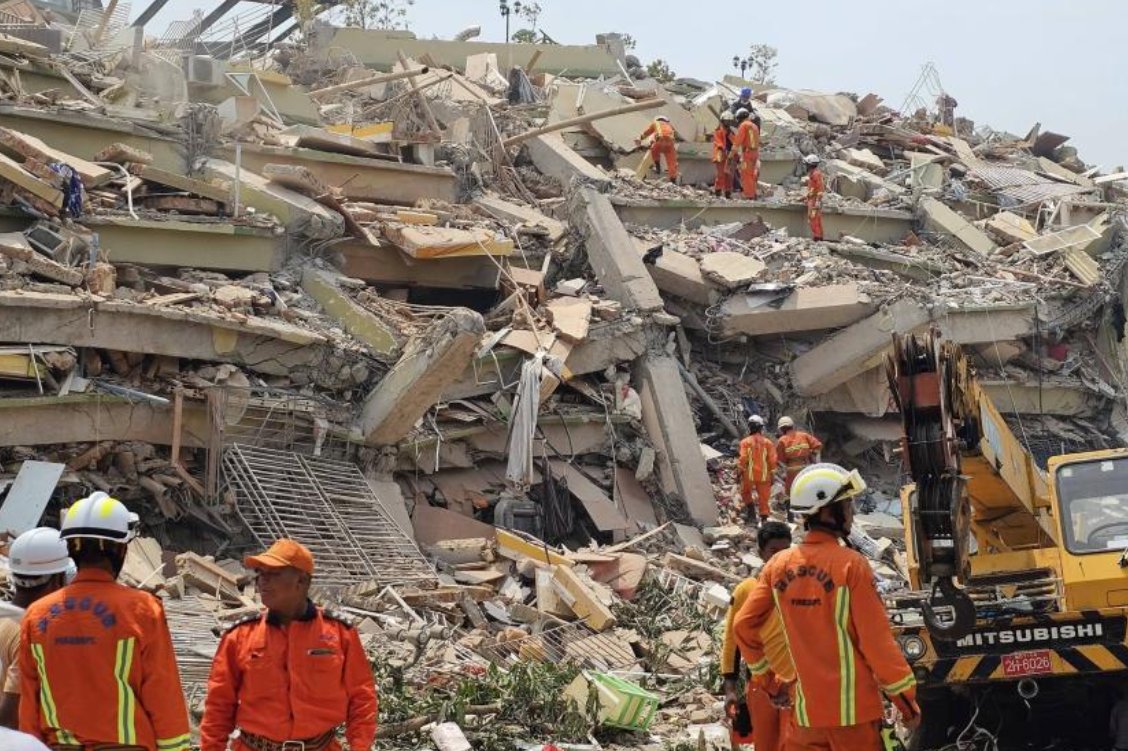
A Myanmar court has handed down a five-year prison sentence with hard labour to U Naing Htun Lin, owner of the Sky Villa Condominium in Mandalay, following the building's catastrophic collapse during an earthquake that claimed more than 200 lives. The Aungmyaythazan Township Court delivered the verdict on June 23, marking a significant accountability measure in one of the most destructive structural failures linked to the natural disaster.
U Naing Htun Lin faced formal charges under Section 304-A of the Penal Code, which covers causing death by negligence. The case originated from the No. (1) Area Police Station in Aungmyaythazan Township, with the investigation ultimately culminating in court proceedings that began in February when he first appeared before the Aungmyaythazan Township Court on February 10. The judicial process reflected the gravity of the incident, as authorities determined that construction deficiencies or maintenance failures had contributed materially to the building's vulnerability during seismic activity.
The defendant's legal journey through the system reveals how Myanmar's courts have grappled with assigning responsibility for infrastructure failures. Initially granted bail to remain free during trial proceedings, U Naing Htun Lin's circumstances shifted dramatically on March 17 when the court revoked his bail and remanded him into custody. This decision underscored judicial concerns about either flight risk or the seriousness of the charges, and the accused subsequently remained imprisoned throughout the remainder of his trial.
The case prosecutor, U Zaw Moe Aung from the Special Investigation Department, pursued the negligence charges with intensity, acting as the state's primary representative in establishing that the condominium owner bore responsibility for inadequate building standards or oversight. The prosecution's case relied on establishing a causal nexus between the owner's actions—or inactions—and the deaths that resulted when the structure failed to withstand the earthquake's forces.
The Sky Villa building itself was an 11-storey residential condominium situated between 21st and 22nd Streets on 60th Street in Aungmyaythazan Township. Its strategic location in an urban area meant the collapse claimed a dense concentration of victims. The recovery of more than 200 bodies from the rubble made it among Myanmar's deadliest building collapses triggered by natural disaster, rivalling or exceeding other major structural failures in the nation's seismic history. The death toll underscored how construction quality directly translates into human casualties when earthquakes strike.
NTL Construction Company, managed by U Naing Htun Lin's wife Daw Thet Thet Khine, was the entity that constructed the Sky Villa development. The corporate relationship between family members and the construction firm raised questions about oversight structures and whether adequate quality control had been implemented during the building process. The presence of family involvement in both ownership and construction management suggested potential conflicts of interest or accountability gaps that investigators likely scrutinised.
In the aftermath of the disaster, the defendants' family demonstrated public contrition through organised gestures of reconciliation. At a monastery pavilion located on 19th Street in Mandalay, the group held three separate commemorative ceremonies where representatives formally apologised to the families of deceased victims. These events served both religious and social purposes, allowing victims' relatives to participate in collective mourning whilst hearing acknowledgements of responsibility from those connected to the failed structure.
Financial compensation accompanied the public apologies. The family provided 10 million kyats to each deceased victim's family, a substantial sum reflecting an attempt to provide material redress to those left bereaved by the catastrophe. While money cannot restore lives or erase trauma, such compensation represents a tangible expression of accountability beyond the criminal proceedings themselves. This dual approach—judicial punishment combined with voluntary compensation—demonstrates how Myanmar's society has addressed major infrastructure failures.
The conviction is not final, however. Both the prosecution and the defence have initiated appeal and revision proceedings, ensuring the case will receive additional judicial scrutiny at higher levels. The Aungmyaythazan District Court has formally requested the case file for review under Criminal Revision Case No. 39Ka/2026, signalling that either party contests aspects of the judgment or believes legal errors warrant correction. This ongoing appellate process reflects the complexity and high stakes involved when determining accountability for mass casualties.
The Sky Villa case carries implications extending beyond individual punishment, raising questions about building code enforcement, earthquake preparedness standards, and structural integrity requirements across Myanmar's construction sector. As Southeast Asia confronts rising earthquake risks and rapid urban development, the conviction sends a message that developers and owners bear responsibility for ensuring their structures protect occupants. For Malaysia and other regional nations with similar seismic vulnerability, the verdict serves as a cautionary reminder about the consequences when commercial interests override safety considerations or when inadequate enforcement mechanisms fail to prevent substandard construction practices.

