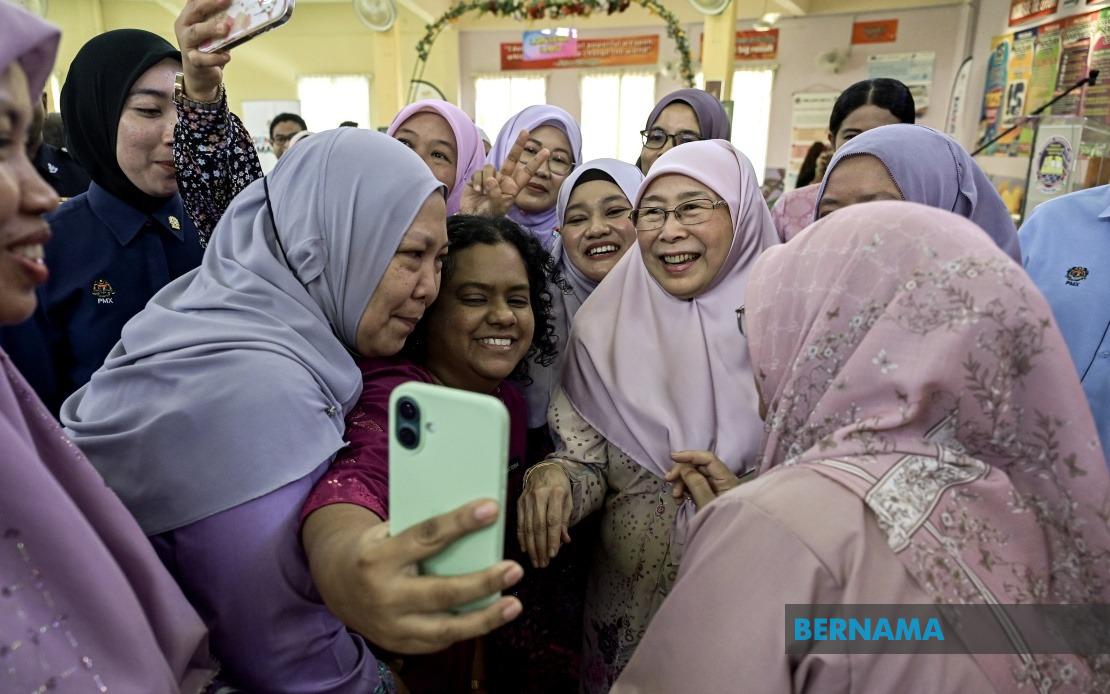
Sekolah Menengah Kebangsaan Seri Mulia in Kuala Lumpur is set to undergo significant physical transformation and safety improvements after securing RM300,000 in funding from the Bandar Tun Razak parliamentary allocation. The development represents a watershed moment for an institution that has operated without comprehensive upgrades for the past 23 years, addressing longstanding infrastructure deficiencies that have accumulated over more than two decades of service to the local community.
Bandar Tun Razak Member of Parliament Datuk Seri Dr Wan Azizah Wan Ismail announced the allocation while officiating the school's Academic Excellence Awards ceremony, emphasising that the initiative responds to urgent facility maintenance needs and heightened security priorities. The funds will enable the institution to undertake both routine maintenance work and strategic modernisation that extends beyond cosmetic improvements to address structural and operational challenges that have developed with age.
A critical component of the renovation programme focuses on bolstering student security through the installation of safety grills, an investment that carries substantial additional costs but reflects contemporary institutional responses to safeguarding concerns. Dr Wan Azizah stressed that protecting the physical and psychological wellbeing of students forms the bedrock of educational excellence, noting that mental health considerations have informed the allocation's design. The comprehensive approach acknowledges that facility conditions directly influence student welfare and learning outcomes, making infrastructure investment inseparable from educational quality.
The funding comes at a time when Malaysian secondary schools increasingly face pressure to modernise aging infrastructure while managing tight budgets. SMK Seri Mulia's case illustrates how parliamentary constituency allocations can function as essential mechanisms for addressing deferred maintenance in educational institutions that lack dedicated capital budgets. For schools serving predominantly middle and working-class communities, such targeted interventions prove particularly valuable in ensuring equitable access to safe, functional learning environments.
Dr Wan Azizah's emphasis on the school's prior neglect underscores broader questions about resource distribution within Malaysia's education system. Two decades of operational existence without significant renovation suggests potential systemic gaps in facility upkeep, where routine budgeting fails to accommodate major capital requirements. The RM300,000 allocation, while welcome, also highlights how individual schools must sometimes depend on the advocacy and discretionary resources of elected representatives rather than predictable government funding mechanisms.
The Academic Excellence Awards ceremony provided the platform for this announcement, creating a symbolic connection between institutional recognition of student achievement and commitment to improving the physical spaces where learning occurs. The ceremonial context reinforces the message that excellence extends beyond academic outcomes to encompass the complete educational environment, including infrastructure quality and safety provisions that enable students to concentrate on their studies without concern for facility adequacy or personal security.
The allocation's approval for safety grill installation reflects changing institutional priorities regarding student protection, particularly in contexts where premises access and movement patterns require enhanced management. Such security measures, while sometimes contentious in educational settings, have gained acceptance as schools balance openness with protective requirements. The specific mention of safety installations as requiring approval through a formal process suggests that institutions have developed frameworks for evaluating security modifications within broader policy contexts.
For the Kuala Lumpur Federal Territory Education Department, which maintains oversight through its School Management Sector, such parliamentary-directed funding complements government education budgets and enables targeted investments in particular institutions. The presence of the department's deputy director at the ceremony indicates coordination between parliamentary allocations and official education structures, ensuring that facility improvements align with educational standards and compliance requirements.
Beyond SMK Seri Mulia, this funding model carries implications for how Malaysian secondary schools might secure necessary upgrades. Many institutions similarly face ageing facilities and constrained maintenance budgets, suggesting that parliamentary allocations could serve as a sustainable mechanism for addressing deferred infrastructure needs across the system. However, relying primarily on constituency-level discretionary spending introduces potential inequities, as funding depends partly on individual representatives' prioritisation and available resources.
The investment also reflects broader efforts to connect education quality with environmental and safety conditions. Malaysian policymakers increasingly recognise that learning effectiveness depends partly on facility standards, cleanliness, security, and psychological comfort—factors that facility upgrades directly influence. For SMK Seri Mulia students, the renovation programme promises not only improved working conditions but also tangible evidence of institutional investment in their welfare and educational experience.
Looking forward, the success of this allocation may influence how other parliamentary representatives approach education funding requests from their constituencies. If SMK Seri Mulia demonstrates measurable improvements in student welfare, facility functionality, and perhaps even academic outcomes following renovation, it could encourage similar initiatives. Conversely, if implementation proves challenging or benefits remain limited, it might inform discussions about how to most effectively deploy parliamentary allocations toward educational improvement.
The timing and scope of the allocation reflect recognition that educational institutions serving urban communities like those in Bandar Tun Razak warrant contemporary facilities supporting 21st-century learning. As Malaysia continues positioning itself as a knowledge-driven economy, ensuring that secondary schools operate in functional, safe environments becomes increasingly important for maintaining competitiveness and nurturing student potential. SMK Seri Mulia's transformation potentially sets a precedent for how Malaysian constituencies can leverage available resources to address educational infrastructure gaps systematically.

