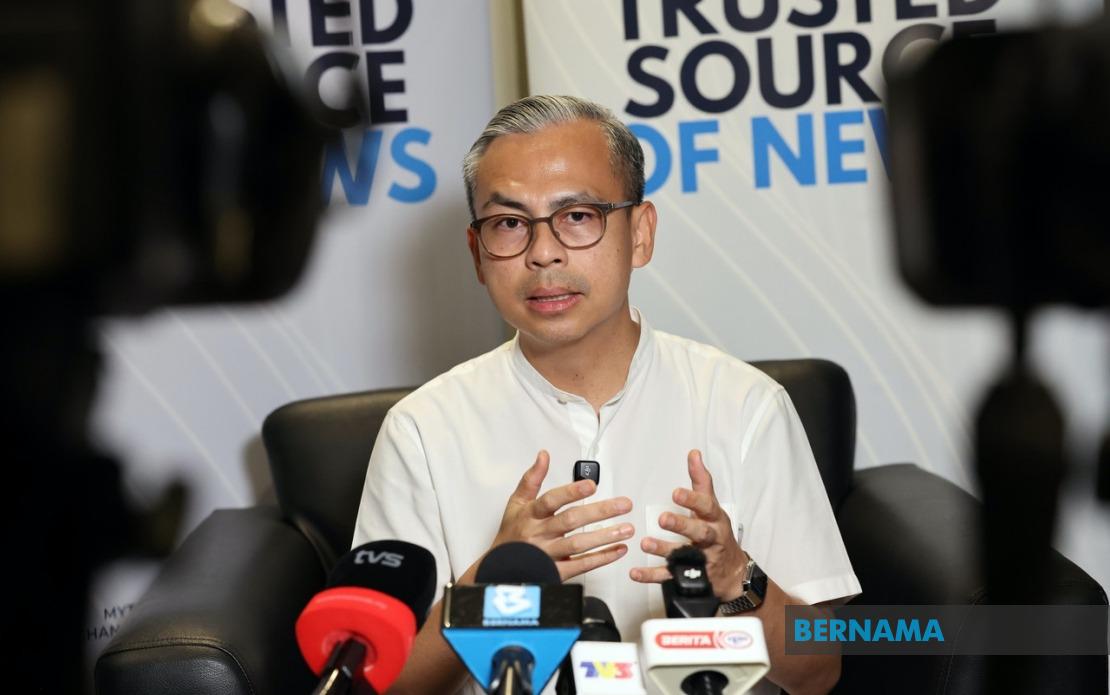
Communications Minister Datuk Fahmi Fadzil has called on social media platforms to intensify their fight against misinformation ahead of the 16th Johor state election, emphasising that current industry policies remain insufficient without robust enforcement mechanisms. Speaking at the Malaysian National News Agency (Bernama) operations centre in Johor Bahru, Fahmi highlighted the critical importance of preventing the rapid spread of false claims during the electoral process, particularly as voters prepare to cast their ballots on Saturday.
The challenge facing Malaysian authorities extends beyond simply identifying fabricated content, as Fahmi pointed out during his visit on July 7. While social media providers maintain formal policies prohibiting the dissemination of falsehoods, the Communications Minister stressed that monitoring and enforcement capabilities require substantial strengthening, especially during the sensitive hours when election results are being announced and tallied. The risk of confusion among voters remains particularly acute when unverified claims about seat outcomes circulate across popular platforms before official declarations are made.
Fahmi expressed significant concern about the potential for coordinated disinformation campaigns on polling night itself. The spread of false information regarding individual constituency results could potentially influence late-deciding voters or spark public confusion about the legitimacy of outcomes. This anxiety reflects broader regional concerns about election integrity in Southeast Asia, where social media has become a primary information source for millions of citizens making voting decisions. The Malaysian government's proactive stance signals recognition that platform operators cannot rely solely on after-the-fact fact-checking when real-time intervention proves far more effective.
The minister identified a two-pronged problem requiring different solutions. One dimension involves the deliberate misuse of established media logos and visual branding to manufacture convincing fake graphics that deceive voters about official results or endorsements. The Malaysian Communications and Multimedia Commission (MCMC) and Malaysian Media Council have already expressed readiness to collaborate with platforms to address this particular threat, recognising that visual manipulation requires specialized detection capabilities. However, Fahmi emphasised that tackling fabricated imagery represents merely half the battle in the broader war against electoral misinformation.
The second and potentially more complex dimension concerns user-generated content created by ordinary netizens, whether formatted as images, commentary, or argumentative posts. These contributions may contain misleading election-related claims without necessarily violating explicit platform policies around harassment or violence. Unlike professional disinformation campaigns, user-generated misinformation often propagates organically through social networks based on emotional resonance or partisan alignment rather than deliberate coordination. Addressing this category demands more nuanced algorithmic responses and content moderation decisions that balance free speech principles against electoral integrity concerns.
Fahmi stressed the necessity for social media platforms to cooperate directly with MCMC in developing faster response protocols. The current complaint-based mechanism proves inadequate when false information can reach millions of users within hours. Proactive monitoring systems that identify suspicious patterns—such as sudden surges of identical messaging or coordinated account behaviour—would enable intervention before misinformation achieves viral spread. This approach aligns with international best practices adopted by platforms operating in other electoral environments, where real-time disinformation dashboards have proven effective at reducing false information's electoral impact.
Regarding complaints, Fahmi noted that MCMC had not yet received formal reports of campaign rule violations occurring through social media channels. This relative quietness might reflect either effective self-regulation by political actors or inadequate reporting mechanisms rather than genuine absence of problematic content. The distinction matters significantly for designing appropriate regulatory interventions, as different root causes demand tailored solutions. Malaysian policymakers appear to be adopting a collaborative approach rather than imposing punitive regulations, seeking to build platform operator buy-in for enhanced voluntary compliance.
Beyond the immediate misinformation challenge, Fahmi discussed the government's broader strategy for maximising voter participation in the final week of campaigning. Pakatan Harapan's campaign strategy focuses on encouraging citizens working or studying outside Johor to return home specifically to vote, recognising that outstation voter mobilisation significantly influences electoral outcomes. The positive reception accorded to enhanced public transport services and special bus packages offered by multiple transport companies suggests genuine appetite among voters to participate despite logistical hurdles.
The government has coordinated with employers across multiple economic sectors to facilitate voting participation. Youth and Sports Skills Training Institute (ILKBS) students have received authorised leave to travel home, while ministers hope retail and food and beverage sector businesses will grant employees flexibility to cast their votes on Saturday. These practical accommodations acknowledge that voting barriers often prove decisive in determining who actually participates, particularly among younger and working-class populations that might otherwise face scheduling conflicts.
Fahmi articulated an ambitious target voter turnout exceeding 60 per cent, reflecting government ambition to demonstrate robust democratic engagement in the Johor election. This threshold carries symbolic significance beyond raw numbers, as high turnout typically generates stronger legitimacy for outcomes and broader public acceptance of results. Parents remain crucial to the mobilisation strategy, with Fahmi specifically urging them to encourage adult children residing outside Johor to return for voting, framing participation as both civic duty and generational stewardship of Johor's future political direction.
The communications strategy emphasised the four to five-year implications of voting choices, attempting to elevate the election's salience beyond immediate partisan competition. By encouraging voters to conceptualise their ballot as determining state governance for a substantial period, officials sought to motivate turnout among populations that might otherwise dismiss the election as routine or insignificant. This framing particularly targets younger voters who may not have participated in previous state elections or who lack strong inherited partisan allegiances.
The convergence of concerns around misinformation, voter access, and participation rates reflects the complex challenges confronting modern electoral administration in Malaysia and comparable Southeast Asian democracies. While the immediate focus addresses this specific Saturday's Johor polling, the underlying issues—social media's role in elections, logistical barriers to voting, and the efficacy of government-platform cooperation—will undoubtedly resurface in future electoral cycles. The approach adopted here, emphasising collaborative problem-solving over confrontational regulation, may provide a template that other Malaysian states or regional governments consider when developing their own election integrity frameworks.

