South Africa has intensified its legal campaign against Israel at the International Court of Justice by submitting a comprehensive filing documenting what it characterizes as systematic non-compliance with court-ordered provisional measures in the genocide case filed nearly two years ago. The submission, made under Article 11 of the ICJ's Resolution on internal judicial practice, represents a significant escalation in Pretoria's determination to hold the Israeli government accountable through international legal mechanisms.
The South African Department of International Relations and Cooperation emphasized that the provisional measures issued by the ICJ carry full legal weight and are binding on all parties. By formally challenging Israel's adherence to these orders, South Africa is attempting to leverage the court's own enforcement machinery to compel compliance, a strategic move that underscores growing frustration with what Pretoria views as deliberate disregard for international law. This filing signals that South Africa intends to exhaust all available remedies within the court system rather than pursue alternative diplomatic channels.
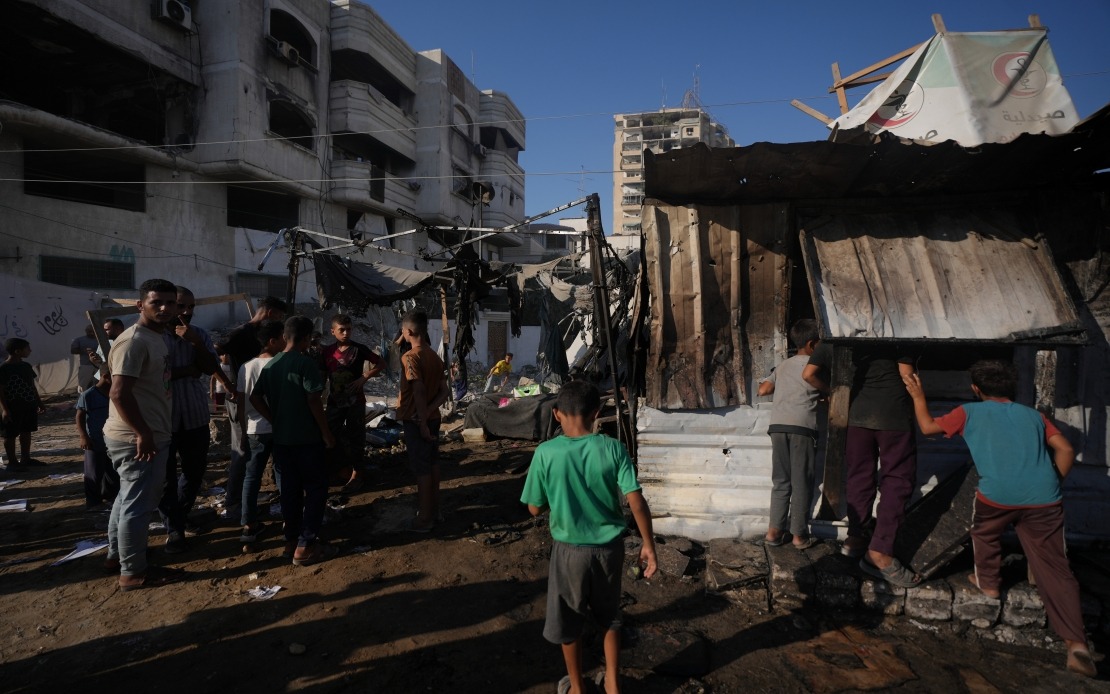
The context for this escalation is deeply rooted in the humanitarian situation in Gaza, where Palestinian populations continue to face extraordinary suffering according to South African assertions. The filing highlights the psychological and material toll on survivors, emphasizing that Palestinians in the enclave are being forced to endure progressively deteriorating conditions in an area that continues to shrink, creating an environment of compounded trauma and deprivation. South Africa's argument essentially frames non-compliance as perpetuating an ongoing harm that the provisional measures were specifically designed to prevent.
Crucially, South Africa points to ongoing casualties as evidence of Israel's failure to respect the ceasefire framework that has been nominally in place since October 10, 2025. According to figures cited in the filing, more than 1,300 Palestinians have been killed and over 4,330 wounded since the ceasefire took effect, with rescue operations continuing to uncover bodies buried beneath collapsed infrastructure. These statistics form the empirical backbone of South Africa's argument that the provisional measures remain necessary and unenforced.
The broader death toll from the conflict itself provides additional context to South Africa's submission. According to Palestinian Health Ministry figures presented in the filing, the overall toll since October 7, 2023 stands at 73,438 Palestinian deaths and 174,447 wounded, figures that South Africa clearly believes demonstrate the scale of harm the provisional measures were intended to mitigate. For Southeast Asian observers, these statistics underscore the prolonged nature of the conflict and the limited effectiveness of interim court orders in preventing loss of life.
South Africa's original case, filed on December 29, 2023, accused Israel of violating the 1948 United Nations Convention on the Prevention and Punishment of the Crime of Genocide. This foundational accusation has structured the entire proceeding, with South Africa arguing that Israeli actions in Gaza constitute genocidal intent and implementation. The case represents one of the most significant applications of the Genocide Convention in recent international legal history, with implications that extend far beyond the immediate parties involved.
The ICJ itself has already intervened multiple times, issuing provisional measures orders in January, March, and May 2024. Each order directed Israel to undertake all necessary measures to prevent acts explicitly prohibited by the Genocide Convention, suggesting that the court itself harbored concerns serious enough to warrant interim protection. South Africa's new filing essentially argues that these three separate interventions have proven insufficient to achieve compliance, necessitating an additional enforcement mechanism.
For Malaysia and other ASEAN nations, this legal proceeding carries significant weight. Southeast Asian states have maintained complex relationships with both the Israeli state and Palestinian territories, and the unfolding ICJ case touches on fundamental questions about the enforceability of international law and the credibility of multilateral institutions. If the ICJ proves unable to enforce its own provisional measures, it raises troubling questions about the viability of international courts as mechanisms for restraining state behavior, a concern that resonates across the region.
South Africa's commitment to exhausting all available avenues for enforcement reflects a broader determination to ensure the provisional measures serve their intended purpose: safeguarding Palestinian rights under the Genocide Convention and preventing irreparable harm before a final judgment emerges. This forward-looking legal strategy suggests South Africa recognizes that the case itself may take years to resolve, making interim protections all the more critical. By filing this compliance challenge now, South Africa is attempting to create pressure on Israel and potentially influence the eventual substantive judgment.
The filing also carries implicit messaging about the limits of diplomatic solutions and the necessity of sustained legal pressure. South Africa's decision to escalate through formal enforcement proceedings rather than negotiating behind closed doors suggests that conventional diplomatic channels have been exhausted or deemed insufficient. This approach may resonate differently across the Global South, where nations have historically relied on international legal institutions to counterbalance military or economic power disparities.
The ICJ's response to this filing will be closely watched by international law specialists and government officials across the world. The court faces a delicate challenge: maintaining its institutional credibility requires demonstrating that provisional measures carry real weight, yet enforcing compliance against a major military power with significant international support presents practical and political difficulties. The outcome may establish important precedent for how international courts address non-compliance by powerful states.
For Malaysian policymakers and legal professionals, this case exemplifies the ongoing tension between national sovereignty and international accountability mechanisms. As Southeast Asia continues to navigate complex geopolitical relationships, the ICJ proceedings offer lessons about both the potential and limitations of international law in addressing grave humanitarian concerns. South Africa's persistence suggests that even when institutional mechanisms appear inadequate, affected nations may continue pursuing legal avenues as a means of maintaining international pressure and documenting violations for historical record.

