Seven transport ministry officials in South Korea now face potential prosecution for their alleged involvement in concealing critical safety information related to one of the nation's deadliest aviation disasters. Police investigation teams announced on Wednesday that the officials have been referred to prosecutors for their role in what authorities characterize as a systematic effort to mislead the public about the airworthiness of equipment directly implicated in the tragedy.
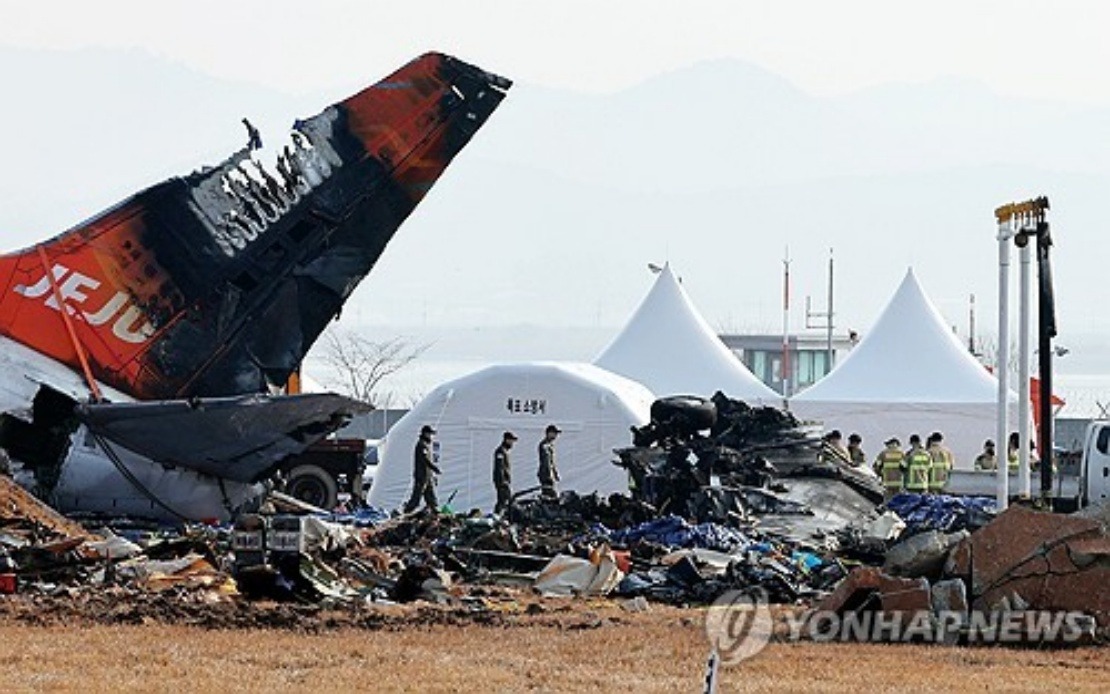
The Jeju Air Flight 2216 disaster unfolded on December 29, 2024, when the Boeing 737-800 aircraft executing an emergency belly landing at Muan International Airport, situated approximately 290 kilometres south of Seoul, struck a concrete structure housing a localiser—a sophisticated navigation system designed to guide aircraft safely onto runways. The impact proved catastrophic. Of the 181 people aboard, 179 perished in the incident, making it one of South Korea's most significant aviation catastrophes and drawing intense scrutiny into the circumstances preceding the crash.
The investigation revealed that officials prepared and disseminated official communications claiming the localiser had been installed in compliance with all applicable safety regulations. However, police investigators determined that the officials involved possessed knowledge that the equipment did not fully satisfy the technical and placement requirements mandated by aviation safety standards. This discrepancy between public statements and internal knowledge forms the core of the cover-up allegations now being pursued by prosecutors.
The positioning of the localiser within the concrete mound structure became a focal point of post-crash analysis. Aviation experts and independent investigators questioned whether the installation violated standard safety protocols regarding obstacle placement near runway approaches. The proximity and structural integrity of the surrounding concrete mound raised concerns about whether alternative configurations might have reduced the severity of the impact had the aircraft encountered it during landing. These technical questions made the regulatory compliance of the installation a matter of urgent public interest.
The referral to prosecutors represents an escalation in accountability measures following the disaster. Rather than treating the matter as a simple administrative oversight, South Korean authorities have chosen to pursue it as a potential criminal matter, signalling the seriousness with which they view the alleged concealment of safety information. The decision to bring charges against multiple officials suggests investigators believe this was a coordinated effort rather than isolated misconduct by individual actors.
For Malaysian aviation professionals and safety regulators, the case underscores the critical importance of transparent communication regarding equipment installations at airports. Malaysia's own civil aviation infrastructure, managed by authorities including the Department of Civil Aviation, benefits from international standards established through the International Civil Aviation Organization. The Jeju Air incident demonstrates how deviations from these standards, particularly when concealed through official misrepresentation, can have fatal consequences that extend far beyond regulatory technicalities.
The investigation methodology employed by South Korean police—examining official communications, cross-referencing them against internal knowledge, and establishing a timeline of who knew what information—provides a valuable template for aviation safety investigators throughout the region. Such systematic approaches help distinguish between genuine misunderstandings of regulations and deliberate attempts to obscure non-compliance from regulators and the traveling public.
The broader implications extend to institutional accountability within government transport agencies. When officials responsible for aircraft safety oversight face potential prosecution for misleading statements, it reinforces the principle that public trust in aviation safety depends upon candid, accurate communication from authorities. This principle applies universally across aviation systems in Southeast Asia, where rapid growth in air travel has expanded the number of airports and increased pressure on regulatory frameworks.
The Jeju Air investigation also highlights how post-disaster investigations can reveal systemic issues extending beyond mechanical failures or pilot error. By examining administrative and bureaucratic conduct, authorities can identify whether safety lapses resulted from inadequate training, unclear regulations, institutional pressure to avoid costly remediation, or deliberate wrongdoing. Understanding these root causes becomes essential for preventing similar incidents in future.
For passengers and their families seeking accountability, the referral of officials to prosecution provides some measure of institutional responsibility being assigned. However, the case also raises questions about whether individual prosecutions adequately address systemic deficiencies in how safety compliance is monitored, verified, and reported within government agencies. Comprehensive reforms may need to extend beyond individual accountability to encompass structural and procedural improvements in safety oversight mechanisms.
The investigation's findings will likely influence how other civil aviation authorities review their own communication practices surrounding equipment installations and regulatory compliance. Airport operators and maintenance contractors throughout Southeast Asia may face heightened scrutiny regarding how they document safety compliance and justify installation decisions that deviate from standard practice.
As the case proceeds through South Korean courts, it will serve as an important precedent regarding governmental accountability in aviation safety matters. The outcome may influence how other nations approach investigations into administrative conduct following major transportation disasters, establishing expectations about transparency and honesty from officials entrusted with public safety responsibilities.

