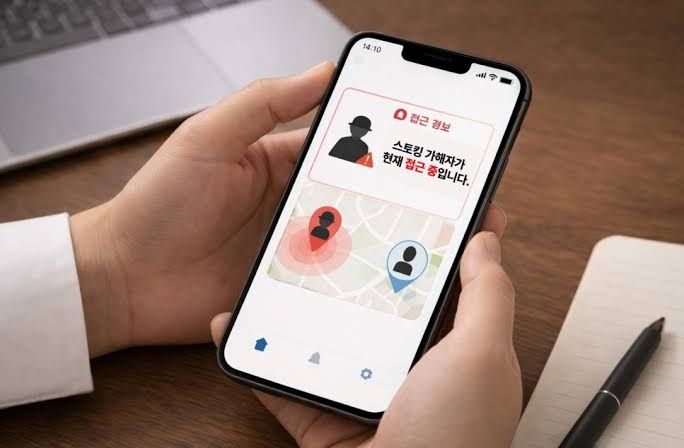
South Korea took a significant stride in victim protection on June 24 when it unveiled a smartphone-based alert system designed to give stalking victims direct access to the whereabouts of those accused of pursuing them. The Ministry of Justice developed the application to address mounting frustrations with the efficacy of existing safety frameworks, particularly after high-profile cases revealed inadequacies in how law enforcement monitored dangerous offenders and notified their targets of imminent threats.
The new platform represents a fundamental shift in how stalking cases are managed across South Korea's justice system. Rather than victims remaining passive recipients of occasional official notifications, the app furnishes continuous visibility into a suspect's precise geographical coordinates and directional movement patterns. This real-time intelligence allows potential targets to make informed decisions about their daily routines, travel routes, and public appearances with greater awareness of proximity risks. The technological intervention acknowledges an uncomfortable reality: traditional emergency alert devices alone have proven insufficient deterrents against determined perpetrators.
The backdrop for this initiative reveals the scope of South Korea's stalking crisis. Beginning in 2024, authorities began mandating electronic ankle monitors in particularly dangerous cases following court determinations. These devices complement smartwatch-style emergency alarm systems that had been distributed to at-risk individuals for several years prior. Yet the statistics underscore systemic failures: between 2021 and August 2025, as many as 23 women equipped with the emergency alert apparatus were either killed or became victims of attempted homicide, according to Lee Gwang-hee, a representative from the ruling Democratic Party of Korea. Such deaths occurring despite existing safeguards catalysed urgent governmental action.
The deployment of real-time location sharing technology raises significant civil liberties questions that policymakers have attempted to address directly. Concerns around privacy—particularly the risks of misusing intimate information about a suspect's movements, residence, and routine—forced the Justice Ministry to undergo a comprehensive regulatory revision in December 2025. These updated guidelines establish protective boundaries around how location data may be accessed, stored, retained, and utilised, attempting to balance victims' legitimate safety interests against broader data protection principles. The recalibration reflects Seoul's effort to craft accountability mechanisms that prevent location information from being weaponised against either party.
The context of this development carries resonance across East and Southeast Asia, regions grappling with rising stalking-related violence. South Korea's willingness to implement technological solutions complemented by strengthened legal protections offers a case study for neighbouring countries evaluating how digital tools might enhance victim safety without compromising offender rights or exposing systems to abuse. The approach differs markedly from some international models that rely solely on enhanced law enforcement response times or victim relocation assistance, instead positioning victims as active monitors of their own security landscape.
The Justice Ministry has signalled that technological innovation will continue expanding victim agency within the system. Scheduled for introduction in April 2027, a further reform will enable stalking victims to petition courts directly for restraining orders rather than depending on law enforcement personnel to initiate such requests on their behalf. This procedural change addresses another identified weakness: delays inherent when victims must convince police of danger severity before official protective measures activate. Direct court access compresses timelines and acknowledges that those being targeted often possess the clearest understanding of threat levels they face.
Implementing comprehensive victim protection requires coordination across multiple governmental agencies and technological platforms. The Ministry of Justice now oversees the app's administration while working with law enforcement to ensure consistent use of electronic monitoring devices in qualifying cases. However, success ultimately depends on consistent judicial application of monitoring requirements and victim familiarity with the new system's capabilities. Public education campaigns will be essential to ensure that vulnerable individuals understand how to access real-time location data and integrate such information into their personal safety strategies.
The evolution of South Korea's approach reflects global recognition that stalking constitutes a serious criminal matter warranting sophisticated responses. What distinguishes Seoul's strategy is the explicit empowerment of victims through direct access to suspect location information. This model assumes that individuals threatened by persistent pursuers should retain maximum autonomy over decisions affecting their mobility, social engagement, and personal routines. The underlying philosophy rejects paternalistic frameworks where authorities determine what information victims need; instead, it grants them tools to construct their own threat assessments.
Looking forward, the adequacy of these interventions will be measured through victim safety outcomes and the incidence of stalking-related violence in the coming years. South Korea's willingness to implement bold technological solutions while simultaneously reforming legal procedures suggests a comprehensive recognition that single-tool approaches prove insufficient. The April 2027 introduction of victim-initiated restraining order petitions will further reduce friction points in the protection system. Whether these layered interventions—real-time location tracking, enhanced electronic monitoring, expedited court access, and revised privacy safeguards—prove sufficient to meaningfully reduce stalking-related homicides and attempted murders remains the ultimate measure of policy success.

