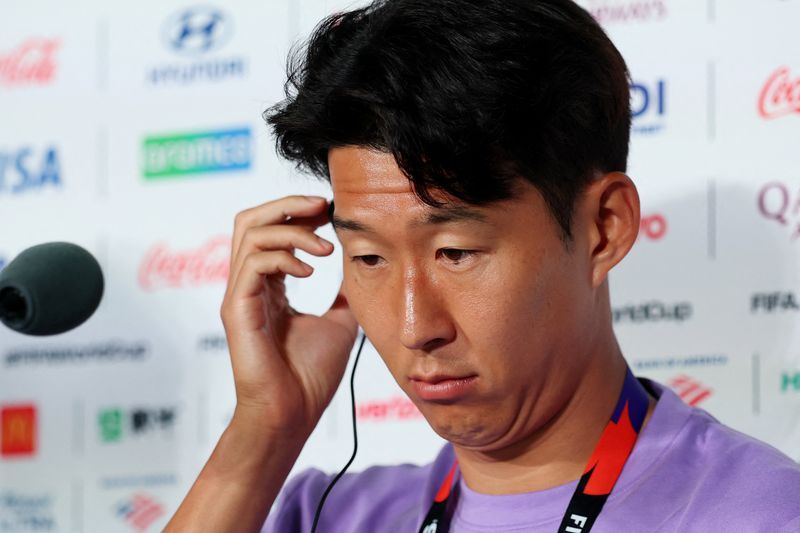
South Korea's national football team has taken the unusual step of withdrawing from non-mandatory media interactions during the World Cup after allegations emerged that journalists from the country made derisive comments about captain Son Heung-min's military service obligations. The incident occurred at the team's Guadalajara training base and was captured on an open microphone, prompting immediate action from team officials concerned about player morale and dignity.
The controversy centres on Son Heung-min, the 33-year-old Tottenham Hotspur forward and national team captain, who has been the target of unwanted scrutiny regarding his completion of South Korea's mandatory military service. Unlike many of his peers who serve full conscription terms, Son was entitled to an exemption as one of the gold medallists from the 2018 Asian Games, an achievement that carries significant prestige within South Korean sports culture and provides a legitimate pathway around lengthy conscription obligations.
Military service represents one of the most complex and politically charged issues within South Korean society. The nation requires all able-bodied men to complete approximately 21 months of active duty as a cornerstone of national defence strategy and preparation against potential threats from North Korea. This is not merely a bureaucratic requirement but a foundational civic responsibility that shapes generational experiences and remains deeply embedded in national consciousness. The system creates inevitable tensions between competing national interests and individual aspirations, particularly for elite athletes whose careers peak during years when their contemporaries are in uniform.
The exemption structure, which grants relief to athletes who achieve gold medals at the Asian Games or Olympic medals, acknowledges the reality that international sporting success brings global prestige to the nation. Son and his teammates earned their exemption through genuine sporting excellence at the 2018 Asian Games, a legitimate achievement that released them from the full service requirement. However, this exemption system itself has become increasingly controversial, with public opinion often divided on whether sporting accomplishment truly warrants reducing military obligations that ordinary citizens must fulfil.
The Korea Football Association issued a formal statement expressing deep regret about the incident and describing the journalists' comments as inappropriate and harmful to the team's functioning. The statement emphasised that players are representing their nation on football's grandest stage and deserve respect and protection as they attempt to honour their country's expectations. This framing positions the players not merely as athletes but as national ambassadors whose welfare and morale directly affect South Korea's competitive performance at the World Cup.
The KFA's broader concerns extend beyond the immediate incident to the relationship between sports organisations and media institutions. By requesting that media outlets demonstrate greater consideration and responsibility toward the squad, the association has signalled that current media practices are viewed as creating a hostile environment that undermines team cohesion and player wellbeing. The statement represents a formal rebuke of journalistic conduct that the federation believes crosses ethical boundaries, regardless of how the subjects of criticism might be perceived publicly.
Protecting the squad has been designated as a priority for the football association going forward, with explicit commitment to developing what officials describe as a healthier media environment. This indicates that the incident reflects deeper structural problems in how South Korean sports journalism covers national teams, particularly regarding sensitive topics like military service that intersect with patriotic expectations and national security concerns. The federation's commitment suggests they intend to implement new protocols and boundaries for media access.
FIFA's mandatory media obligations present a practical constraint on the team's ability to extend their boycott indefinitely. While the players have withdrawn from voluntary interactions, they will be required to participate in formal press conferences and interviews as stipulated by football's governing body. This distinction between voluntary cooperation and mandatory compliance allows the team to register their protest while still meeting international football regulations, demonstrating a calibrated response that maximises pressure on media outlets without inviting sanctions from FIFA.
Son himself underwent formal military training earlier in his career, completing a three-week basic training programme in 2020 during the COVID-19 pandemic when the Premier League was suspended. This training was far from ceremonial, involving exposure to tear gas, live-fire drills, and extended endurance marches covering 30 kilometres. The imagery of Son participating in these demanding physical challenges underscores the reality that his military obligation, while abbreviated compared to standard conscription, was substantive and genuine. His willingness to undertake this training at the height of his professional career demonstrated both respect for national requirements and commitment to honouring exemption privileges.
The controversy carries implications beyond the immediate World Cup campaign, touching on broader questions about how South Korean society reconciles individual achievement with collective national responsibility. The journalists' reported comments suggest undercurrents of resentment or scepticism about military service exemptions, reflecting public divisions that occasionally surface in response to high-profile athletes who benefit from these arrangements. The team's boycott response indicates that players and officials have reached a point where they no longer wish to tolerate suggestions that their exemptions were undeserved or that their military obligations deserve mockery.
For Malaysian and Southeast Asian observers, this incident illuminates the distinctive pressures faced by South Korean athletes navigating the intersection of sporting careers and mandatory military service. While conscription exists in several regional nations, South Korea's particular security situation and the centrality of military service to national identity create unique tensions that affect how athletes are perceived and covered by domestic media. The situation also demonstrates how sports organisations can take collective action to establish boundaries with media institutions, a precedent that carries relevance across the region.
The broader football community will be watching how this situation evolves and whether the team's protest yields tangible changes in how domestic media outlets cover the national squad. The incident serves as a reminder that professional athletes, regardless of their status or achievements, deserve treatment that respects both their contributions to national sporting endeavours and the legitimate paths they take to fulfilling civic responsibilities. As the World Cup campaign continues, the team's unity in response to this challenge may ultimately strengthen rather than weaken their collective performance.