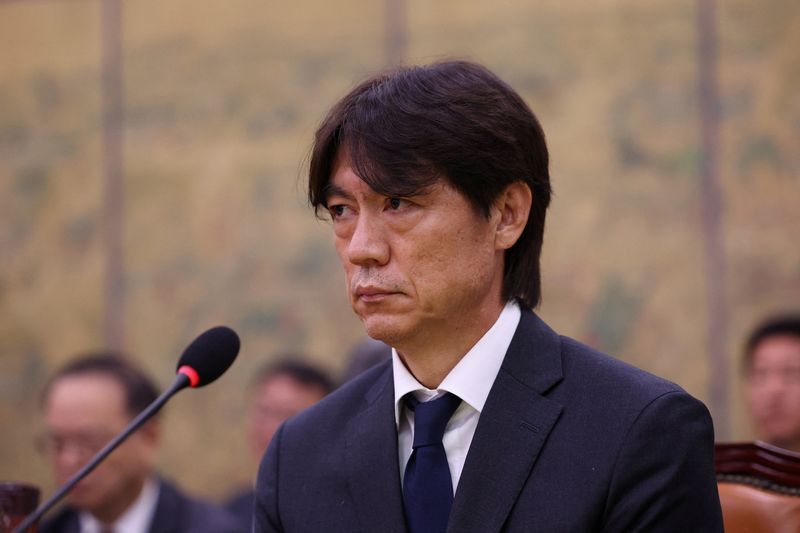
South Korean authorities have intensified their examination of the Korea Football Association's decision-making processes with a police raid on the organisation's offices on Thursday. The search was conducted as investigators pursue allegations of obstruction of business connected to the appointment of Hong Myung-bo as the national football team's coach. This development marks a significant escalation in a controversy that has shadowed South Korean football since the executive's return to his former role early last year.
The controversy surrounding Hong's appointment stems from the KFA's abrupt departure from what had been an extensive international recruitment campaign. The association had conducted an extended search featuring various foreign candidates before suddenly truncating the process and offering the position to Hong following what critics characterise as a mere informal conversation. This dramatic shift in procedure triggered immediate questions about the legitimacy and transparency of the decision-making process, particularly given the high-profile nature of the position.
The timing of Hong's reappointment proved especially contentious in light of South Korea's subsequent performance at the World Cup tournament. The national team's early elimination from group-stage play significantly amplified public scrutiny and political interest in how the coaching position had been filled. Parliamentary lawmakers seized on the poor results as evidence that the appointment process warranted closer examination, suspecting that procedural irregularities may have contributed to suboptimal leadership selection.
During formal parliamentary testimony the previous month, Hong directly addressed accusations that he had received preferential treatment during his appointment. While rejecting suggestions of improper advantage, he acknowledged responsibility for the national team's disappointing tournament campaign. His testimony reflected an attempt to separate the legitimacy of his appointment from the results he subsequently delivered, though critics argued both issues remained inextricably linked.
Government sports authorities had already begun documenting concerns about the appointment process. In October 2024, South Korea's sports ministry formally concluded that the KFA had deviated from its own established protocols both in Hong's appointment and in the previous selection of former coach Juergen Klinsmann. The ministry's examination specifically identified the technical director's meeting with Hong as falling short of constituting a proper formal interview, thereby violating standard procedural requirements.
Despite these institutional findings, the sports ministry refrained from escalating its response. Officials determined that while procedural violations had occurred, the available evidence did not substantiate criminal wrongdoing sufficient to warrant contract cancellation or other disciplinary action against Hong. This measured response left the situation in an ambiguous state, with administrative fault established but criminal liability remaining unproven.
Law enforcement bodies, however, took a different view of the matter. Police had been separately examining complaints alleging inappropriate interference in Hong's appointment even before the World Cup results intensified public pressure. The raid on KFA offices represents the first visible manifestation of this criminal investigation, suggesting investigators believe evidence sufficient to justify more formal inquiry may exist within the association's records and documentation.
The distinction between administrative and criminal investigations is significant in the South Korean context. While the sports ministry's October 2024 findings established procedural breaches and raised questions about governance standards, they explicitly found no evidence of illegality. However, the police investigation into obstruction of business charges suggests investigators may be pursuing a different legal theory, potentially focusing on whether officials actively blocked or interfered with lawful administrative processes.
For Malaysian and Southeast Asian observers, this case illuminates broader questions about governance standards in regional sports organisations and the appropriate relationship between civilian administrative bodies and law enforcement. The sequence of events—initial coaching decision, poor performance, administrative investigation, and subsequent criminal inquiry—reflects the complex interplay between technical sporting judgment and institutional accountability that increasingly characterises major sports decisions throughout Asia.
The investigation also underscores growing public and political intolerance of perceived non-transparency in high-stakes sporting appointments. As professional football's global profile and economic significance continue expanding in Southeast Asia, similar scrutiny of coaching and administrative decisions may become increasingly common across the region. South Korea's experience suggests that even established football associations face mounting pressure to demonstrate rigorous, transparent appointment processes that withstand both public and governmental scrutiny.
Neither Hong nor KFA officials have faced announced criminal charges as investigations continue. The police raid represents the investigative phase rather than any formal accusation of wrongdoing. However, the action signals that authorities believe sufficient grounds exist to examine organisational records and personnel more systematically. The ultimate outcome of this investigation may shape how South Korean and other Asian football associations structure their future coaching searches and decision-making protocols.

