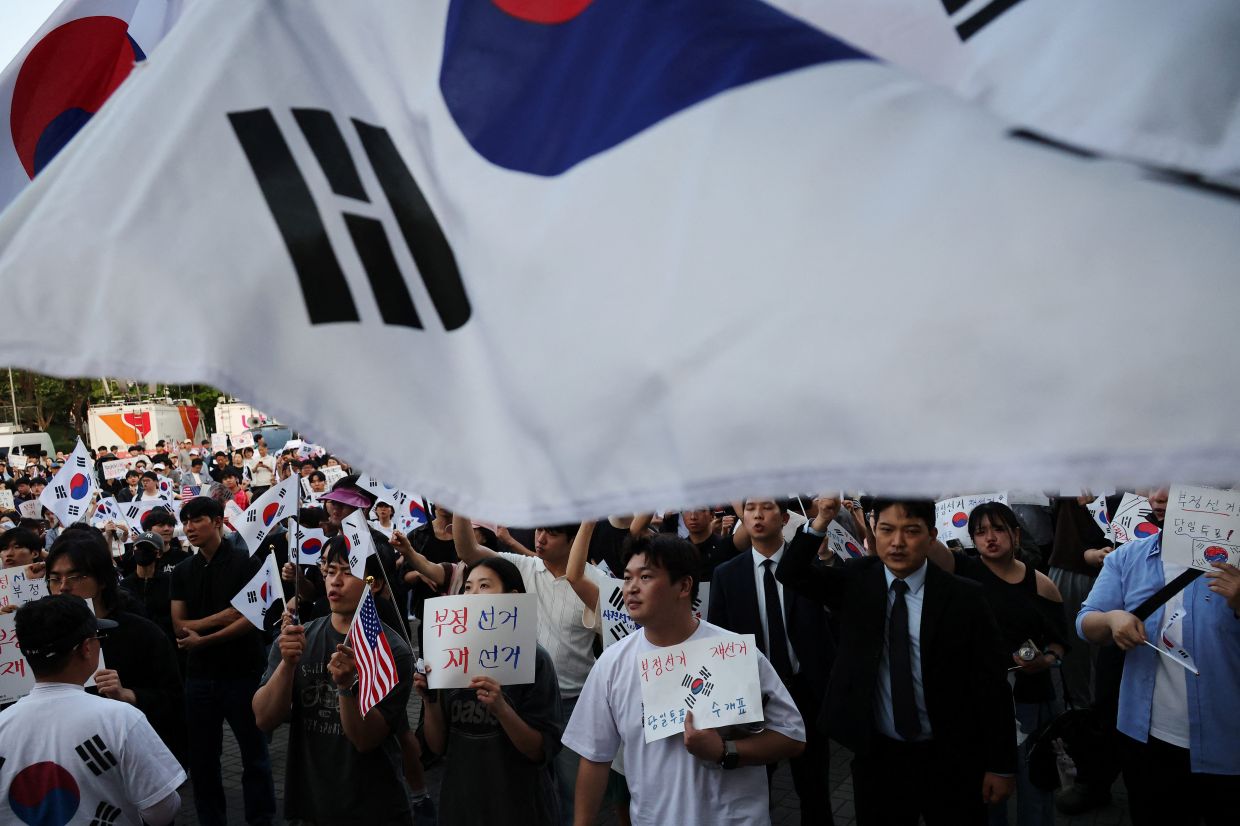
South Korean President Lee Jae Myung has appealed to demonstrators protesting the bungled June 3 local elections to remain mindful of public order and the rights of fellow citizens. In a statement posted on social media platform X on June 15, he emphasised that while legitimate grievances exist over voting irregularities, protesters must ensure their actions do not encroach upon others' freedoms and ability to go about their daily lives. The measured tone reflects an attempt to acknowledge public anger without validating what he characterises as unfounded claims of systematic election manipulation.
The president's comments came as ongoing demonstrations continued around Olympic Park in southern Seoul, specifically in the vicinity of the handball arena that served as the vote-counting centre during the June 3 elections. Protesters have maintained a presence at the facility, which housed ballot boxes following election day. Their actions, however, have had unintended consequences for legitimate operations in the area. Sports organisations with offices inside the sprawling Olympic complex have reported substantial disruptions to their administrative functions, with some unable to conduct essential work required for South Korean athletes competing in international sporting events.
Lee instructed law enforcement to launch comprehensive investigations targeting not only individuals who forcibly obstructed access to facilities but also those who coordinated or conspired in such obstruction. This dual focus suggests authorities intend to pursue charges against both direct participants in blockades and suspected organisers or strategic coordinators. The approach signals a hardened stance toward what the government views as escalating interference with public services and commercial operations.
The presidential intervention occurred one day after Lee had publicly criticised the National Election Commission's management of the June 3 elections as constituting a grave institutional failure that compromised voter rights. Speaking via video link from the Vatican during a meeting with senior government officials, he framed the voting irregularities as fundamentally antithetical to democratic principles. His acknowledgment of the NEC's operational shortcomings represented a significant concession, recognising that systematic failures in ballot distribution and vote management had created genuine obstacles to the franchise.
However, Lee drew a sharp demarcation between legitimate criticism of poor administrative execution and the spreading of what he termed baseless conspiracy narratives alleging deliberate election rigging. He contended that certain political actors were opportunistically exploiting genuine public concerns to advance unfounded theories about election fraud. This distinction has become a central point of contention in South Korean political discourse, with the government arguing that while procedural improvements are warranted, claims of systematic manipulation lack evidentiary foundation.
According to Lee's account, those promoting election fraud allegations have engaged in increasingly troubling behaviour, including threatening police officers and ordinary citizens, conducting unauthorised searches and inspections, blocking facility access, and obstructing the performance of official duties. These characterisations paint a picture of protests that, in the government's view, have transcended peaceful demonstration and entered territory of intimidation and interference with law enforcement functions. The president warned that individuals responsible for such conduct must face legal consequences without exception or protection.
For Malaysian and Southeast Asian observers, the South Korean situation illustrates the delicate balance democracies must navigate when managing both legitimate electoral grievances and preventing the weaponisation of procedural failures for political agitation. Electoral management irregularities in any democracy risk eroding public confidence in institutions, yet governments must distinguish between accountability measures and the amplification of unsubstantiated fraud narratives. The tension between transparency and stability that Lee identifies reflects challenges common across the region.
Lee called for an accelerated, transparent investigation into the electoral failures, positioning such scrutiny as essential to strengthening democratic institutions rather than undermining them. He urged the National Election Commission to fully cooperate with an anticipated parliamentary inquiry, indicating that legislative oversight should complement executive and law enforcement investigations. This call for multi-institutional engagement suggests recognition that public confidence requires visible accountability processes rather than closed government inquiries.
The president also pressed joint investigation teams comprising prosecutors and police to expedite their examination of responsibility regarding the voting failures. His invocation of conducting investigations "without any sanctuary" appeared designed to signal that no senior official would receive preferential treatment, though the statement remained notably general in scope. Such rhetorical commitments to impartial investigation carry particular weight in South Korean politics given historical patterns of politicised prosecutorial action.
Lee framed the election management crisis as an opportunity for societal renewal rather than a moment for partisan exploitation. He argued that constructive engagement—featuring healthy criticism paired with concrete alternative proposals—represented the appropriate civic response to the voting irregularities. This framing invites civil society and opposition figures to participate in solutions-oriented dialogue while implicitly criticising protest movements that focus primarily on allegations without advancing implementable reforms.
The broader context reveals how election administration failures can rapidly metastasise into wider institutional crises if not managed carefully. South Korea's June 3 irregularities, while initially technical in nature, have escalated into demonstrations questioning election integrity itself. Lee's intervention attempts to contain this escalation by separating justified institutional criticism from what he characterises as inflammatory conspiracy-mongering.
For Southeast Asian democratic practitioners, the South Korean precedent underscores how procedural transparency and swift remedial action can help distinguish between legitimate accountability and destabilising polarisation. The region has witnessed instances where electoral irregularities, whether real or alleged, have become catalysts for broader institutional conflicts. Lee's attempt to ring-fence the June 3 election failures as administrative rather than conspiratorial reflects a strategy many democracies have adopted with varying degrees of success.
Moving forward, the effectiveness of Lee's approach will depend substantially on whether parliamentary and prosecutorial investigations produce findings that public stakeholders perceive as credible and comprehensive. Should investigations appear perfunctory or politically motivated, his calls for restraint and distinction-drawing between legitimate criticism and fraud allegations will likely ring hollow. The ultimate test of institutional resilience lies not in presidential rhetoric but in whether democratic safeguards and investigative mechanisms function with genuine independence and rigour.