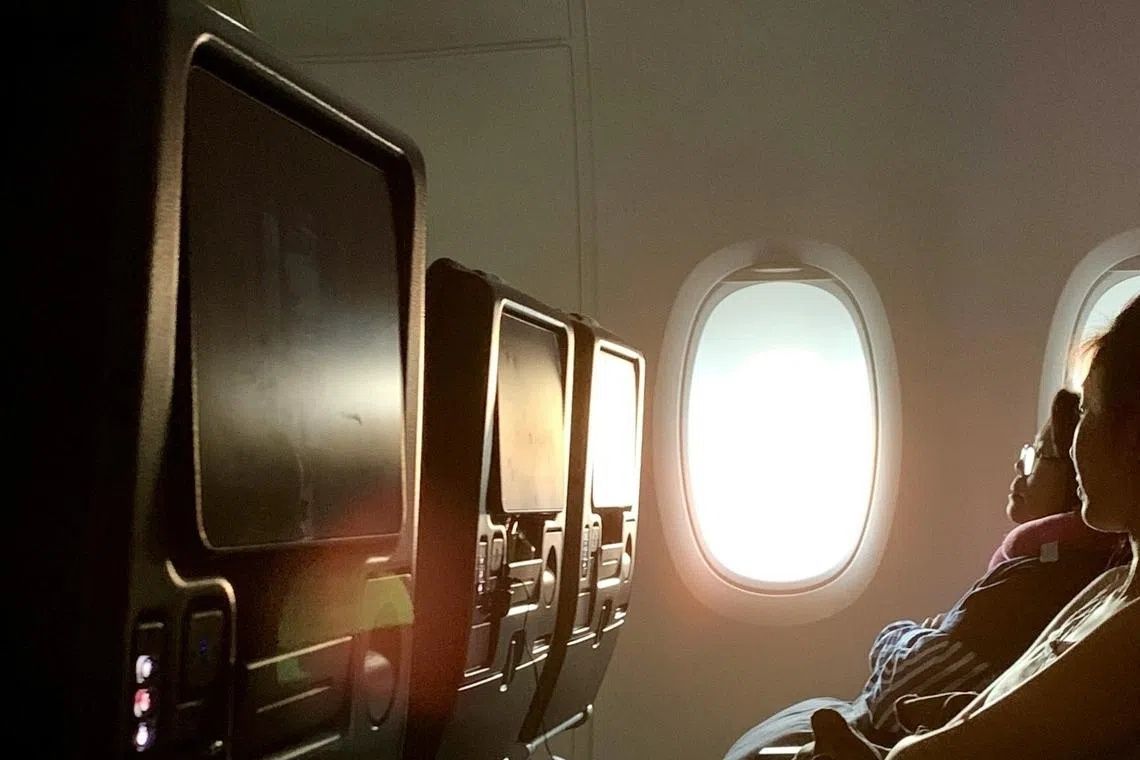
A middle school student in South Korea has escalated concerns about unfiltered entertainment on commercial flights by filing a formal complaint through the government's Petition 24 platform, administered by the Ministry of the Interior and Safety. The petition highlights a gap in child protection mechanisms within the aviation industry, raising questions about how airlines balance passenger choice with their duty of care towards minors. The case underscores growing parental anxiety across East Asia regarding children's exposure to unsuitable material in public spaces where supervision becomes difficult.
The petitioner described being unable to avoid viewing violent and sexually explicit scenes during a recent flight, despite making a conscious effort not to engage with the content being displayed on seat-back monitors. The involuntary exposure was particularly concerning because a younger sibling in primary school was also present and subjected to the same material. This shared experience of family members being affected by the same incident adds weight to the complaint, framing the issue not merely as an individual grievance but as a systemic failure affecting multiple age groups simultaneously.
Instead of simply enduring the situation, the teenager has proposed concrete solutions through the official petition mechanism. The suggested remedy involves implementing privacy screens on individual seat monitors to prevent passengers from viewing content rated above certain age thresholds, a technological intervention that would give families greater control over what appears on their screens. This suggestion demonstrates awareness of practical alternatives that airlines could adopt without entirely eliminating adult-oriented content from their entertainment offerings—a balanced approach that acknowledges the diverse viewing preferences of different passenger demographics.
The petitioner grounded their complaint in existing South Korean legislation, specifically citing both the Child Welfare Act and the Youth Protection Act, which expressly mandate the protection of children and adolescents from harmful content. By anchoring the petition in established legal frameworks rather than framing it as a personal complaint, the teenager effectively argued that current airline practices may violate statutory protections that society has already deemed necessary. This legislative foundation could prove significant if the petition gains traction and triggers government review of airline policies.
Currently, South Korea's two dominant carriers—Korean Air and Asiana Airlines—maintain policies against screening content rated for audiences aged nineteen and above. Both airlines typically utilise edited versions of films where the most disturbing or graphic sequences have been removed or significantly altered. These measures suggest that industry leaders already recognise the tension between offering comprehensive entertainment options and protecting younger passengers. However, the teenager's complaint implies these existing safeguards remain insufficient because they rely on content selection and editing rather than preventing exposure at the point of display.
The precedent set by both Korean Air and Asiana in 2020 illustrates how airlines occasionally respond to content concerns. The two carriers jointly removed the internationally acclaimed film Parasite from their in-flight catalogues despite its official rating for viewers aged fifteen and above. The decision acknowledged that certain cultural products, regardless of their artistic merit or critical acclaim, contain scenes so intense or explicit that they warranted exclusion from the captive audience environment of commercial aircraft. Parasite's removal demonstrated that established review ratings did not automatically translate into airline-appropriate material, setting a precedent for reactive policy-making rather than proactive structural changes.
The case reveals a broader challenge facing Asian aviation regulators: defining appropriate boundaries for entertainment in shared spaces where family groups with varying ages travel together. Unlike cinemas where parents make deliberate choices about what films to expose their children to, aircraft provide no such gate-keeping opportunity. Passengers simply power on their screens without knowing precisely what content will be available, creating potential conflicts between adult entertainment preferences and child welfare. This structural difference suggests that aviation regulations should logically differ from cinema standards.
The filing also reflects generational attitudes towards child protection in South Korea and the broader region. Young people are increasingly willing to utilise government petition platforms to voice concerns about societal issues, viewing institutional mechanisms as legitimate channels for change. The teenager's decision to formalise their complaint rather than merely accepting the situation as an inevitable aspect of air travel signals growing expectations that institutions should proactively manage risks to minors, even in commercial contexts.
As the petition circulates through the government system, it may prompt formal review by aviation authorities regarding whether current airline policies adequately balance entertainment diversity with child welfare obligations. The outcome could influence regional standards, as other Southeast Asian carriers often adopt policies aligned with Korean market leaders. A requirement for privacy screen technology or mandatory age verification before adult content display could become increasingly normalised across Asia-Pacific airlines if this petition leads to regulatory action.

