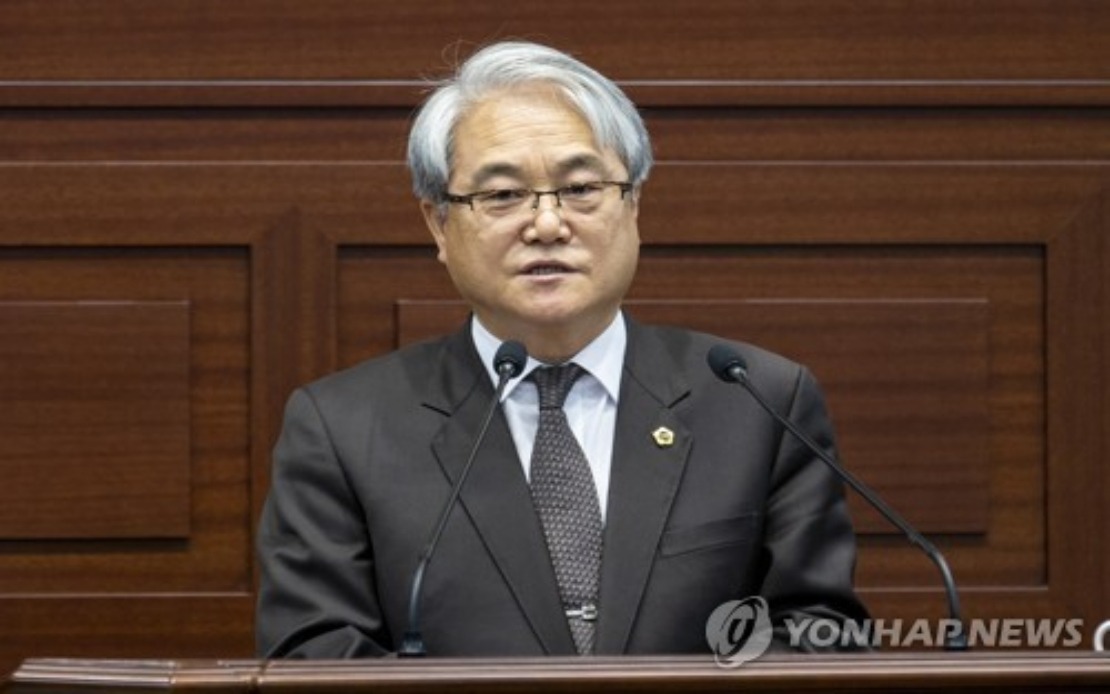
A former administrative leader in South Korea's southeastern Cheongdo County has been discovered dead on a mountain, marking a tragic conclusion to an ongoing corruption investigation. Rescue personnel located the body of Kim Ha-soo early on Monday morning around 7 a.m., discovering what appeared to be a handwritten note at the scene. The discovery underscores the mounting pressure facing public officials across South Korea caught up in financial misconduct probes that have increasingly tarnished the reputation of local government institutions.
The circumstances surrounding Kim's death occur against a backdrop of serious allegations that had accumulated against him during his tenure in office. Prosecutors had initiated proceedings against the former county chief on suspicion of accepting improper payments from a government employee in return for career advancement—a classic quid pro quo arrangement that represents one of the most common corruption patterns in South Korean public administration. This charge specifically relates to activities conducted while Kim held office between 2022 and earlier this year, suggesting a pattern of misconduct spanning several years.
The bribery investigation takes on additional significance given that a man believed to have served as the intermediary in transmitting the illicit funds was found dead earlier, raising questions about the pressure and circumstances surrounding those implicated in the scheme. The death of this go-between figure may have intensified scrutiny on Kim himself, potentially contributing to the mounting strain he faced as the investigation deepened. South Korean authorities have been increasingly vigilant in pursuing such cases, reflecting broader societal demands for governmental accountability.
Beyond the bribery allegations, Kim faced a separate referral to prosecution for allegedly committing a residential burglary targeting the director of a nursing home facility in January. This additional charge suggests a pattern of behaviour extending beyond financial malfeasance into more serious criminal conduct, painting a picture of an official apparently willing to employ various unlawful methods to achieve his objectives. The combination of white-collar corruption and violent crime allegations creates a particularly damaging profile that likely intensified public and institutional pressure upon him.
For Malaysian observers, Kim's case reflects challenges that transcend national boundaries across East and Southeast Asia regarding municipal governance standards and official misconduct. South Korea has established itself as a regional leader in anti-corruption enforcement, with specialized prosecutors and courts dedicated to investigating public sector wrongdoing. Yet despite these institutional mechanisms, cases like Kim's demonstrate that determined pursuit of corrupt officials does not necessarily prevent personal tragedy or resolve the underlying systemic vulnerabilities that enable misconduct.
The involvement of multiple parties in what appears to be an organised bribery operation—including the intermediary whose death preceded Kim's own demise—suggests deeper institutional rot within Cheongdo County's administrative apparatus. Such networks of corruption typically require cooperation from multiple officials and facilitators, indicating that Kim's case probably represents merely the visible surface of broader problems that may continue affecting the county's governance. South Korean authorities will likely expand their investigation to identify other participants in these schemes.
From a broader Southeast Asian governance perspective, Kim's situation underscores why maintaining robust institutional integrity mechanisms remains perpetually challenging for local governments. Even in relatively developed democracies with strong legal frameworks, corruption can take root at county and municipal levels where oversight mechanisms may be less stringent than those applying to national-level officials. Malaysia's own experience with local government accountability demonstrates similar vulnerabilities, where proximity to development projects and contracts can incentivize official misconduct.
The apparent suicide note discovered at the scene raises difficult questions about the psychological dimensions of corruption investigations and personal accountability. In South Korean society, shame and loss of social standing carry profound weight, potentially exceeding the legal consequences themselves. This cultural context may help explain trajectories where officials facing exposure choose drastic measures rather than submit to prosecution and imprisonment. Understanding these psychological pressures proves relevant for other Asian societies grappling with similar governance challenges.
South Korea's response to such cases has included legislative reforms strengthening disclosure requirements and establishing independent oversight bodies. Nevertheless, the continuing emergence of new corruption scandals suggests that systemic change requires more than institutional innovation alone. Educational initiatives promoting ethical governance among officials, combined with cultural shifts elevating integrity as a professional prerequisite, represent longer-term approaches that several Southeast Asian nations have begun exploring.
The Cheongdo case will likely prompt South Korean authorities to review internal control mechanisms within county-level government, examining how a chief administrator could simultaneously engage in bribery schemes and commit residential burglary without earlier detection. Such institutional reviews often yield valuable insights for other jurisdictions facing comparable governance challenges. For Malaysia, observing South Korea's investigative methodologies and corrective responses offers useful reference points as domestic institutions continue strengthening anti-corruption capacities across state and local levels.
Moving forward, the broader significance of Kim's death extends beyond individual tragedy to encompass systemic lessons regarding governance vulnerability. The investigation's expansion and any subsequent prosecutions of other implicated parties will test South Korea's institutional commitment to comprehensive corruption accountability. Simultaneously, the case reinforces why regional peer learning through organizations like the Asian Network of Ombudsmen Institutions remains essential for building governance resilience across the region's diverse political contexts.

