South Korea stands on the cusp of eliminating a culinary tradition that has endured for centuries, as the country's landmark ban on breeding, slaughtering and selling dogs for meat approaches its enforcement deadline in February 2027. The legislation, which passed in January 2024 after prolonged public debate, represents a seismic shift in a nation where dog meat consumption has been woven into cultural and medicinal practices since at least the Joseon Dynasty. The transition is now reshaping livelihoods across the industry, from rural farms to urban restaurants, as economic incentives and regulatory pressure combine to accelerate an exit from a practice once considered essential during periods of scarcity.
The legislative framework included a three-year grace period designed to allow the estimated 1,500 dog meat farms operating in 2024 to wind down operations gradually. This measured approach has proven remarkably effective: by May 2026, more than 80 per cent of these farms had ceased operations entirely, leaving fewer than 300 still breeding dogs for meat. The government's compensation strategy has incentivised rapid closure, offering farmers up to 600,000 won per dog alongside low-interest loans and comprehensive transition support including job counselling and re-employment assistance. This combination of financial incentive and bureaucratic support has accelerated industry consolidation far faster than many anticipated when the law was enacted.
On the restaurant front, the collapse has been equally dramatic though less precisely measured. Without comprehensive national data on closures, observers across Seoul's dining districts report that establishments serving boshintang—dog meat stew—have experienced a catastrophic decline in business volumes, with turnover falling to roughly one-third of pre-ban levels. This summer's boknal season, traditionally the peak period for dog meat consumption when South Koreans believe the dish replenishes energy during the three hottest days of summer, proved particularly devastating for remaining vendors. The three designated dog days falling on July 15, July 25 and August 14 represented the final major seasonal surge before the ban's enforcement, yet even these occasions failed to generate expected demand.
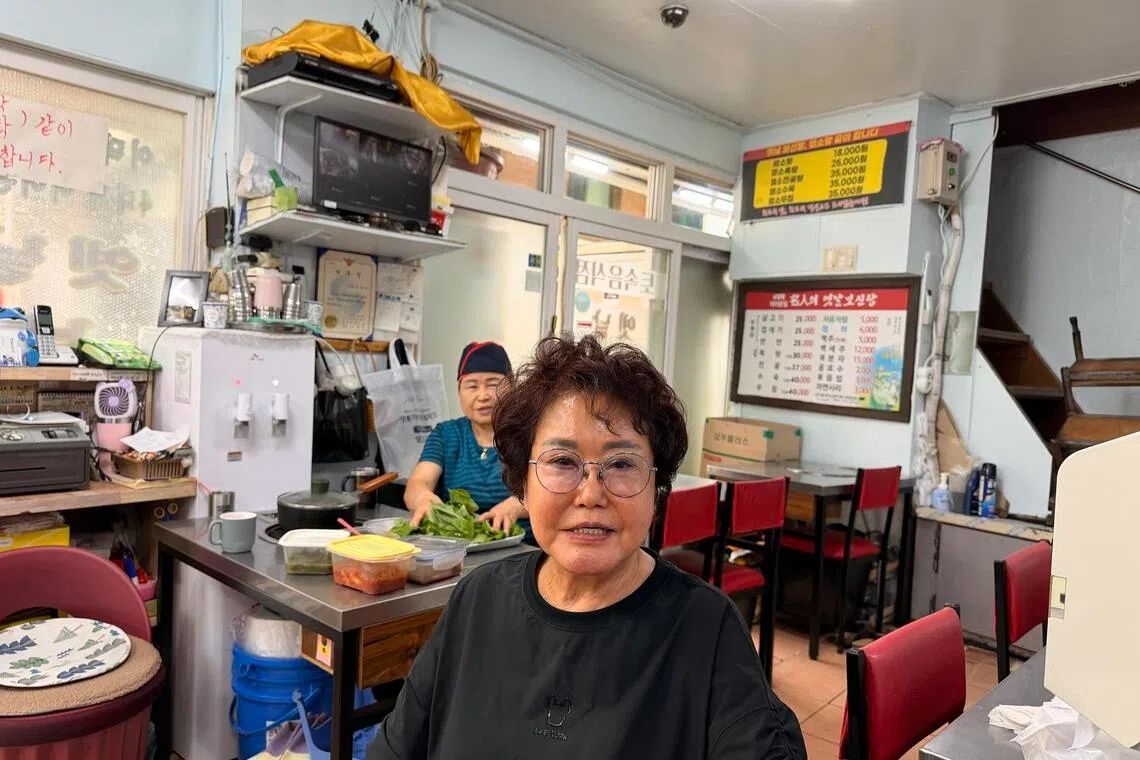
The economic squeeze on remaining operators has become severe. At Seoul's Gyeongdong Market, one of the few locations where dog meat remains available for purchase, a vendor reported that prices have surged threefold from approximately 20,000 won per kilogramme in 2024 to 60,000 won currently, reflecting both scarcity and the administrative burden of operating in a narrowing legal grey zone. This price volatility has created impossible conditions for established restaurant operators dependent on consistent supply and stable margins. Lee Deok-sung, who has operated a dog meat stew restaurant within sight of Seoul's bustling Dongdaemun Market for 45 years, described this summer as a complete commercial disaster, forcing her to raise bowl prices from 16,000 won to 25,000 won simply to approach break-even on daily operations.
Across the narrow alley from Lee's establishment sits Lee Kyung-ja's boshintang restaurant, another institution spanning more than four decades of continuous service. Both neighbours began experimenting with black goat stew earlier in 2026 as a putative replacement, arguing that the protein offers comparable texture and gamey flavour profiles to dog meat. However, the pivot has failed to attract customers: Lee Kyung-ja reported days of complete customer absence, while her remaining patrons frankly prefer dog meat for its superior taste and express scepticism about the culinary equivalence of goat. At 75 years old, she faces the prospect of either rebuilding her customer base from scratch around an unfamiliar protein or retiring altogether—a calculation that becomes increasingly untenable as the enforcement date approaches.
The resilience of demand among surviving customers reflects the deeply entrenched cultural and medicinal dimensions of dog meat consumption. Some patrons continue to visit precisely because traditional Korean medicine practitioners still recommend dog meat to patients recovering from serious illnesses, viewing it as possessing unique nutritional and therapeutic properties. This medical endorsement, rooted in centuries of Korean medical philosophy, complicates any simple narrative of changing consumer preferences driving the industry's decline. Rather, the industry's collapse stems primarily from regulatory prohibition overriding cultural practice, creating genuine hardship for aging business operators whose entire professional identities have been constructed around this specific trade.
Historical perspective illuminates the tradition's depth. The Donguibogam, a celebrated 17th-century medical compendium compiled by royal physician Heo Jun, explicitly identifies dog meat as a warming food capable of replenishing energy and vitality—positioning it within an elite medical framework rather than as mere sustenance. The practice expanded dramatically during Japan's colonial occupation from 1910 to 1945 and in the devastated aftermath of the Korean War, when widespread hunger and extreme poverty transformed dog meat from a medicinal substance into an affordable protein source sustaining millions. This historical trajectory means the tradition carries multiple layers of meaning simultaneously: cultural heritage, medical tradition, and memory of national survival.
The government's transition support programme, while generous relative to comparable global precedents, faces the reality that financial compensation cannot fully address the non-pecuniary losses experienced by operators. A farmer receiving 600,000 won per dog being phased out receives tangible financial relief, but a 75-year-old restaurateur watching decades of accumulated expertise and customer relationships become economically worthless encounters a different category of loss. Psychological attachment to a profession and social identity cannot be compensated through low-interest loans. The job transition assistance and re-employment counselling programmes operate in a context where alternative work opportunities for older Koreans in rural areas or aging urban merchants remain severely constrained.
For animal welfare advocates, the approaching ban represents vindication of a decades-long campaign. Humane World for Animals, the non-profit organisation that rescued dog such as DeeJay—a Labrador puppy who spent his first three months confined in a cramped cage on a Wonju farm alongside six siblings—has successfully facilitated the rescue and overseas adoption of approximately 2,800 dogs since beginning operations. DeeJay now lives as a pampered household pet with his adopted owner, musician Annie Ko, a trajectory that would have been virtually impossible without intervention. For these advocates, the economic hardship experienced by departing industry participants represents the necessary cost of eliminating what they characterise as systematic animal cruelty.
The broader Southeast Asian context renders South Korea's decision even more significant. While dog meat consumption exists in several countries across the region, South Korea's comprehensive legislative prohibition, coupled with substantial government-funded transition support, establishes a potential precedent. The industry's rapid collapse suggests that regulatory prohibition with adequate economic support can successfully reverse entrenched cultural practices within a decade—a finding that carries implications for policy discussions in other jurisdictions. Simultaneously, the real hardship experienced by departing operators demonstrates the complexity of using law to transform cultural practices, and the necessity of coupling prohibition with genuine economic support rather than treating such transitions as purely technical administrative matters.
As February 2027 approaches, South Korea's dog meat industry faces complete extinction through a combination of regulatory enforcement and economic collapse. The final boknal season has already passed, and fewer than 300 farms continue operations in a holding pattern awaiting inevitable closure. Restaurants like Lee Deok-sung's and Lee Kyung-ja's represent the last generation of dog meat purveyors, their professional futures contingent on success with substitute proteins or retirement. The transformation reflects broader patterns within modernising societies where consumer preferences, animal welfare concerns, and regulatory frameworks eventually overwhelm historical tradition—but the human cost of that transformation, visible in the hesitant faces of aging business operators, should not be obscured by celebrations of regulatory success.

