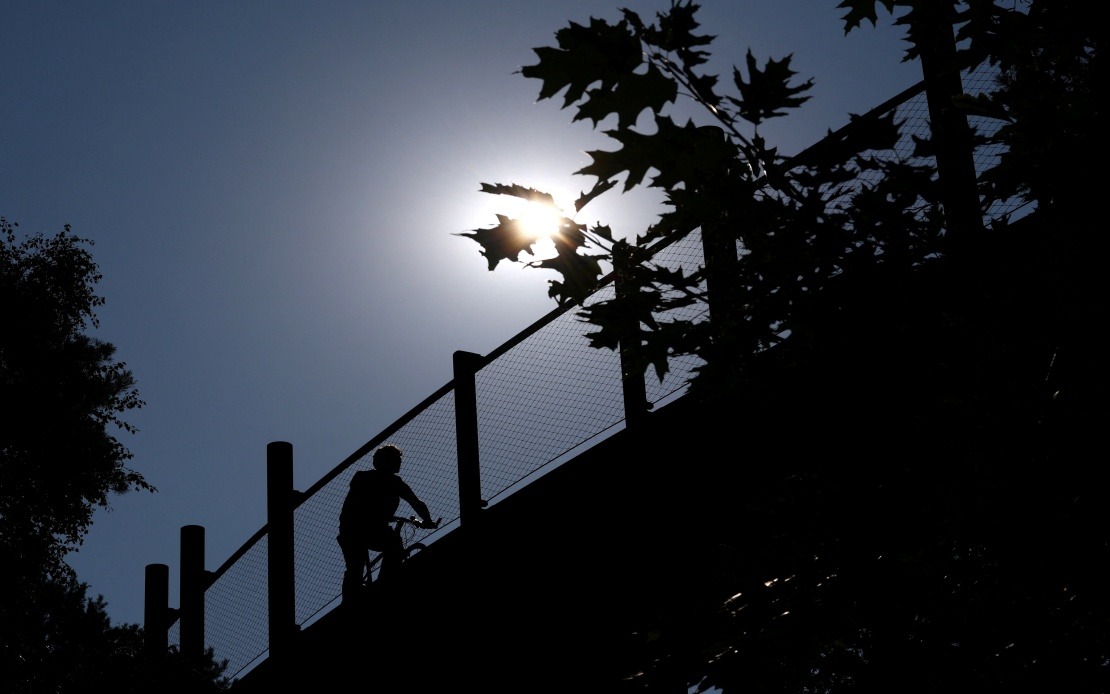
South Korea is confronting a deepening public health crisis as heat-related fatalities mount during what has become one of the country's most punishing summers in recent memory. The Korea Disease Control and Prevention Agency confirmed Wednesday that 21 people have succumbed to heat-related illnesses this year alone, a grim milestone that has already exceeded the entire previous year's death toll of 20, with the summer season still unfolding across the peninsula.
The human toll extends far beyond the fatal cases, with medical systems absorbing an unprecedented caseload of heat-related illness emergencies. Since health authorities activated their surveillance network in mid-May, hospitals and emergency departments have treated 2,441 patients presenting with heat-induced conditions. This volume of cases underscores how the extreme temperatures are affecting not just vulnerable populations but large swathes of the South Korean population, from construction workers to agricultural labourers to urban commuters navigating daily routines in lethal conditions.
What distinguishes this year's crisis from previous summers, despite a lower overall count of affected individuals, is the markedly higher fatality rate. This paradox suggests that while awareness and intervention efforts have reduced the absolute number of people developing heat-related symptoms, those who do fall ill are experiencing more severe manifestations of heat illness. The composition of cases illuminates this pattern: heat exhaustion comprises 61.7 per cent of reported incidents, the least immediately life-threatening category, while the more dangerous heat stroke accounts for 16.8 per cent and heat cramps constitute 11.5 per cent. The concentration of cases in the exhaustion category, coupled with elevated mortality, implies that demographic factors—such as an ageing population with limited mobility or reduced physiological capacity to thermoregulate—may be increasing vulnerability to fatal outcomes.
Recent fatalities illustrate the indiscriminate nature of heat-related death in modern South Korea. On Tuesday, a 60-year-old man collapsed while performing agricultural work on a farm in Eumseong County, North Chungcheong Province, succumbing to the relentless outdoor temperatures. Such incidents are not anomalies but recurring patterns as workers across South Korea's agricultural, construction, and manufacturing sectors face occupational exposure to ambient heat with insufficient protection infrastructure. Unlike office environments where air conditioning provides refuge, outdoor workers endure cumulative thermal stress throughout their shifts.
Weather forecasts indicate the crisis will intensify in the coming days. The Korea Meteorological Administration issued heightened heat wave alerts for the greater Seoul metropolitan area on Wednesday, designating 43 per cent of the region under the most severe warning category. Temperatures in Seoul are anticipated to reach 39 degrees Celsius on Thursday, creating conditions that approach human physiological limits. Such sustained heat at these extremes impairs the body's ability to dissipate core temperature through sweating and evaporation, particularly when humidity levels remain elevated throughout the night, preventing nocturnal recovery.
For Malaysian and Southeast Asian readers, South Korea's escalating heat crisis carries sobering implications. The region has long experienced tropical and subtropical temperatures, yet the concentration of extreme heat events in temperate zones represents a new phenomenon linked to climate change patterns. South Korea's infrastructure—from housing design to public transport systems to workplace standards—evolved under historical climate parameters and is not inherently optimised for sustained high-intensity heat. This mismatch between physical infrastructure and emerging climate realities creates vulnerability that even wealthy, technologically advanced nations struggle to address comprehensively.
The institutional response mechanisms activated in South Korea offer instructive lessons for Southeast Asian policymakers. The activation of a formal heat illness surveillance system demonstrates recognition that heat is a measurable public health threat requiring systematic data collection and epidemiological analysis. However, the surge in fatalities despite these monitoring systems suggests that surveillance alone is insufficient without accompanying interventions addressing occupational safety, access to cooling facilities, and medical capacity to manage severe heat illness cases. Emergency departments in major cities report saturation, indicating that while awareness campaigns promote heat awareness, the structural capacity to absorb surges in patient volume requires strategic investment.
Climate scientists attribute the intensification of heat waves to broader atmospheric circulation patterns altered by global warming. The positioning of high-pressure systems over East Asia this summer has created semi-permanent conditions that prevent weather system movement, trapping hot, stagnant air masses for extended periods. Such blocking patterns are becoming more frequent, suggesting that South Korea—and by extension, Southeast Asian nations—must contemplate a future in which heat extremes are normalised rather than exceptional. Policy frameworks constructed around historical climate variability will prove inadequate for emerging hydrometeorological realities.
The economic dimensions of escalating heat mortality merit consideration alongside public health impacts. When workers succumb to heat stress or require emergency hospitalisation, labour productivity declines, healthcare systems absorb costs, and families experience financial and emotional devastation. In South Korea's context, where manufacturing and agricultural exports sustain significant portions of the economy, worker incapacity from heat illness carries cascading economic consequences. Southeast Asian economies, which depend heavily on outdoor-sector employment and have weaker healthcare infrastructure than South Korea, face disproportionate vulnerability to similar dynamics.
Government authorities are now weighing additional interventions beyond the surveillance framework. Enhanced warnings, workplace heat protection protocols, increased cooling centre availability, and public education campaigns are being evaluated. Yet these remain reactive measures implemented after mortality has already risen. Genuinely effective responses would require anticipatory policy design—modifying building codes to prioritise passive cooling, mandating occupational heat safety standards with enforcement mechanisms, and strategically deploying air-conditioned public refuges accessible to vulnerable populations during extreme heat events. Such comprehensive approaches demand sustained political commitment and resource allocation sustained across multiple governmental cycles.
For Southeast Asia, South Korea's experience serves as an advance warning. The region's lower latitudes mean temperatures are already elevated compared to East Asia, and projected warming trends suggest that heat-related mortality could accelerate rapidly as climate change progresses. Building adaptive capacity now—through policy innovation, infrastructure investment, and institutional strengthening—offers the most cost-effective strategy for protecting populations from the intensifying heat hazards that successive climate models consistently project across the region.

