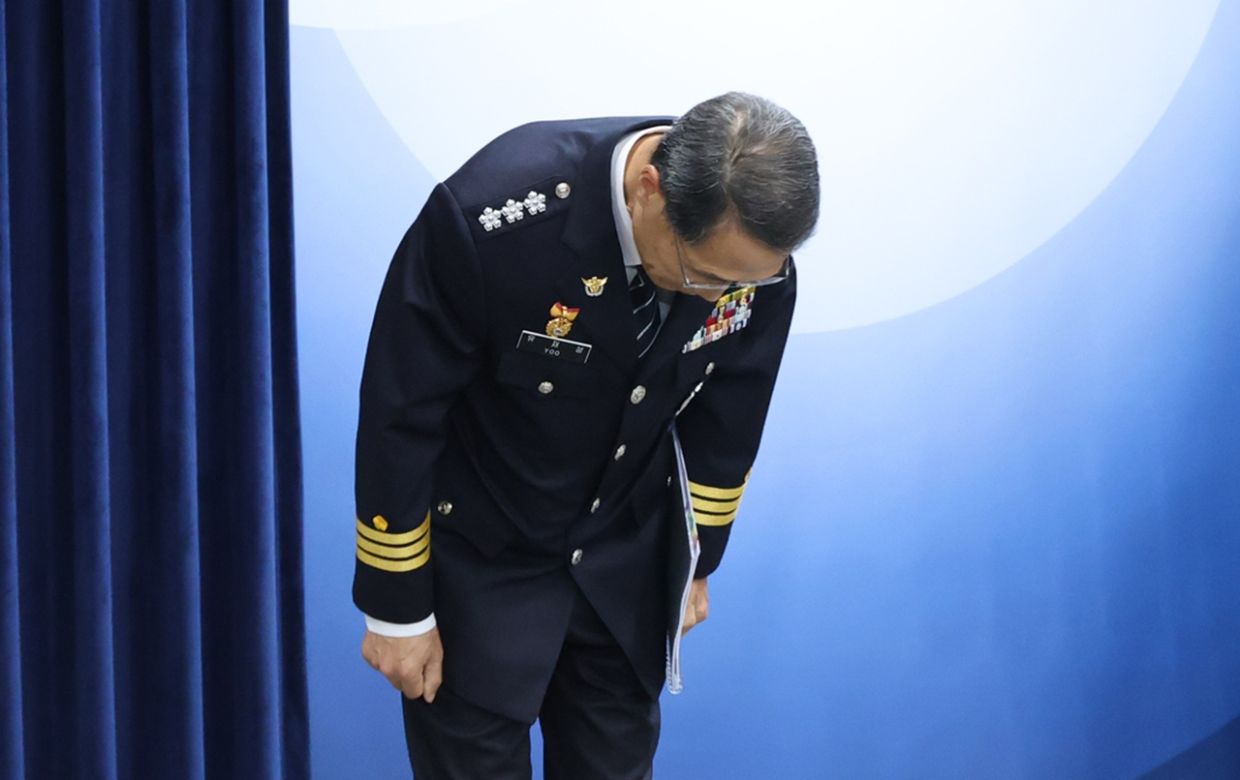
South Korea's interim police leadership is attempting to rebuild public confidence through a comprehensive reform agenda announced Monday as a high-profile investigation scandal continues to damage institutional credibility. Acting National Police Agency Commissioner General Yoo Jae-sung outlined the measures at a Government Complex Seoul briefing, acknowledging that the department faces an urgent need to demonstrate substantive change. The scandal centres on the handling of a murder case involving Jang Yoon-gi, arrested for allegedly killing a teenage girl in Gwangju in May, with particular focus on how police investigators allegedly disclosed case details to Jang's father, a serving officer within the force, and permitted critical evidence to slip through investigative procedures.
The gravity of the institutional failure has become increasingly difficult for the police to manage through routine public relations efforts. Allegations that officers with family connections to suspects received preferential treatment represent precisely the kind of corruption that erodes police legitimacy, especially when the victim is young and vulnerable. The incident has triggered substantial public backlash, prompting resignation calls targeting senior officials and demands for systemic accountability measures that extend beyond personnel changes. Yoo's acknowledgment that the force must treat the scandal as a transformative moment suggests recognition that cosmetic adjustments will not satisfy either public opinion or political pressure for genuine institutional repair.
The centrepiece of the reform package is the establishment of an investigative reform task force scheduled to begin operations by the end of July, comprising seven to ten members with external experts making up the majority. This composition addresses the perception that police investigating police tends toward institutional self-protection rather than genuine accountability. The task force will focus on restructuring investigative procedures, particularly those governing cases involving socially disadvantaged populations who may lack family connections or resources to ensure proper police conduct. Additionally, the task force will examine personnel management systems designed to disrupt informal networks between officers and community figures that created conditions for the alleged collusion in the current scandal.
Parallel to the investigative task force, the police are establishing an internal affairs investigation unit operating under the Korean National Police Commission with jurisdiction over serious crimes committed by officers irrespective of rank. This structure removes the investigation of significant police misconduct from internal departmental channels, where institutional loyalty traditionally compromised impartiality. The unit represents an attempt to address the problem that previous internal investigations often protected senior officials or reached conclusions questioned by the public. For Malaysian and broader Southeast Asian contexts, where police accountability remains contested in many jurisdictions, this structural separation of investigative function from command authority offers an instructive model for institutional independence.
Yet perhaps the most significant institutional innovation involves establishing a dedicated civilian oversight body under the Korean National Police Commission, potentially comprising approximately one hundred external investigators who will examine alleged human rights violations and police misconduct in investigations. Creating such a body requires amending the Police Act, with relevant legislation already submitted to the National Assembly. Yoo emphasized that the oversight body's effectiveness depends on its capacity to generate findings that translate into personnel recommendations and disciplinary action, indicating recognition that toothless oversight bodies generate cynicism rather than public confidence. The scale of civilian participation suggests a genuine power-sharing arrangement rather than merely ceremonial public involvement.
The rotation system expansion represents a different category of reform targeting structural vulnerabilities that enable misconduct. Current practice rotates superintendent-level officers nationally, with some senior inspectors also affected, but the system does not extend to lower ranks where investigative work concentrates and where informal community relationships develop over years of service in particular locations. Expanding rotation broadly could disrupt the local networks through which collusion occurs, preventing officers from developing relationships with suspects' families or from cultivating reputation for selective enforcement. However, implementation presents significant practical obstacles that Yoo acknowledged frankly, particularly regarding official residence provision and the financial burden on lower-ranking officers transferred from home communities.
The agency's commitment to gathering opinions from rank-and-file officers before implementing expanded rotation policies reflects sensitivity to morale concerns within the force. Officers assigned to rotations without adequate housing support or family relocation assistance experience genuine hardship, particularly those earning relatively modest salaries. Yoo's indication that support measures must accompany rotation policies, with some quick-win measures introduced immediately while longer-term structural questions receive task force attention, suggests a recognition that institutional reform cannot proceed against the force's own personnel without political sustainability. This approach contrasts with reform initiatives that generate officer resentment and internal resistance, ultimately undermining implementation effectiveness.
The timing and scope of these reforms carry implications beyond Korean domestic politics. As Southeast Asian police forces navigate pressures for greater accountability and institutional independence, the Korean model of combining structural separation of investigative functions, substantial civilian participation, and systematic rotation policies offers an alternative to approaches that either maintain strong internal control or impose external mechanisms viewed as threats to institutional autonomy. The Korean case demonstrates that comprehensive reform can address corruption vulnerabilities while maintaining police operational capacity and officer engagement with the reform process.
Regarding the specific case of Jang's father, Yoo indicated that police will await completion of a special investigation team's findings before finalizing their own internal inspection and determining follow-up measures. This procedural sequencing allows the independent investigation to reach conclusions without perception of internal police conclusions pre-empting external scrutiny. The outcome of that investigation will test whether the announced reforms represent genuine commitment to accountability or tactical responses designed to defuse immediate criticism while preserving institutional interests. The next months will reveal whether the structural innovations transform police investigative practice or whether they function as parallel bureaucracies without meaningful influence on operational conduct.

