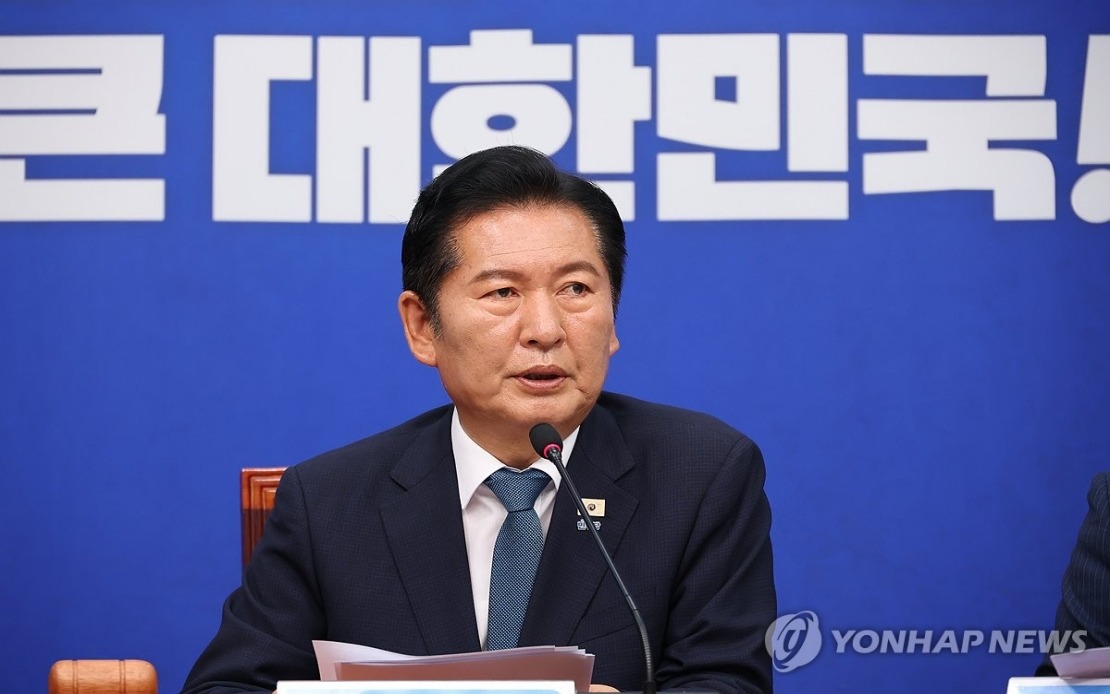
South Korea's Democratic Party is entering a decisive phase in its internal power struggle following the resignation of Chairman Jung Chung-rae on Wednesday. The lawmaker's departure from the top position comes as the ruling party prepares for a national convention scheduled for August 17, where a new leader will be chosen. Jung's decision to step down is widely interpreted as a tactical move to reposition himself for another run at the chairmanship rather than a genuine exit from party leadership contention.
During remarks made to the party's supreme council at the National Assembly, Jung reflected on his tenure with an emphasis on the personal toll of his leadership. He described the experience as exhausting, acknowledging that internal and external party divisions had prevented him from enjoying even a single peaceful day during his time as chairman. Despite these challenges, Jung maintained that he had performed his duties without protest, framing his resignation as a principled decision rather than an admission of failure.
A central element of Jung's statement focused on his alignment with President Lee Jae Myung's administration. He stressed throughout his term as party chairman that his primary objective was to coordinate efforts between the ruling party, the government, and the presidential office to function as a cohesive unit. This emphasis on unity appears significant given the tensions that have reportedly surfaced within the party, with some pro-Lee faction members criticizing Jung for allegedly prioritizing his own political base over strategic coordination with the president on critical policy matters.
The underlying friction within the Democratic Party reflects broader factional divisions that have long characterized South Korean politics. Jung's hard-line supporters within the party apparently differ from those who advocate for tighter alignment with Lee's direction on governance issues. These internal disagreements suggest deeper ideological or strategic differences that may shape the August convention contest and the party's positioning in the lead-up to future elections.
With Jung's resignation, DP floor leader Han Byung-do will assume the role of acting party leader until the convention takes place. This interim arrangement ensures continuity in party management while allowing sufficient time for the leadership campaign to unfold. The temporary transfer of authority represents a crucial procedural step that establishes the formal framework for the upcoming competitive process.
The August convention is now expected to feature a substantial contest involving three major political figures. Beyond Jung's anticipated re-bid, Prime Minister Kim Min-seok represents the interests of the Lee administration within the party structure. Kim's candidacy would likely emphasize continuity with current presidential policies and closer alignment between party leadership and the executive branch. As a key political ally of Lee, Kim's entry into the race reflects the president's preference for a party chairman who works in concert with his administration's agenda.
Former Democratic Party leader Song Young-gil constitutes the third pillar of what political observers anticipate will be a competitive three-way contest. According to DP lawmaker Park Jie-won, who discussed Song's plans during a radio interview with CBS, the former party leader has already informed President Lee of his intention to participate in the leadership race. Song has also reportedly indicated willingness to consider a unified candidacy arrangement with Prime Minister Kim, a possibility that could reshape the dynamics of the competition.
The prospect of Song potentially coordinating with Kim against Jung presents a significant variable in the upcoming convention. Should such an alliance materialize, it would effectively create a two-front race, with pro-Lee forces potentially consolidating behind a single candidate. This scenario would substantially disadvantage Jung unless he can mobilize sufficient support from his factional base and other party members who favor his approach to party leadership.
For Malaysian observers of regional politics, South Korea's internal party dynamics offer relevant insights into how major democracies manage leadership transitions within ruling coalitions. The tension between a party chairman and the sitting president reflects recurring challenges in democratic systems where party structures and executive authority must coordinate without one completely subordinating the other. The Democratic Party's August convention will test whether South Korea's political institutions can facilitate peaceful and orderly leadership competition.
The timing of Jung's resignation and the August convention date provide sufficient interval for candidates to campaign and articulate their visions for the party's future direction. This extended preparation period allows party members and supporters across the country to evaluate competing candidates' platforms and assess their compatibility with both party traditions and the current administration's priorities.
The Democratic Party's leadership race also carries implications for South Korea's broader political trajectory. The party that governs during the remainder of Lee Jae Myung's presidency requires effective internal coordination to deliver on policy commitments and maintain public confidence. The convention outcome will influence the party's organizational coherence, its capacity to manage relationships between the presidential office and the legislature, and its positioning for future electoral contests.
As South Korea's ruling party navigates this transition, the August convention will reveal much about the relative strength of competing factions and the preferences of the broader party membership. The outcome will shape not only the party's immediate governance capacity but also signal important dynamics about South Korean political leadership and the mechanisms through which democratic parties in the region manage internal power distribution and institutional renewal.

