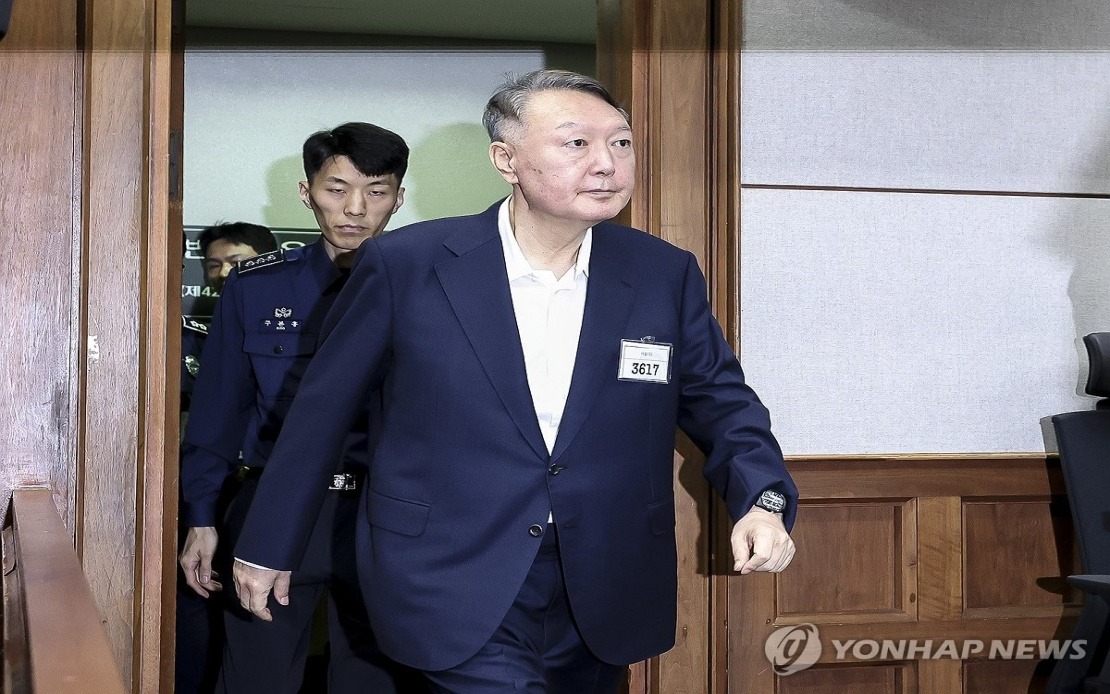
South Korea's highest court has opened the doors to unprecedented public scrutiny by sanctioning a live broadcast of its verdict in the obstruction of justice case against former President Yoon Suk Yeol, marking a watershed moment in how the nation's judicial system handles high-profile political trials. The Supreme Court's decision on Tuesday represents a significant departure from typical closed-court proceedings, with the ruling expected on Thursday afternoon and transmitted directly to broadcasters using the court's own cameras.
Yoon stands accused of deploying bodyguards to physically obstruct law enforcement officials from executing an arrest warrant against him in January 2025, approximately six weeks after his shocking and ultimately failed attempt to impose martial law on December 3, 2024. This obstruction charge forms part of a broader legal reckoning that has engulfed the former leader since his dramatic power grab in late 2024, an episode that sent shockwaves through South Korean politics and raised international concerns about institutional stability in one of Asia's major democracies.
The special counsel's office, helmed by Cho Eun-suk, had petitioned for the live broadcast last Friday, recognising the extraordinary public interest in proceedings that touch on fundamental questions of presidential accountability and the rule of law. Yoon's defence team vigorously opposed this move, contending that allowing cameras into the courtroom would inflict "irreparable harm" to his constitutionally guaranteed right to a fair trial, as well as compromise his personal privacy and public standing. The court's rejection of these objections signals judicial confidence that transparency serves the broader interests of justice and public trust.
The obstruction charge encompasses more than merely the January confrontation with investigators. Prosecutors have expanded the indictment to include allegations that Yoon violated the constitutional rights of nine Cabinet members by failing to convene them for advance consultation before announcing his martial law decree. Additionally, he faces accusations of falsifying official documents by subsequently revising the martial law proclamation after its lifting, apparently to conceal procedural irregularities in how the order was drafted and implemented. The former president is also alleged to have destroyed evidence by discarding the original document.
The trajectory of this case through South Korea's judicial system demonstrates both the seriousness with which authorities are treating the obstruction charges and the institutional tensions surrounding Yoon's prosecution. An appellate court in April had already sentenced him to seven years imprisonment on these obstruction counts, representing a significant escalation from the trial court's initial five-year sentence but remaining substantially below the prosecution's request for a decade-long term. This variance between prosecution recommendations and judicial sentencing reflects ongoing debate within South Korea about proportionality in political crime cases.
Yoon's legal predicament extends far beyond the obstruction charges heading to the Supreme Court this week. A separate and more serious trial concerning alleged insurrection through the martial law declaration itself remains ongoing at an appellate level, with the initial court having imposed a life sentence. The question of whether the Supreme Court will uphold, reduce, or increase the obstruction sentence may set a tone for how the insurrection charges are ultimately adjudicated, creating interconnected dynamics in what constitutes the gravest constitutional crisis in modern South Korean history.
The live broadcast decision carries implications that extend across Southeast Asia and beyond, as regional democracies grapple with balancing transparency against concerns about judicial independence and fair trial protections. Malaysia and other nations in the region have periodically confronted similar questions about whether high-stakes political trials should be televised or live-streamed, with divergent conclusions reflecting different constitutional traditions and conceptions of public interest. South Korea's choice to allow cameras into what amounts to a verdict delivery session rather than the full trial proceedings represents a middle path that prioritises outcome transparency while limiting potential disruption to courtroom operations.
For Malaysian observers, the Yoon case offers instructive lessons about institutional resilience and judicial independence during political turmoil. South Korea's legal system is proceeding with charges against a sitting former president according to established procedure, notwithstanding the political explosiveness of the situation and despite his defence team's objections. This contrasts with various global contexts where prosecutions of former leaders have either been delayed indefinitely, weaponised for partisan purposes, or abandoned altogether. The fact that South Korean courts are entertaining both obstruction charges and insurrection allegations simultaneously demonstrates institutional capacity to handle multiple, interconnected legal proceedings arising from a single constitutional transgression.
The Supreme Court's decision to broadcast the verdict also reflects evolving attitudes toward judicial communication in an era of social media and instant information dissemination. Rather than attempting to restrict access through traditional courtroom closures, the court has opted for managed transparency, controlling the feed through official equipment and presumably establishing protocols around commentary and interpretation. This approach acknowledges that attempting to suppress information about high-profile cases typically proves counterproductive, generating conspiracy theories and undermining public confidence.
Yoon's continued detention underscores the severity with which South Korean institutions are treating the charges. Unlike scenarios elsewhere where former leaders face prosecution while remaining free pending trial outcomes, Yoon has remained imprisoned, suggesting judicial determination to prevent potential flight or witness interference. The obstruction charge itself gains poignancy from this context: prosecutors allege he deployed bodyguards precisely to prevent his own arrest, an action that has itself become part of the criminal record prosecutors are pursuing through the courts.
The Thursday verdict represents merely one waypoint in what promises to be a prolonged legal process. Appeals, constitutional challenges, and the ongoing insurrection trial ensure that Yoon's case will occupy South Korea's political and judicial landscape for months or years ahead. The Supreme Court's willingness to broadcast this particular verdict may establish precedent for future high-profile cases, potentially reshaping how South Korean courts balance accountability transparency against procedural fairness considerations. For the broader region watching how established democracies manage unprecedented constitutional crises, the Yoon proceedings offer a genuine-time case study in institutional responses to executive overreach.

