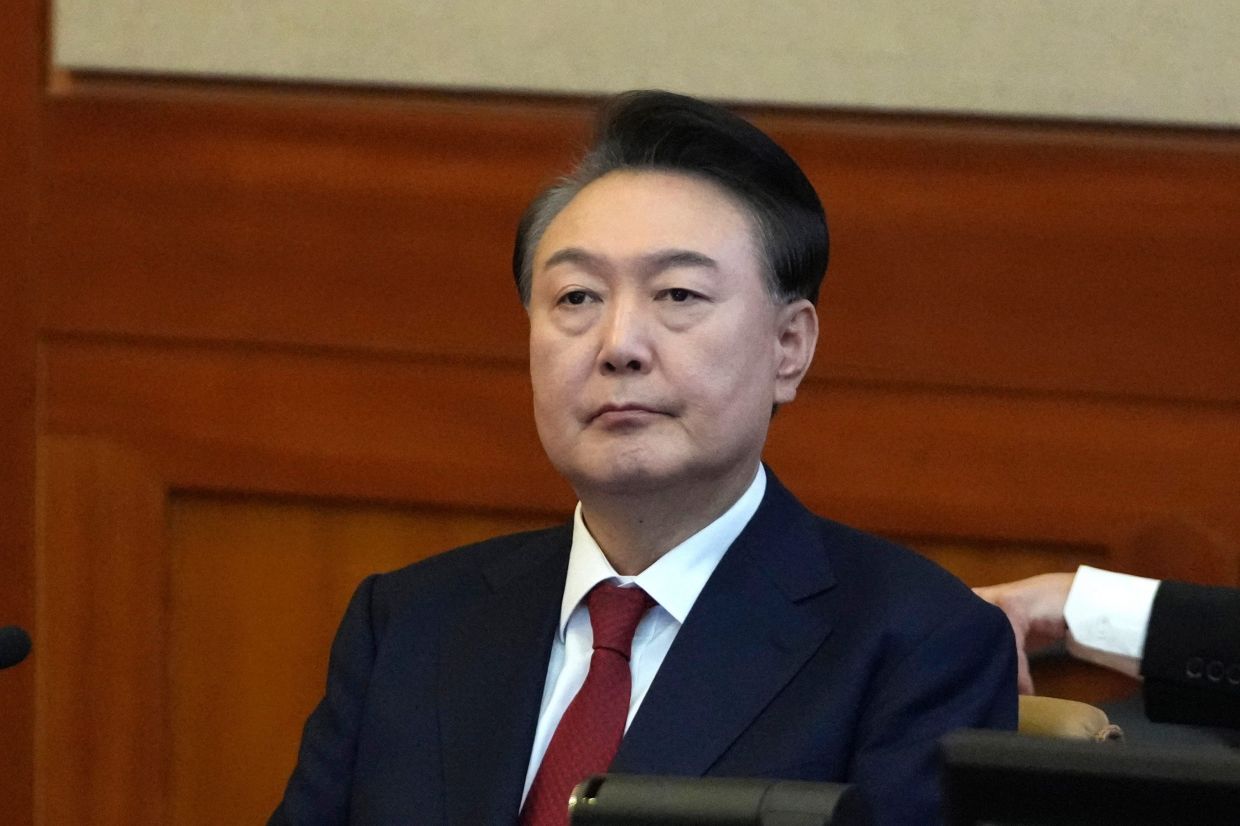
South Korea's highest court delivered a decisive verdict on Thursday, July 9, confirming a seven-year prison sentence for disgraced former president Yoon Suk Yeol in connection with his abortive attempt to impose martial law in December 2024. The Supreme Court's affirmation of the lower courts' judgement marks a definitive legal reckoning for one of East Asia's most consequential political crises in recent memory, with implications extending across the region's fragile democratic institutions.
The charges against Yoon centred on multiple layers of alleged governmental misconduct surrounding the martial law declaration and its chaotic resolution. Prosecutors had argued that Yoon obstructed proper cabinet deliberations by summoning only a select group of ministers to a pre-declaration meeting, deliberately bypassing normal procedural safeguards. He was also convicted of orchestrating the creation of a false martial law decree that bore forged signatures purporting to be from the prime minister, seeking to lend false legitimacy to an unconstitutional move. Additionally, Yoon faced accusations of instructing government officials to distribute misleading statements to international media outlets and directing an army commander to delete records stored on secure military communications systems, suggesting a pattern of evidence destruction.
The legal proceedings have unfolded across multiple stages, with each level of South Korea's judiciary examining the evidence and rendering increasingly serious judgements. A lower court initially sentenced Yoon to five years imprisonment in January after finding him guilty on the majority of charges. That decision was appealed in April, when an intermediate appellate court not only upheld the original conviction but added a guilty verdict regarding the dissemination of false information to foreign media and substantially raised the penalty to seven years. Both the prosecution, which had sought a ten-year term, and Yoon's legal representatives then escalated their cases to the Supreme Court, seeking to overturn or further modify the judgment.
The Supreme Court's announcement was characterised by judicial brevity and finality. A presiding judge stated simply that "all appeals are dismissed," while noting that the lower court's reasoning "contained no errors" and therefore warranted no modification. This language reflected the court's confidence in the lower courts' factual findings and legal analysis, effectively closing the door on further appellate review. South Korea's Supreme Court decisions are final and cannot be appealed further, making this outcome legally binding and irreversible on these particular charges.
Yoon's defence team responded swiftly with formal expressions of disappointment, asserting that the Supreme Court had reached its conclusion "without sufficient deliberation" and failed to engage adequately with their arguments. The legal representatives announced plans to mount a constitutional challenge to the ruling and indicated they would file complaints through additional procedural mechanisms, though these steps represent largely symbolic gestures rather than realistic avenues for overturning the conviction. The strategic pivot toward constitutional grounds suggests an attempt to reframe the case from criminal liability to questions about governmental powers and separation of powers, arguments that have resonated with some of Yoon's supporters.
The political earthquake that triggered these prosecutions occurred on December 3, 2024, when Yoon delivered a late-night televised address announcing the imposition of martial law, effectively suspending civilian governance across South Korea. The move shocked the nation and reverberated internationally, catching strategic allies including the United States completely unprepared. Markets responded viscerally, with South Korea's stock exchange experiencing sharp declines as investors fled uncertainty. Within hours, lawmakers convened in emergency session to vote down the declaration, with martial law lasting merely six hours before being nullified through legislative action. The brief but consequential episode exposed vulnerabilities in South Korea's constitutional safeguards and democratic institutions.
Yoon has consistently maintained that his martial law declaration was motivated entirely by the national interest, though his justifications have evolved across different forums. In subsequent statements, he argued that the emergency measure was necessary to eliminate what he characterised as "anti-state forces" and to counter alleged security threats emanating from North Korea. These claims have been viewed with considerable scepticism by political opponents and independent analysts, who argue the declaration appeared designed to consolidate presidential power and neutralise parliamentary opposition rather than address genuine security exigencies.
The judicial consequences for Yoon extend considerably beyond the seven-year sentence now affirmed. In a separate criminal proceeding, a court convicted him of orchestrating drone incursions into North Korean airspace, apparently designed to manufacture a security crisis that would justify the martial law declaration. That case resulted in a thirty-year prison sentence, adding substantially to his cumulative legal jeopardy. The combination of multiple lengthy sentences has essentially ended any realistic prospect of Yoon avoiding incarceration during the appellate process, though his legal team continues to pursue various procedural challenges.
The political ramifications of Yoon's downfall fundamentally altered South Korea's leadership trajectory. His ouster in April 2025, directly precipitated by the martial law crisis, triggered presidential elections that resulted in Lee Jae Myung of the centre-left Democratic Party assuming the presidency. This transition represented a significant rightward-to-leftward swing in national political orientation and marked the second consecutive conservative president to exit office under a legal cloud, suggesting troubling patterns in South Korean politics regarding the institutionalisation of power transfers and the treatment of predecessor administrations.
For Southeast Asian observers and democratic practitioners, South Korea's experience offers instructive lessons about institutional resilience and vulnerability. While South Korea's parliament ultimately prevented the martial law declaration from taking hold, the episode demonstrated how quickly constitutional norms can be tested even in established democracies. The courts' subsequent willingness to prosecute a former president reflected institutional independence, yet also raised questions about whether prosecutorial zeal might eventually become weaponised for partisan purposes. The case underscores the necessity of vigilant protection for democratic institutions and transparent, depoliticised justice systems.
The Supreme Court's affirmation of Yoon's sentence closes an important chapter in South Korea's democratic jurisprudence, establishing a clear legal precedent that martial law declarations motivated by partisan or unconstitutional objectives will face serious consequences. However, deeper questions about institutional reform, constitutional safeguards, and the prevention of future attempts to circumvent democratic processes remain unresolved. South Korea's political establishment faces the challenge of learning from this crisis to strengthen procedural protections and restore public confidence in governmental institutions.

