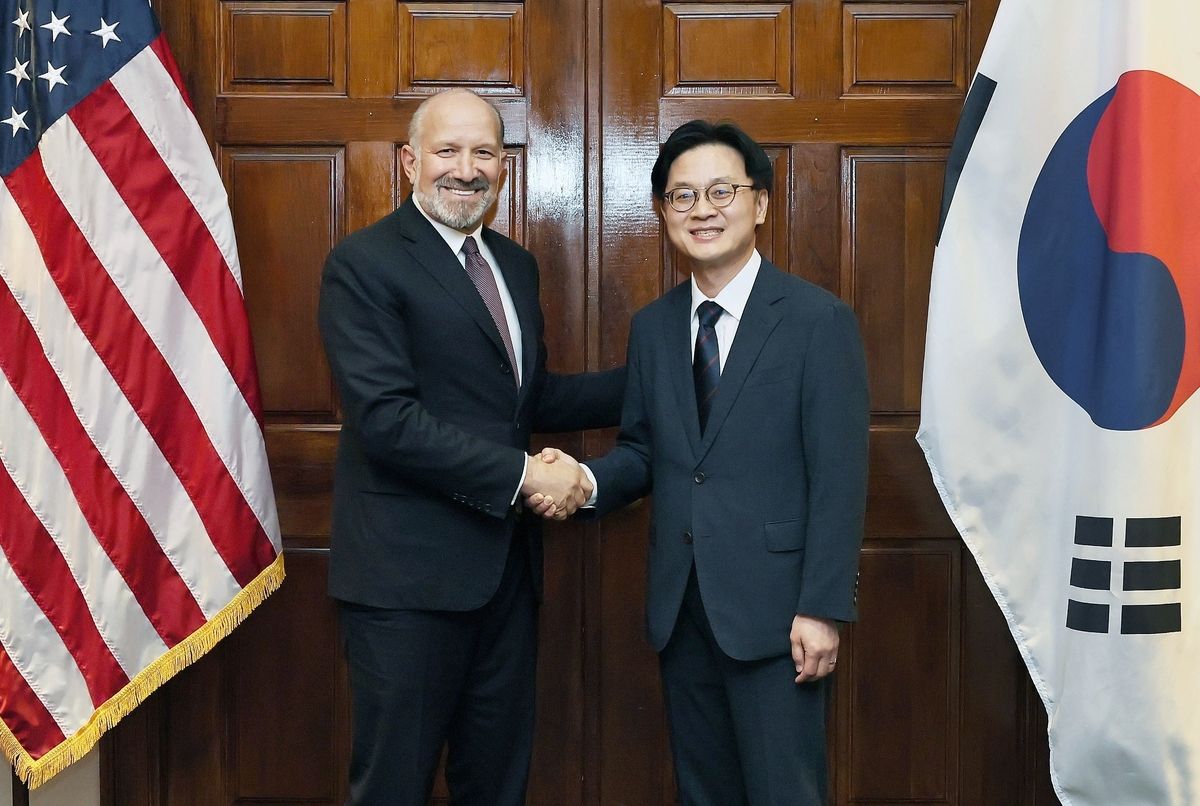
South Korea's Industry Minister Kim Jung-kwan is embarking on a critical diplomatic mission to Washington, arriving on Wednesday in what amounts to a carefully timed effort to influence a looming trade decision. The visit comes at a delicate moment: the United States is preparing to announce fresh tariffs against South Korean exports, potentially invoking Section 301 of the Trade Act in conjunction with an investigation into alleged forced labour violations. For Seoul, the stakes are considerable, as South Korea maintains a robust export economy that depends heavily on US market access, making this week's talks potentially decisive for shielding domestic industries from escalating trade barriers.
The timing of Kim's journey underscores the urgency with which Seoul views the threat. An expected US announcement stemming from the forced labour investigation could significantly expand tariff pressure on South Korean goods, precisely the outcome Seoul hopes to forestall through high-level engagement. By positioning senior officials in direct conversation with US Commerce Secretary Howard Lutnick and other Trump administration figures, South Korea is attempting to make the case for restraint before the tariff decision crystallizes into formal policy. This pre-emptive diplomatic posture reflects Seoul's understanding that once tariffs are announced, reversing or negotiating them becomes exponentially more difficult.
Kim's itinerary spans July 22 to 25 and encompasses meetings with key members of the US economic policy establishment. Beyond his scheduled conversation with Commerce Secretary Lutnick, the minister will engage US Energy Secretary Chris Wright on matters of mutual resource and energy cooperation. These discussions serve a dual purpose: they allow South Korea to highlight areas of complementary economic interest, while also enabling Kim to cultivate personal relationships with decision-makers who may influence tariff calculations. The breadth of his meeting schedule—including outreach to congressional members—suggests Seoul is pursuing a comprehensive strategy to build political support across multiple levels of US government.
The centrepiece of Kim's visit, however, is attendance at the opening ceremony of a South Korea-US Shipbuilding Partnership Center in Washington on Thursday. This facility represents the materialisation of a May agreement between Seoul's Ministry of Trade, Industry and Resources and the US Commerce Department, formalising cooperation in one of South Korea's signature industrial sectors. By inaugurating this centre during his visit, Kim transforms what could be a purely defensive trade negotiation into an affirmative narrative about deepened bilateral economic partnership. The shipbuilding sector holds particular strategic importance for South Korea—it is a globally competitive industry that symbolizes technological prowess and generates substantial export revenues.
The partnership centre itself addresses a structural need in how the two countries' shipbuilding industries interact. Kim has indicated that the facility will function as an official platform enabling sustained coordination between South Korean and American shipbuilders. For the US, this arrangement facilitates access to advanced Korean shipbuilding technology and capacity. For Seoul, it formalizes relationships that might otherwise remain fragmented, creating institutional infrastructure for long-term collaboration rather than transaction-by-transaction dealings. This kind of structured cooperation can prove more resilient to political fluctuations than informal business relationships.
Another element of Kim's agenda involves advancing implementation of a South Korean law enacted in June specifically designed to encourage strategic South Korean investment within the United States. This legislation represents Seoul's recognition that defending market access through tariff negotiations alone is insufficient; rather, direct investment in the US economy creates stakeholders within America who benefit from stable Korean-US economic relations. By investing in US infrastructure, manufacturing, or technology, South Korean firms become embedded in American supply chains and regional economies, generating political constituencies that favour continued commercial openness. Kim's discussions with US officials will seek to clarify and expand the scope of eligible investment projects under this framework.
The broader context for this diplomatic initiative involves the structural vulnerabilities of South Korea's export-dependent economy. The country ships substantial volumes of semiconductors, steel, petrochemicals, and other goods to the United States, making it highly exposed to tariff actions. Any significant increase in duties on South Korean products would reverberate through Seoul's manufacturing base, potentially forcing production cutbacks or price increases that diminish competitiveness. This economic reality gives Kim's mission considerable weight—he is not engaging in routine trade administration but rather negotiating matters that could affect employment and growth across multiple South Korean sectors.
The forced labour investigation underpinning the potential tariffs introduces a particularly complex dimension. While tariff decisions are ostensibly grounded in trade law violations, forced labour investigations involve allegations of human rights abuses and ethical manufacturing practices. South Korea must therefore navigate not merely economic arguments but also demonstrate commitment to labour standards and supply chain transparency. The country's response to these concerns—how thoroughly it investigates alleged violations within its own manufacturing ecosystem—will likely influence whether tariffs proceed and at what severity level.
For Malaysia and other Southeast Asian economies, developments in Korean-US trade relations carry significant implications. South Korea is a regional competitor in several manufacturing sectors and a source of investment capital within Southeast Asia. If South Korea faces severe tariff escalation, it may trigger broader protectionist impulses affecting other Asian exporters, particularly in electronics and shipbuilding. Conversely, if Seoul successfully negotiates stable trade relations with Washington, it may preserve regional confidence in continued US market openness. The outcome of these talks could thus ripple across the region's export-oriented manufacturing base.
Kim's efforts to implement tariff agreements and maintain bilateral stability reflect Seoul's preference for negotiated settlements over escalating trade conflict. South Korea has historically sought to position itself as a reliable US ally and strategic partner rather than adopting confrontational trade postures. This diplomatic approach has generally served Seoul well, though it requires consistent engagement and the cultivation of political support at multiple levels within Washington. The minister's multi-layered itinerary—combining infrastructure projects, energy cooperation, and congressional outreach—embodies this patient, relationship-building strategy even as the threatened tariffs loom overhead.

