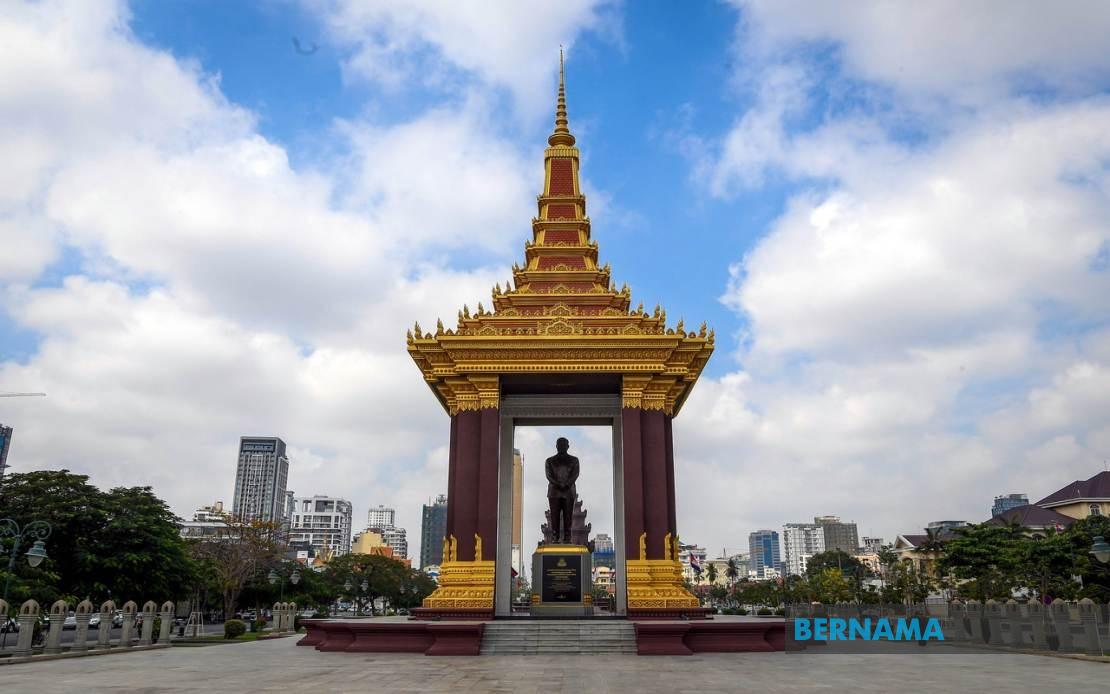
Across Southeast Asia, a striking pattern has emerged in the policy priorities of its major governments: regional leaders are simultaneously embracing artificial intelligence governance, accelerating the shift toward environmentally sustainable transport, and making structural changes to bolster domestic economic resilience. The region's diplomatic and industrial strategies reveal a continent determined to engage fully with global technological change while protecting local industries and communities from disruption. China continues to leverage its partnership networks within the region, with Premier Li Qiang's visit to Cambodia underlining Beijing's sustained focus on building deep institutional ties with Southeast Asian partners. The description of China-Cambodia relations as "ironclad"—language freighted with historical and geopolitical meaning—demonstrates how language itself serves as diplomatic reinforcement in a region where such partnerships carry strategic weight.
Cambodia's decision to become a founding signatory to the Agreement on the Establishment of the World Artificial Intelligence Cooperation Organisation in Shanghai represents a calculated step into the evolving architecture of global tech governance. This move positions Cambodia alongside major powers in shaping rules that will govern one of the most consequential technologies of the twenty-first century. For a smaller nation that has historically occupied a more reactive position in international forums, the designation as a founding member—rather than merely a participant—carries symbolic importance. The agreement signals Cambodia's intent to participate in rather than simply respond to global AI governance frameworks. For regional observers, Cambodia's positioning raises questions about how Southeast Asian nations will collectively approach AI regulation and whether individual country choices will create divergent standards across the bloc, potentially complicating intra-regional technology flows and digital commerce.
Indonesia, meanwhile, is pursuing a more domestically focused but equally ambitious agenda under President Prabowo Subianto's leadership. The announcement of plans for up to fifty new ethanol plants across the archipelago reflects a comprehensive rethinking of Indonesia's energy infrastructure. The E20 fuel program—mandating at least twenty percent bioethanol blending—represents not merely an environmental initiative but a calculated strategy to harness Indonesia's existing agricultural capacity and create new value chains. Indonesia's substantial palm and sugarcane industries can be redirected toward fuel production, potentially generating economic activity and employment across rural regions where such feedstock production is concentrated. However, the program's success will depend on careful implementation and avoiding fuel price volatility that could harm consumers. The ethanol initiative also positions Indonesia as a clean-fuel innovator within Southeast Asia, potentially creating a regional manufacturing advantage if neighboring countries adopt similar blending standards.
Complementing this energy strategy, Prabowo's announcement of a coming national electric motorcycle speaks to Indonesia's strategic intent to claim automotive leadership in the region's developing EV segment. Rather than attempting to compete in the capital-intensive global passenger vehicle market, Indonesia is identifying the two-wheeler segment—where hundreds of millions are sold annually across Asia—as an opportunity to establish domestic electric vehicle manufacturing expertise and capacity. This represents shrewd industrial positioning. As Thailand and Vietnam pursue EV car manufacturing, Indonesia's focus on motorcycles addresses a massive untapped market and aligns with existing domestic manufacturing capabilities. The motorcycle sector remains far less consolidated than passenger vehicles, offering Indonesian companies genuine opportunities to establish themselves as EV innovators serving their own vast domestic market and potentially exporting throughout Southeast Asia.
Myanmar's policy shift toward integrated coastal management illustrates how resource-stressed regions are adapting governance frameworks to address overlapping environmental and development pressures. The approach, rooted in "green, blue, and circular economy" principles, represents theoretical sophistication in how a developing nation conceptualizes sustainable development. These frameworks acknowledge that coastal ecosystems—crucial for food security, tourism, and maritime commerce—cannot be managed through isolated sectoral policies. Similarly, Myanmar's expansion of loans for cotton industry development through the MSME Development Fund demonstrates a commitment to moving traditional agricultural sectors up the value chain. Rather than simply exporting raw cotton, the government is encouraging domestic processing into cottonseed oil and yarn, capturing more economic value within the country. This reflects a wider Southeast Asian recognition that commodity extraction alone cannot sustain development ambitions.
Philippine policy during this period has addressed both immediate environmental conditions and structural economic questions. The weather service's forecasting of fair conditions with isolated thunderstorms reflects the technical sophistication now expected of meteorological services in serving both public safety and economic planning. Meanwhile, the basketball coverage—highlighting Blackwater and Converge's performance in the PBA Season 50 Governors' Cup—illustrates how professional sports continue to serve as unifying national narratives. For Malaysia, the Philippine developments hold relevance insofar as they indicate how Southeast Asian nations prioritize internal social cohesion alongside policy reform. Sports culture remains intertwined with governance legitimacy across the region.
Singapore's anti-drug enforcement operation, which resulted in one hundred arrests and drug seizures exceeding S$34,000, underscores the persistent security challenges even wealthy, well-policed Southeast Asian societies face. The scale of the operation and the value of drugs intercepted indicate that narcotics trafficking remains economically significant despite decades of enforcement. Prime Minister Lawrence Wong's remarks on mother tongue languages as connectors to cultural roots speak to a philosophical conviction that economic and technological development need not erode cultural particularity. This is instructive for Malaysia and other multiethnic societies navigating rapid change while managing communal cohesion. Singapore's positioning of language policy as education strategy and heritage preservation—not merely utility—reflects sophisticated thinking about how development states manage cultural change.
Thailand's international recognition of Pavin Pattanavekin, a Grade 3 pupil who secured top coding honors at a Rome competition, demonstrates how Southeast Asian societies are producing talent capable of excellence in technology fields from remarkably young ages. This achievement, spanning mathematics, science, and coding, indicates that the region's educational infrastructure in STEM is producing genuine world-class capacity. However, the parallel Bangkok Post story about the Commerce Ministry's forty-baht khao kaeng scheme—designed to subsidize meal costs—reveals underlying economic pressures. The scheme's exposure of a reality where vendors already operate near that price point without government support suggests that market pressures and inflation have already compressed margins such that state intervention faces difficulty identifying a meaningful price point. This illustrates a broader Southeast Asian challenge: even well-intentioned cost-of-living interventions struggle when underlying economic pressures have already shifted market equilibriums.
For Malaysian policymakers and observers, the seven-nation snapshot reveals several implications. The region's pursuit of AI governance participation suggests that Malaysia, as a mid-tier economy with significant tech capabilities, should similarly ensure strong presence in emerging governance frameworks rather than assuming developed nations will set rules alone. Indonesia's renewable energy and EV strategies demonstrate that Southeast Asian countries are identifying specific industrial niches rather than attempting broad technological competition with developed economies—a lesson relevant to Malaysia's own industrial strategy. The governance experiments underway across the region—from Myanmar's integrated coastal management to Singapore's language policy—offer models and counter-models for examining how Malaysia approaches comparable challenges. Collectively, Southeast Asia's governments are signaling that development-focused, technology-engaged, climate-conscious governance remains the expected posture for the region's political leadership.

