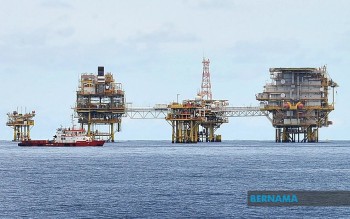
Southeast Asia stands to benefit significantly from a sustained wave of offshore energy investment, even as the broader Asia Pacific region navigates the aftermath of West Asian conflicts. Hong Leong Investment Bank Bhd projects the region will capture more than US$100 billion in greenfield capital expenditure, representing a substantial 12 per cent increase that underscores a decisive shift towards building new production infrastructure rather than merely maintaining existing facilities. This growth trajectory signals that regional players and international operators view Southeast Asian waters as strategically attractive despite the geopolitical uncertainties that gripped global energy markets in recent months.
The investment momentum extends beyond greenfield projects. Brownfield capital expenditure—the retrofitting and enhancement of operating assets—is also expanding across the region, with Southeast Asia expecting a three per cent rise while South Asia experiences more dramatic growth of 23 per cent. This dual expansion reveals a comprehensive investment strategy that prioritises both immediate supply security through existing asset optimisation and longer-term production capacity through new developments. For Malaysian stakeholders in the oil and gas supply chain, this bifurcated investment pattern translates into sustained demand for specialist services across the entire asset lifecycle.
The backdrop for this resilience is the tentative de-escalation of West Asian tensions following the signing of a 14-point US-Iran memorandum of understanding. While analysts acknowledge the fragility of ceasefire arrangements in the region, the agreement has catalysed measurable shifts in energy market dynamics and investor sentiment. Traffic monitoring through the critical Strait of Hormuz indicates recovery, though the data presents a more complicated picture than headline figures suggest. Satellite imagery reveals that an increasing number of vessels are transiting the waterway with automatic identification system transponders disabled, suggesting shipping activity may be higher than official records indicate—a detail with implications for regional energy security assessments.
The structural foundation underlying this optimism rests on two interconnected investment themes that Hong Leong has identified as pivotal. The first hinges on whether geopolitical resolution translates into durable improvements in global energy security posture and the strategic accumulation of inventory reserves. Should this materialise, pipeline operators and storage terminal facilities would emerge as prime beneficiaries of sustained capital allocation. For Malaysian firms operating in port infrastructure and logistics, this scenario carries tangible commercial implications through increased throughput and infrastructure utilisation.
The second theme centres on a projected capital expenditure cycle at Petronas beginning around 2027. This anticipated upcycle would inject substantial investment into Malaysia's broader oil and gas services and equipment ecosystem, particularly benefiting companies engaged in upstream field development, hook-up and commissioning operations, maintenance activities, marine support services, fabrication work, and pipeline-related projects. Given Petronas's scale as Southeast Asia's dominant energy company, this capex surge would fundamentally reshape competitive opportunities across the entire supply chain, from multinational tier-one contractors to specialised Malaysian service providers.
Price projections have undergone a significant recalibration reflecting market reassessment of supply-demand dynamics. Hong Leong revised its 2026 Brent crude forecast downward to US$80 per barrel from the previously anticipated US$90, while maintaining a US$75 per barrel projection for 2027. These figures, while adjusted downward from earlier estimates, remain substantially elevated compared to historical norms, reflecting persistent concerns about supply adequacy. The investment bank's analysis points to inventory replenishment cycles as the critical variable determining price trajectories through 2027 and beyond.
The inventory thesis deserves particular attention given its implications for regional energy policy and business planning. The US Energy Information Administration's latest short-term outlook projects Organisation for Economic Co-operation and Development commercial crude inventories will decline to approximately 50 days of supply by late 2026, falling well below pre-conflict levels that exceeded 60 days. This inventory compression creates the structural conditions for sustained price elevation, as global markets remain vulnerable to supply shocks until buffers are adequately replenished. For downstream operators and energy-intensive manufacturers across Malaysia and Southeast Asia, this inventory dynamic translates into extended periods of elevated energy input costs.
However, the medium-term price outlook incorporates some relief scenarios. Should global oil flows normalise and inventory rebuilding progress according to standard schedules, prices could stabilise in the US$75 to US$80 per barrel range through early 2027. Conversely, should inventory accumulation extend beyond the 60-day threshold—a distinct possibility given heightened energy security consciousness among consuming nations—crude could remain underpinned at above US$75 per barrel. The Strait of Hormuz production disruption narrative adds another layer of complexity: shut-in volumes surged to 45 per cent of regional production by May 2026 compared to 35 per cent in March, indicating the supply shock's severity has intensified rather than abated.
Market reality has already begun reflecting more moderate price expectations. At the time of reporting, Brent crude traded at US$69.17 per barrel after a 0.90 per cent daily gain, while West Texas Intermediate crude advanced 0.94 per cent to US$72.67 per barrel. These levels represent a substantial retreat from the peaks reached during the most acute phases of regional tension, and analysts increasingly view the US$70 to US$75 per barrel band as a plausible equilibrium for coming months. This price stabilisation would create a fundamentally different operating environment for energy-intensive businesses compared to the volatile conditions that prevailed during peak geopolitical uncertainty.
From a macroeconomic perspective, sustained moderation in crude prices carries implications extending far beyond the energy sector itself. If the US$70 to US$75 per barrel range persists through the coming year, cost-push inflationary pressures stemming from energy inputs would diminish materially, easing total cost burdens on businesses across supply chains. Consumer purchasing power would benefit from lower transportation and manufacturing costs, potentially stimulating demand and business investment. Central banks throughout the region could preserve accommodative monetary policy stances for longer periods, supporting credit availability and economic growth trajectories during this critical recovery phase.
For Malaysia specifically, these developments carry multi-faceted significance. The combination of rising regional offshore investment and eventually moderating energy prices creates conditions favouring both the nation's energy services export sector and its import-competing, energy-intensive industries. The anticipated Petronas capex cycle offers direct stimulus to employment and capital investment in the domestic upstream sector. Simultaneously, lower sustained energy costs would benefit petrochemical manufacturers, fertiliser producers, and other energy-intensive export industries that anchor Malaysia's industrial economy. The offshore investment surge creates immediate demand for specialised fabrication, engineering, and marine services in which Malaysian firms possess established capabilities and competitive positioning.

