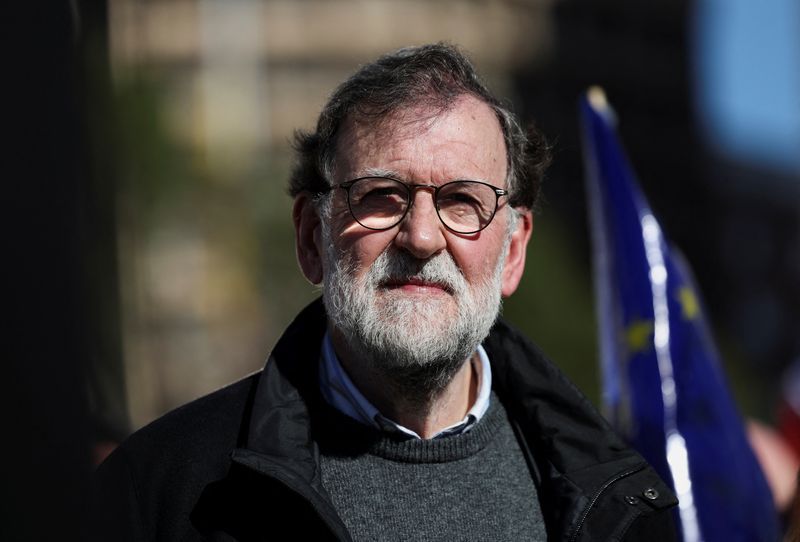
Spain's government has issued a formal apology following controversial remarks made by conservative former Prime Minister Mariano Rajoy about France's national soccer team, describing his column as carrying "the poison of racism and xenophobia". Foreign Minister Jose Manuel Albares conveyed the apology to his French counterpart on Tuesday, emphasising that such views do not represent the majority of Spanish citizens. The timing proved particularly sensitive, arriving just hours before Spain and France were scheduled to contest the World Cup semi-final.
Rajoy, who served as Spain's premier from 2011 to 2018, published his commentary in the online publication El Debate on Friday, where he acknowledged France possessed an exceptionally talented squad while simultaneously questioning its national character. His specific assertion that "there are no French players in it" appeared designed as a pointed jab at the ethnic and cultural diversity of the French roster, with clear implications regarding the African and Afro-Caribbean heritage of several team members. The remark sparked immediate condemnation across both nations, cutting through typical diplomatic pleasantries to touch on sensitive questions about citizenship, belonging, and national identity.
Albares articulated Spain's position with particular force during an interview with Cadena SER radio, explicitly challenging the logic underpinning such commentary. "It's a very serious matter to go around using skin colour to determine who can be a citizen and who cannot," he stated, framing the issue as fundamentally about national values rather than merely about soccer or team composition. This intervention demonstrated that Spain's government sought to establish clear distance between official policy and the statements of political figures no longer in power, signalling awareness of how such remarks could damage Spain's international standing.
Rajoy himself remained unavailable for immediate comment, leaving his People's Party spokesperson Borja Semper to defend the column's intent. Semper characterised the piece as having been written without malicious purpose, arguing instead that it constituted sarcasm rather than a serious ethnographic observation. This defence strategy—reframing controversial statements as humour or rhetorical exaggeration—has become a familiar tactic when such comments invite public backlash, though it struggles to address the underlying assumptions critics identify in the original text.
Spanish Prime Minister Pedro Sanchez, attending France's National Day celebrations in Paris, delivered his own rebuke through social media, criticising anyone who "measure[s] nationality by a person's surname, birthplace or skin colour" and describing Rajoy's words as "shamefully xenophobic". Sanchez's public denouncement proved particularly significant given the potential for such remarks to damage bilateral relations, and his presence in Paris during the controversy allowed him to address the issue directly with French interlocutors and demonstrate Spain's commitment to upholding inclusive democratic values.
France's response achieved a striking consensus across its political spectrum. Foreign Minister Jean-Noël Barrot dismissed Rajoy's comments as "pathetic", employing language designed to underscore both their intellectual weakness and their ideological bankruptcy. Barrot stressed that "France has no skin colour", inverting Rajoy's logic to assert that national identity transcends ethnic or racial categories entirely. The statement represented France's official position that citizenship and belonging operate independently of ancestral origin, a principle embedded in French republican tradition even as that nation continues to grapple with questions of integration and inclusion.
Unusually, France's far-right National Rally opposition party joined mainstream condemnation, with spokesman Julien Odoul calling Rajoy's remarks "scandalous, shameful, deplorable" on FranceInfo television. Odoul went further, directly characterising Rajoy as racist rather than merely misguided, demonstrating that such comments had breached even the tolerances of France's more nationalist political elements. This broad-based rejection reinforced the sense that Rajoy's statement occupied an indefensible position within contemporary European political discourse.
The Rajoy incident followed closely upon similar remarks that had roiled the tournament earlier. Paraguayan Senator Celeste Amarilla had published a racist diatribe on social media following Paraguay's elimination, directing particularly harsh language at French captain Kylian Mbappe. Amarilla described Mbappe as a "colonised Cameroonian, desperately trying to pass himself off as French", attacking both his right to national identity and his authenticity as a representative of France. The comments echoed colonial-era logic, implying that individuals of African descent could never genuinely belong to European nations regardless of citizenship or upbringing.
Mbappe's response to Amarilla's attack demonstrated considerable dignity and broadened perspective. Rather than engaging in a personal dispute, the star player defended not only his own right to represent France but also defended Paraguayan players themselves, characterising Amarilla's words as unworthy of her position. His intervention suggested that athletes could exercise moral leadership on questions of national identity and inclusion, transcending the immediate competitive context to address deeper democratic principles.
Paraguay's government distanced itself from Amarilla's comments, issuing a statement that her remarks contradicted national values, while the French Football Federation filed criminal complaints in response. The sequence of events demonstrated how soccer's global platform had become a venue for airing tensions about citizenship, belonging, and the racial composition of national teams—issues that extend far beyond the sport itself and touch fundamental questions about identity in multiethnic democracies.
For Malaysia and Southeast Asia, these incidents carry relevance beyond European politics. The pattern of scrutiny directed at athletes and teams based on perceived ethnic or cultural markers reflects persistent assumptions about authentic national belonging that remain contested throughout the region. Questions about whether individuals of particular backgrounds genuinely represent the nation continue to surface across Southeast Asia, making the Spanish and Paraguayan incidents cautionary examples of how such rhetoric can escape controlled spheres to provoke international diplomatic incidents and undermine social cohesion.

