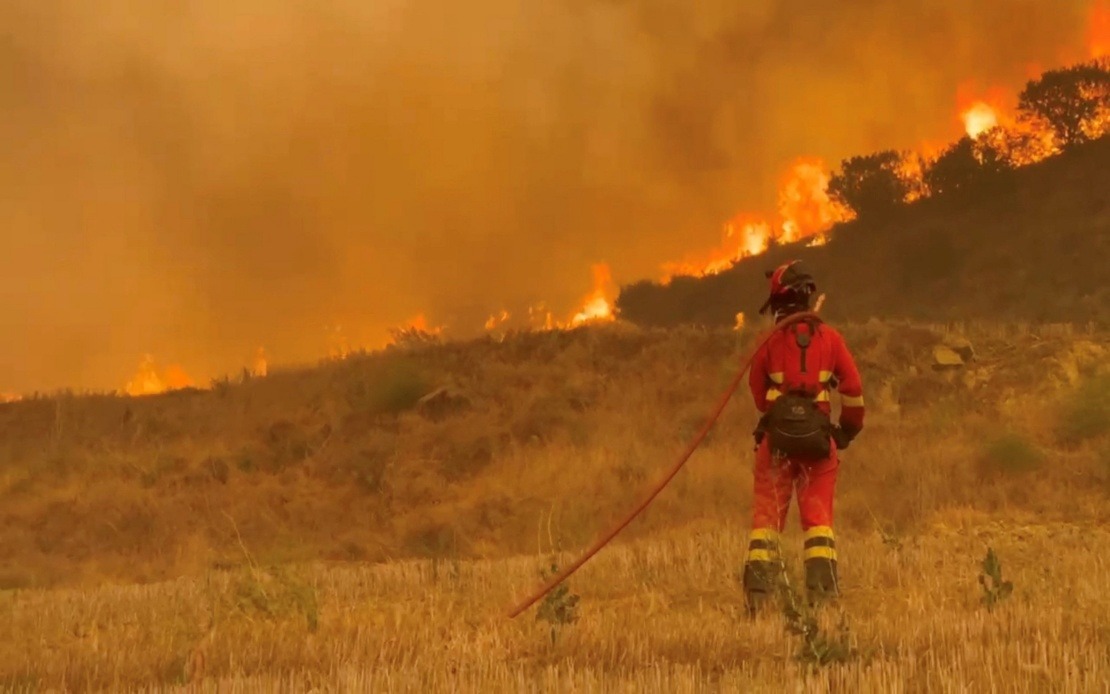
Spain is grappling with its most severe wildfire of 2024, with flames consuming approximately 12,000 hectares across the northeastern province of Zaragoza. The devastating blaze, which ignited on Wednesday in the Cinco Villas region, has forced authorities to evacuate more than 1,100 residents from affected communities as firefighting efforts intensify across the affected zone.
The fire's spread has been particularly aggressive, with the perimeter expanding to roughly 60 kilometres as the blaze remained highly active through Friday. Authorities characterised the situation as "quite active" with "significant" nocturnal expansion into the early hours of Friday, indicating that cooler night-time temperatures have failed to substantially slow the inferno's progression. The combination of uncontrolled spread and challenging terrain has made containment efforts remarkably difficult for emergency responders.
Six municipalities across two Spanish regions have been impacted by the evacuation orders. The majority of those displaced—residing in five municipalities—come from Zaragoza province itself, whilst one additional municipality in the neighbouring region of Navarre has also been evacuated. Infrastructure disruptions compound the humanitarian challenges, with multiple roads throughout the affected area remaining closed to prevent civilian exposure to dangerous conditions and to facilitate unobstructed access for emergency vehicles.
Emergency response has been substantial, with approximately 400 ground-based firefighters and support personnel mobilised alongside 19 aircraft deployed to combat the flames by Thursday. These resources focused their efforts overnight on the critical task of protecting residential structures in Uncastillo, a municipality facing particular vulnerability as the fire's perimeter moves closer to populated areas. Electricity supply has been restored to all affected towns, ensuring residents have access to essential services even while evacuation measures remain in place.
The Zaragoza fire is not the only active wildfire threatening Spanish communities. In Guadalajara province to the north, a separate fire near La Mierla has charred approximately 900 hectares, prompting additional evacuations and lockdown protocols in surrounding settlements. This parallel emergency stretched regional resources further, prompting the Guadalajara regional government to formally request assistance from Spain's Military Emergency Unit, which dispatched approximately 100 personnel to reinforce civilian firefighting operations.
Further south, near Madrid, a third wildfire near Lozoyuela demonstrated more promising signs of control, though emergency services emphasised that the situation remained fluid and unpredictable. Unlike the Zaragoza inferno, this fire was progressing favourably, yet authorities cautioned that it had not been fully contained or brought under control. This cautious assessment reflects the unpredictable nature of wildfire management, where apparent progress can swiftly reverse.
Investigative action has accompanied the emergency response. The Civil Guard arrested a man suspected of deliberately starting the Madrid-region fire, indicating that arson may have contributed to at least one of Spain's current blazes. The Madrid regional government announced it would participate in legal proceedings as a civil party, signalling official intent to pursue justice through the courts and establish accountability for destructive actions.
Environmental conditions have created an unusually volatile situation for wildfire propagation across Spain. High ambient temperatures, strong winds sweeping across the region, unusually low humidity levels, and abundant dried vegetation accumulated during the preceding rainy spring have combined to establish ideal conditions for rapid fire spread. This particular meteorological constellation represents a seasonal pattern that Spanish emergency officials anticipate annually, yet the scale and ferocity of fires varies considerably from year to year.
Beyond immediate weather patterns, Spanish environmental analysts increasingly attribute rising wildfire frequency and intensity to structural factors. Climate change has altered temperature and precipitation cycles across the Iberian Peninsula, whilst the systematic abandonment of rural areas has reduced managed land use practices that traditionally limited fuel accumulation. These longer-term transformations suggest that Spain may face escalating challenges in wildfire management across coming decades, requiring strategic investments in prevention infrastructure and personnel training beyond current levels.
For Malaysian and Southeast Asian observers, Spain's current wildfire crisis offers instructive parallels. The region faces comparable vulnerabilities to uncontrolled vegetation fires during dry seasons, particularly in areas experiencing rural depopulation or reduced agricultural management. Indonesia, Malaysia, and other neighbouring nations have repeatedly confronted transnational haze from regional wildfires, demonstrating how fire management failures in one jurisdiction create international consequences. Spain's experience underscores the necessity for comprehensive regional coordination, investment in firefighting capability, and landscape management strategies that extend beyond emergency response to address root causes of escalating fire risk.

