Spain has announced plans to reinstate temporary border controls on travellers arriving from Italy, marking an escalation in diplomatic friction between two of Europe's largest economies over migration policy. The decision, announced on Friday, represents a direct retaliation against Italy's unilateral decision to reintroduce border checks on Spanish arrivals without advance coordination. The temporary measures will commence on Saturday at Spanish ports and airports, remaining in effect through September 7 unless the underlying circumstances improve or diplomatic negotiations yield a breakthrough.
The timing of Spain's countermeasure reflects mounting frustration with what Madrid characterises as Rome's unilateral and unjustified approach to border management. Italian Prime Minister Giorgia Meloni initiated her country's border checks on August 1 following the extraordinary migration crisis in Ceuta, the Spanish exclave located on Morocco's northern coast. Spain has publicly denounced Italy's action as discriminatory, pointing out that such measures contradict the foundational principles of the European Union and the Schengen area, which theoretically enables freedom of movement across internal borders for EU citizens.
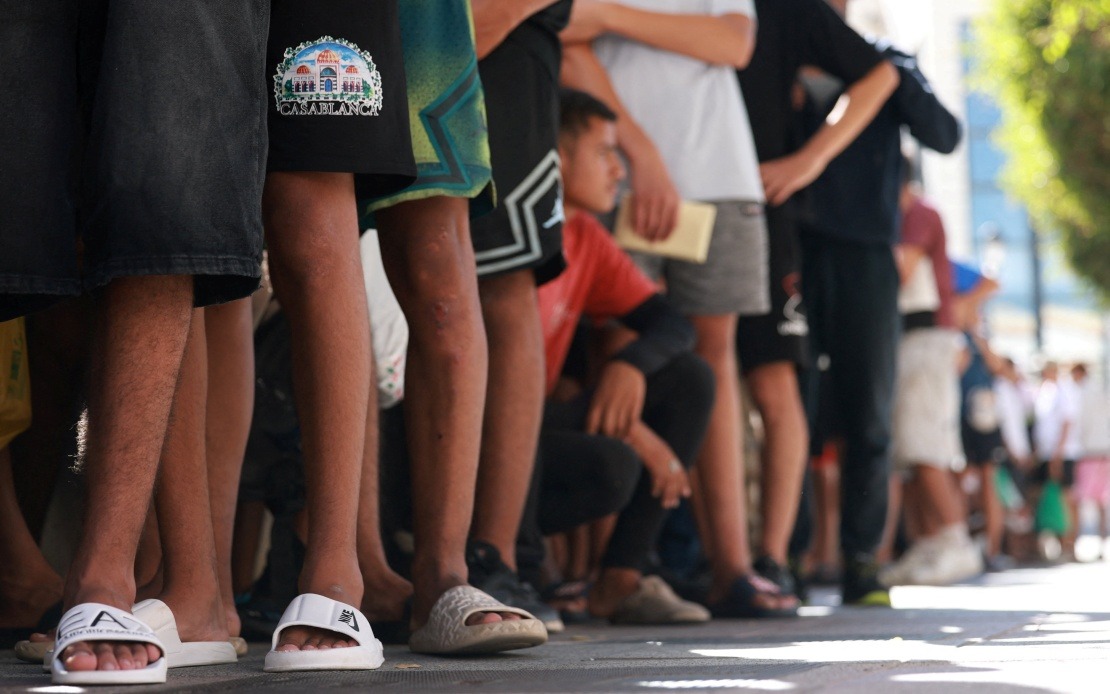
The root cause of this diplomatic clash traces back to an unprecedented surge of migrants into Ceuta at the end of July. Approximately 80,000 people crossed into the Spanish enclave in a compressed timeframe, creating what authorities have described as a severe humanitarian emergency. While roughly 75,000 of these individuals subsequently returned voluntarily to Morocco, between 3,000 and 5,000 migrants have remained within Ceuta's borders, overwhelming the enclave's reception and processing facilities. Ceuta President Juan Jesus Vivas has warned that the enclave's infrastructure and services are severely strained by this concentration of irregular arrivals.
Italy's defensive positioning highlights the broader anxieties that persist within the European Union regarding migration flows and border security. Rome has insisted that its temporary checks, which remain in force until at least August 15, target exclusively third-country nationals arriving from Spain and are justified on grounds of national security and effective border management. The Italian government has emphasised that Spanish and other EU citizens traversing by air or sea routes are exempt from these new checks, suggesting that Italy is attempting to distinguish between irregular migrants and legitimate travellers within the Schengen framework.
The Italian government has adopted a notably firm rhetorical stance, declaring that it "does not accept ultimatums or external pressure" regarding matters of national security and border governance. This language reflects Rome's conviction that it possesses legitimate sovereign authority to implement protective measures at its frontiers, particularly when facing an unpredictable influx of irregular migrants that could transit northward through Italian territory. Rome has also sought to characterise the enforcement efforts as minimally disruptive, asserting that Italian border authorities will endeavour to restrict practical inconvenience to lawful cross-border traffic.
Spain's decision to reciprocate with its own temporary border regime signals that Madrid is unwilling to absorb the consequences of Italy's unilateral action without exacting a diplomatic cost. The Spanish government has formally called upon Italy to withdraw its measures immediately, framing the dispute as a matter of EU principle and solidarity. This escalation demonstrates that even within a supposedly integrated European border zone, individual member states retain the political will to employ border controls when they perceive threats to national interests or when they believe they have been treated unfairly by neighbouring governments.
The checks that Spain will implement include random identity verification and document inspection, mirroring standard procedures employed elsewhere within the Schengen area. This measured approach suggests that Spain is not seeking to completely disrupt legitimate commerce and travel but rather to impose a proportionate response that signals Madrid's displeasure while maintaining some degree of practical functionality. The potential extension of these controls through September 7 creates uncertainty for businesses and travellers reliant on fluid movement between the two countries.
For Malaysia and Southeast Asia, this European development carries instructive lessons regarding how even economically integrated regions can experience rapid deterioration in bilateral relations when migration pressures intersect with nationalist sentiment. The Ceuta crisis demonstrates how external geopolitical events—in this case, Morocco's handling of migration—can trigger cascading effects across integrated border systems. Southeast Asian economies engaged in the ASEAN framework and increasingly bound by regional trade agreements should note how quickly border protocols can revert to protectionist configurations when governments face domestic political pressure.
The broader implication concerns the fragility of integrated border regimes under stress. The Schengen area, despite decades of institutional development, has revealed vulnerabilities when member states pursue independent solutions to shared challenges. This pattern has relevance for Southeast Asia's own integration aspirations, suggesting that border arrangements require sustained political commitment and mechanisms for burden-sharing when crises emerge. The Spain-Italy dispute underscores that formal agreements and shared institutional frameworks do not automatically prevent competitive or retaliatory measures when governments prioritise immediate domestic concerns over regional cooperation.
The incident also highlights persistent tensions within the European Union regarding the distribution of migration responsibility. Southern EU members like Spain and Italy, positioned at the Mediterranean's edge, have long argued that they disproportionately bear the burden of irregular migration, while northern and central European nations benefit from the Schengen system without accepting equivalent numbers of asylum seekers. Italy's actions, while diplomatically provocative, reflect deeper grievances about the perceived inequitable allocation of migration management responsibilities across the bloc.
The path toward resolution remains unclear, though diplomatic channels presumably remain open between Madrid and Rome. The August 7 to August 15 timeline provides a window for negotiation before Spain's measures take full effect, potentially allowing both governments to claim some degree of victory in any compromise arrangement. However, the fundamental challenge—managing migrant flows through Mediterranean entry points while maintaining European border agreements—persists and will likely require more comprehensive EU-level policy responses than bilateral negotiations can achieve.
As this situation develops, it serves as a reminder that migration remains one of Europe's most volatile political issues, capable of disrupting even well-established institutional arrangements. For policymakers in Southeast Asia and elsewhere, the Spain-Italy episode suggests that sustainable solutions to migration pressures must involve genuine burden-sharing mechanisms and coordinated international responses rather than unilateral border enforcement that simply displaces problems across neighbouring jurisdictions.

